|
THEIR KINGDOM COME -- INSIDE THE SECRET WORLD OF OPUS DEI |
|
2. Barbastro
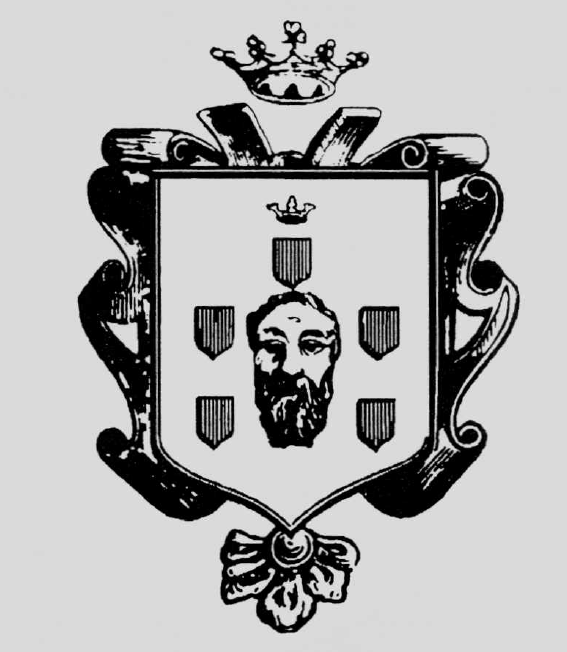
THE COAT OF ARMS OF BARBASTRO, WHERE ESCRIVA WAS BORN, represents the severed head of a bearded Moor, surrounded by five shields, under the crown of Aragon. Barbastro is strategically near the Rio Vero's junction with the Cinca, a tributary of the Ebro, and down through the ages it has prospered as a market centre, lying amidst a broad, rolling plain of golden wheat fields and green orchards. Over the troubled centuries of Spanish nationhood, Barbastro quietly grew, so that by the time of Don Jose Escriva's marriage to Maria de los Dolores Albas y Blanc in the summer of 1898 -- the year of Spain's defeat in the Spanish-American war -- the town counted 7,000 souls, all Catholic and none of them particularly poor or downtrodden. [1] Don Jose's family originally came from Narbonne in France at the time of the Christian reconquest of Spain from the Moors, and settled in Balaguer, a town in Lerida province, not far from Barbastro. In the 1800s his grandfather, a doctor, had moved to Fonz, a hilltop village overlooking the Rio Cinca. Dona Dolores's family owned a textile shop in Barbastro. When Don Jose moved from Fonz to Barbastro in 1894, he became a partner in the shop. He also opened a chocolate confectionery in the basement. Chocolates, neatly done up in bright little packages, seemed to suit his nature, which was cheerful and optimistic. He was a fastidious dresser, always freshly shaven, his handlebar moustache trimmed and twisted. The newly married couple moved into a narrow four-storey house not far from the Argensola Palace, one of the oldest buildings in town. Their first child, Carmen, was born a year later. Hardly had Dona Dolores finished nursing Carmen than she was expecting her next child, born on the feast day of St. Julian, 9 January 1902. Four days later the infant was christened Jose Maria Julian Mariano in the Cathedral of Our Lady of the Assumption. His godfather was Mariano Albas, one of Dona Dolores's cousins who, like Don Jose's elder brother, Teodoro, was a priest. BARBASTRO'S COAT OF ARMS
At the turn of the century Spain remained anchored in the Middle Ages, separated from the rest of Europe not only by the Pyrenees but by a gulf of economic backwardness. Fabulously rich landowners with the same rights as feudal lords lived in the midst of land-hungry peasants. Agriculture, involving more than half the population, had not been freed from its medieval fetters. The Church, too, was marked by abrupt dividing lines: parish priests who were little better than beggars lived in near-hovels, while their bishops lived in palaces. The same phenomenon occurred in the army, with 500 generals receiving imperial salaries while lower ranking officers hardly earned enough to pay for food. Medical services were primitive and limited, but the churches were full. When in 1904 Jose Maria became ill with high fever, the local doctor and a homeopath were summoned to the house. Neither was able to diagnose the ailment or prescribe a remedy. Giving the child only hours to live, they suggested a priest would be of more use. But Dona Dolores refused to accept their verdict. With stirring faith, she beseeched Our Lady of Torreciudad, whom she held in special devotion, to intercede for the infant, promising that if her prayers were met she would dedicate the child to the Lady's work. Hours later, Escriva's biographers tell us, the little Jose Maria was sleeping peacefully. Jose Maria's recovery left Dona Dolores in debt to the Virgin. To make good her promise, she wrapped the child warmly and set off on horseback along the rough track to Torreciudad, in the mountains 24 kilometres away, to present him to Our Lady. Riding side-saddle, the infant in her arms, she forded the Cinca and climbed the high escarpment to a medieval beacon tower and rustic hermitage overlooking the gorge. Torreciudad had once been a Moorish outpost defending Barbastro's northern flank. Under the tower in olden times was a mosque. In 1084, when King Sancho Ramirez of Aragon recaptured Torreciudad, a wooden statue of the Madonna seated on a simple throne, the child Jesus in her lap, was placed in the mosque, henceforth transformed into a Marian shrine, and for the next 900 years Our Lady of Torreciudad continued to attract a strong local following. Over the next five years, Dona Dolores bore three more daughters, but only Maria Asuncion, known in the family as Chon, survived beyond the second year. With two sisters in Heaven, the young Jose Maria believed that if he prayed to the Guardian Angels his parents and two remaining sisters would be protected. But in 1913 Chon fell ill and died shortly after her eighth birthday. It made a deep impression on the 11-year-old Jose Maria. He feared that he might be the next to go. But his mother reassured him. 'Don't worry. You've been put in the care of Our Lady of Torreciudad.' [2] She often repeated how he had been saved by the Virgin. 'Our Lady must have left you in this world for some great purpose, because you were more dead than alive,' she would tell him. [3] Now when a small boy hears his mother reaffirm this proposition over and over again with all the conviction in the world, whether he lives up to the expectation or not it remains lodged in his mind for a lifetime. The Otals of Valdeolivos, who were local landowners, lived a few houses away. Their daughter, a playmate of Chon, recalled that one afternoon she and some of Jose Maria's friends were building castles with playing cards in the Escriva front room. Everyone was gathered around the table, holding their breath as the last cards were added to the structure, when suddenly Jose Maria toppled them with a sweep of his hand. 'That', he announced, 'is exactly what God does with people: they build a castle, and when it is nearly finished He pulls it down.' [4] The premonition of a moody, semi-mystical child? Oddly enough, the house where the Escrivas lived was torn down in the 1960s -- not by the sweep of God's hand, but to make way for a more imposing Opus Dei women's residence and cultural centre dedicated to the Founder. One of Escriva's biographers, Peter Berglar, claimed in a revealing passage that the destruction of the house (and three adjoining houses) actually pleased the Founder, 'because he refused any idea of a cult being created around him'. [5] Nevertheless, to replace his birthplace with a much larger brickwork mansion, in the style of the Argensola Palace, might easily be interpreted as an intention of presenting a grander image of Escriva than fitted his rather modest beginnings. No-one in Barbastro today remembers the young Escriva. The Founder's last surviving boyhood friend, Martin Sambeat, died in 1993. Therefore the most detailed image we have of him comes from the official biographies. They tell us that Jose Maria was a cheerful lad, who even had a touch of mischief in him, and that in spite of the deaths of three sisters, he continued to believe that families united in admiration of the saints enjoyed God's protection. To be sure, the family prayed the rosary together, sometimes in a private oratory belonging to the Otals. On Saturdays they would recite the Hail Holy Queen in the church of San Bartolome. Afterwards they might stroll down El Coso, the broad esplanade near the Cathedral, where Barbastrians still gather on summer evenings to sip the local wines at sidewalk cafes under a canopy of plane trees. Barbastro was known for its religious rituals. For the celebration of Corpus Christi the narrow streets, decked with flowers and red carpets, were filled with robed processions and dancing. The same cast wearing different costumes assembled again for the Holy Week processions and, during the month of June, for the fiesta of San Ramon, the town's patron saint. Escriva's hagiographers maintain that the piety of Barbastro's citizens overflowed during these special occasions. But there were citizens of Barbastro such as the future revolutionaries Eugenio Sopena and Mariano Abad -- both approximately the same age as Jose Maria -- for whom these pious outpourings were odious. It is unlikely that Jose Maria ever crossed their paths, for Sopena and Abad played in different worlds -- the garbage-strewn streets of the San Hipolito quarter. They would have stolen from the alms box if they could have. In sharp contrast, Jose Maria was as pious as a church mouse. But he did not see his boyhood piety as anything out of the ordinary. His mother had explained the Sacraments to him by the age of six. His first experience with the Eucharist -- the Holy Communion -- was in the Cathedral. With every visit to Our Lady of the Assumption, he became immersed in the mysteries it contained. Treasures were hidden there that could make a boy's mind spin. In the apse, behind the great altarpiece, was an oval aperture. Jose Maria's mother explained that behind its tinted glass Jesus was present, perpetually waiting for the young boy's adoration. [6] While the rhythm of secular life in Barbastro, as in every other rural Spanish town of the day, was ruled by the religious calendar, times were changing. The town acquired a Masonic lodge -- the Triangulo Fermin Galan -- whose members were on the whole sympathetic to the idea that Spain would be better governed as a republic. Social tension was increasing in direct ratio to the degree of economic insecurity caused by the disastrous defeat of 1898, the resulting loss of Spain's last colonial possessions and an underemployed workforce suddenly swollen by the return of disbanded units from the lost colonies. In spite of growing tensions, the social life of Barbastro's middle class remained rooted in the engaging Spanish tradition of the tertulia, informal get-togethers of friends of similar standing and interests. One was organized every Wednesday evening by the Parish Friendship Circle. It was an occasion for the town's leading merchants to meet to discuss local politics. Don Jose always turned up for the tertulia smartly dressed, with bowler hat and walking stick, wearing a caped overcoat when the season turned cold. Neither he nor any other member of the friendship circle would have considered venturing into one of the narrow taverns of the San Hipolito quarter where the working class drank. San Hipolito was lost in another Spain, a world apart, and as such quite unknown to them. _______________ Notes: 1. According to Annuario Pontifco 1992, the diocese of Barbastro covers 4,397 square kilometres and has a population of 31,590, of whom 140 are non-Catholic. 2. Francois Gondrand, At God's Pace, Scepter, London 1989, p. 30; and Andres Vazquez de Prada, El Fundador del Opus Dei, Ediciones Rialp, Madrid 1983, p. 51. 3. Peter Berglar, Opus Dei -- Life and Work of its Founder Josemaria Escriva, Scepter, Princeton, p. 12. 4. Bernal, Op. cit., p. 24. 5. Peter Berglar, L'Opus Dei et Son Fondateur Josemaria Escriva, p. 27, MamE, Paris, 1992. This passage was not included in the English translation published by Scepter in 1994. 6. Gondrand, Op. cit., p. 27.
|