|
THE BIBLE UNEARTHED: THE MAKING OF A RELIGION -- ILLUSTRATED SCREENPLAY & SCREENCAP GALLERY |
|
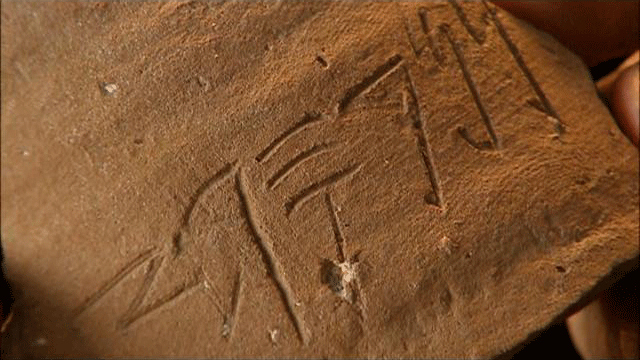
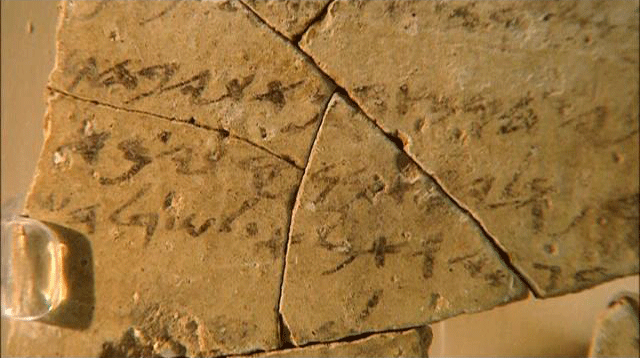
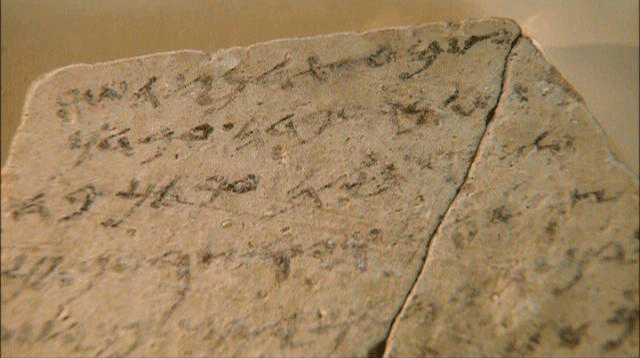
In the 8th century, they are very rare. Before that, they are quite simply, NONEXISTENT.
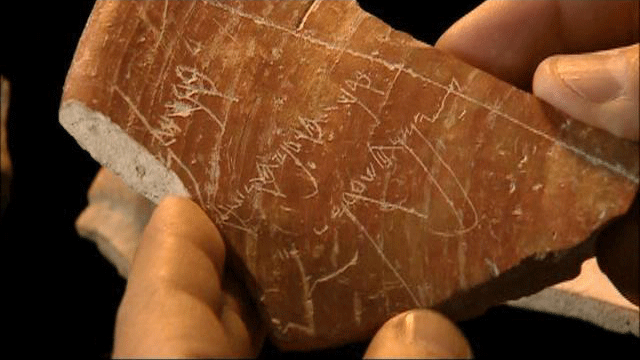
These brief texts deal with economic or administrative questions.
Written by scribes, they provide evidence of the development and centralization of Judah [?], which was then AN ASSYRIAN VASSAL.
This corresponds to a well-known phenomenon: THE EMERGENCE OF A STATE is generally accompanied by the spread of writing.
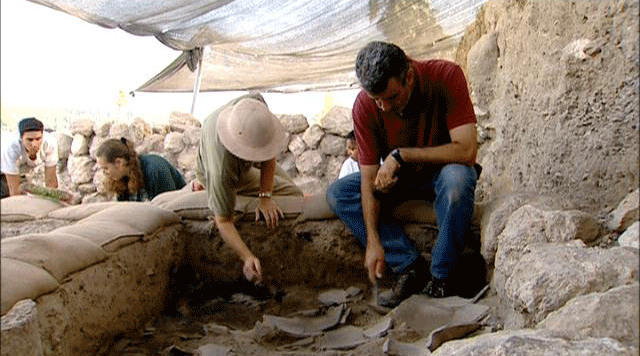
In an ostrakan of the 7th century, a laborer complains to the authorities about the theft of a garment.
In what way does this text provide proof of a revolution?
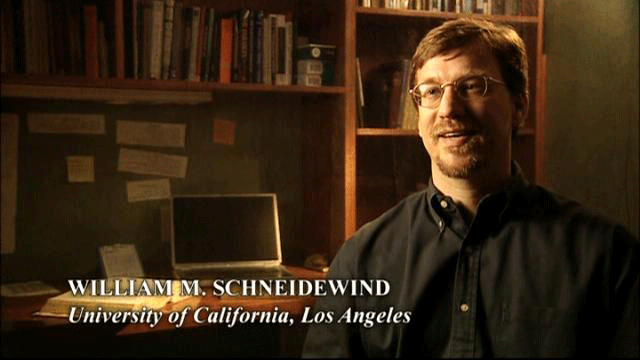
[William M. Schneidewind, University of California, Los Angeles] Before the 7th century B.C., it's clear that THE ANCIENT ISRAELITES [?] were not literate. As a matter of fact, what we would say is that literacy wasn't even a category that people thought about. It wasn't an important idea in society. Beginning in the 7th century, writing spreads through all CLASSES of Israelite society. We see writing by tomb-cutters, by officers in the army, by workmen --
a variety of different kinds of people throughout society are writing, and apparently reading as well. And the spread of writing in ancient Israel [?] at this time indicates that writing at least had the beginnings of literacy in Israel. And, of course, this beginnings of literacy will be CRITICAL TO THE EMERGENCE OF A SACRED, written, and authoritative text.
|