|
THE HORROR OF IT -- CAMERA RECORDS OF WAR'S GRUESOME GLORIES |
|
|
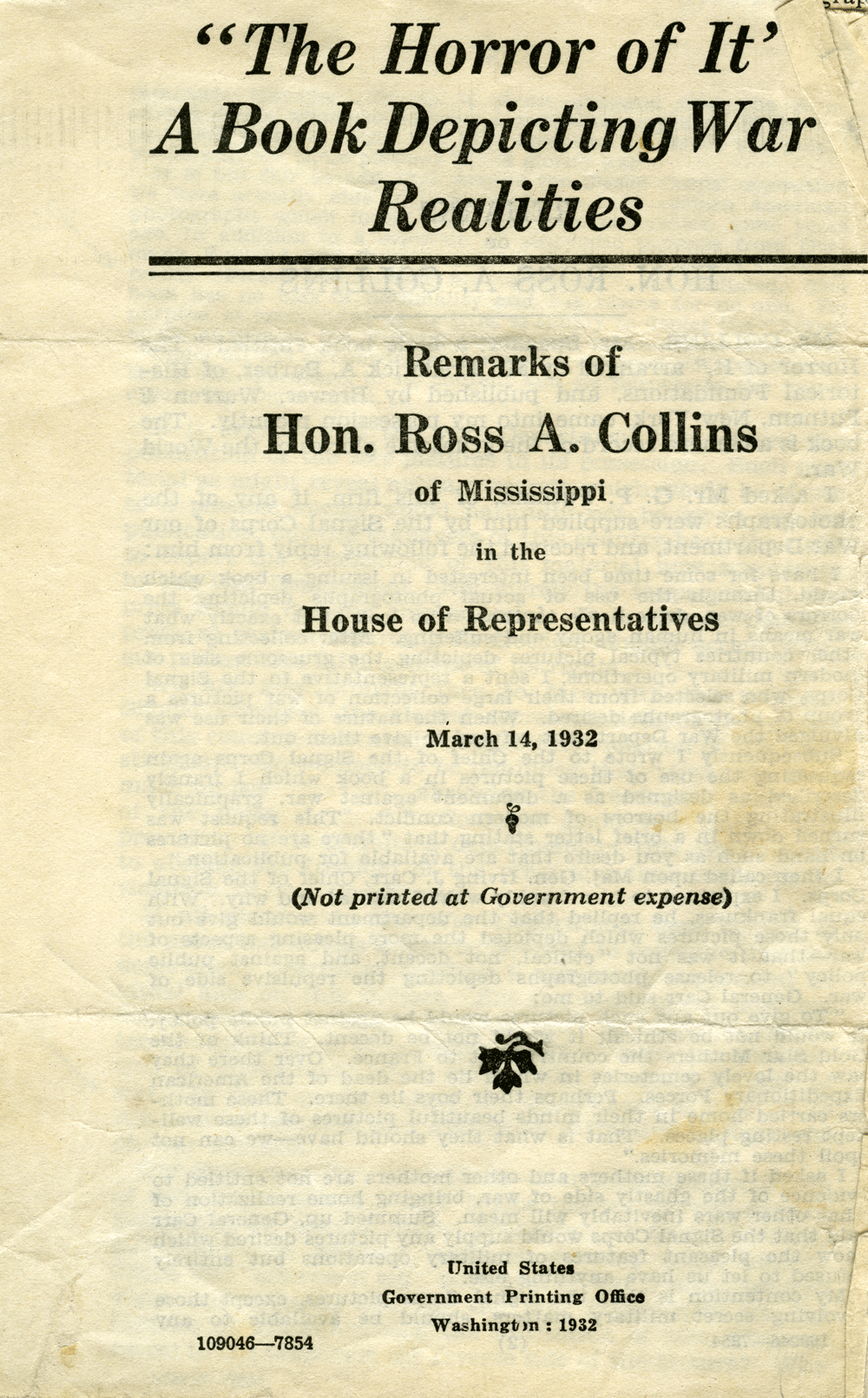
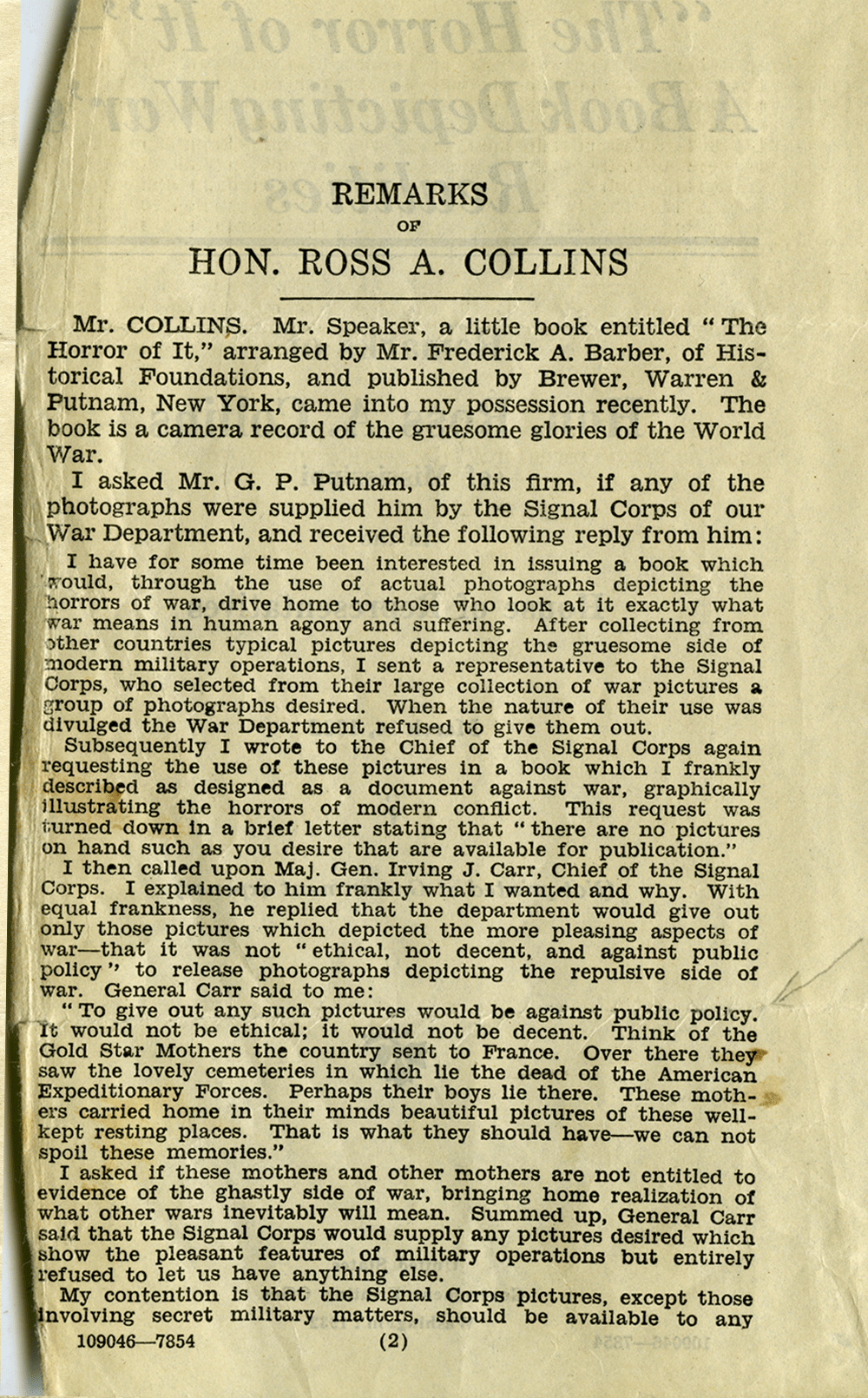
"The Horror of It," a Book Depicting War Realities Remarks of Hon. Ross A. Collins of Mississippi in the House of Representatives March 14, 1932 (Not printed at Government expense) United States Government Printing Office, Washington: 1932 REMARKS OF HON. ROSS A. COLLINS Mr. COLLINS. Mr. Speaker, a little book entitled "The Horror of It," arranged by Mr. Frederick A. Barber, of Historical Foundations, and published by Brewer, Warren & Putnam, New York, came into my possession recently. The book is a camera record of the gruesome glories of the World War. I asked Mr. G. P. Putnam, of this firm, if any of the photographs were supplied him by the Signal Corps of our War Department, and received the following reply from him:
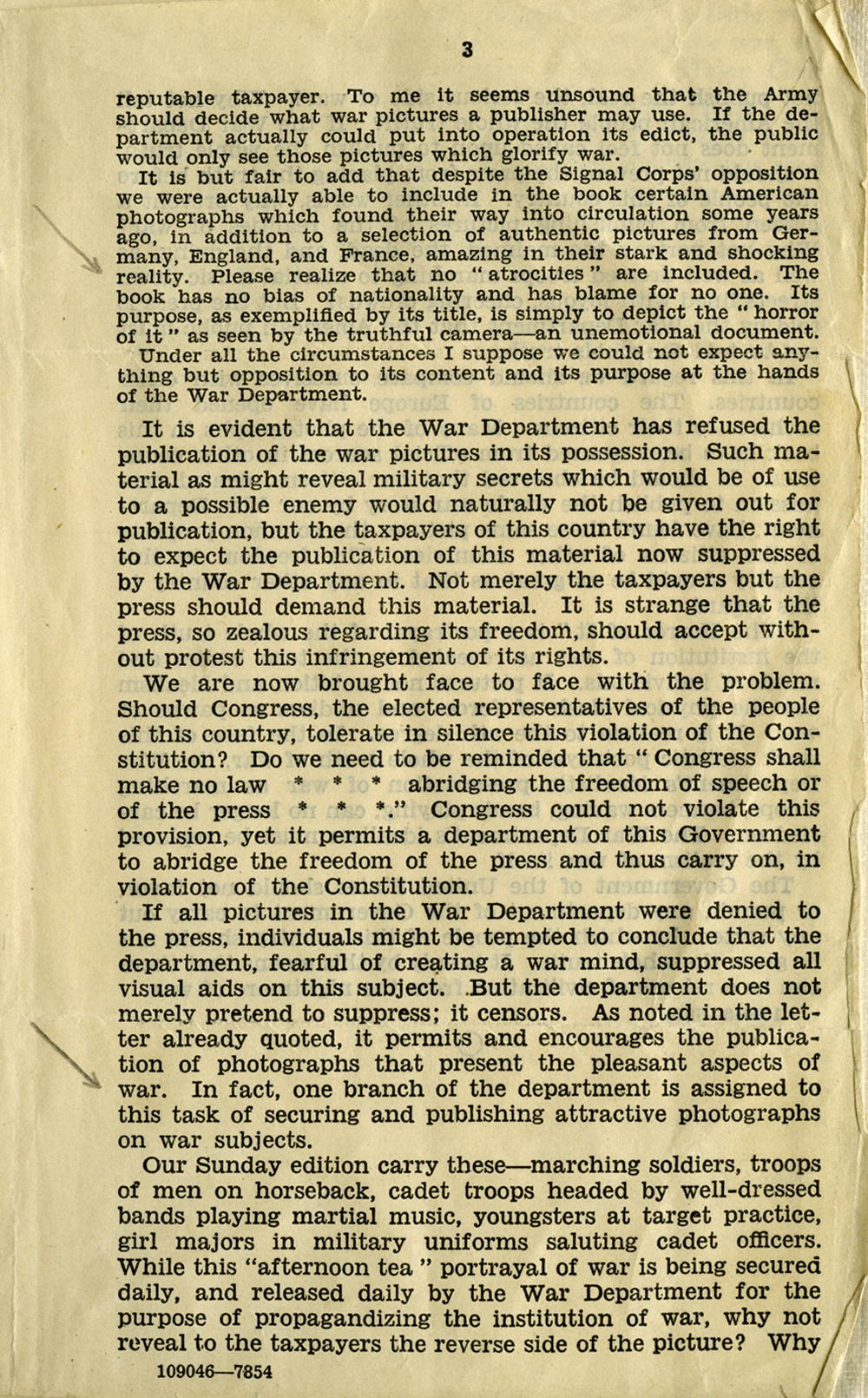
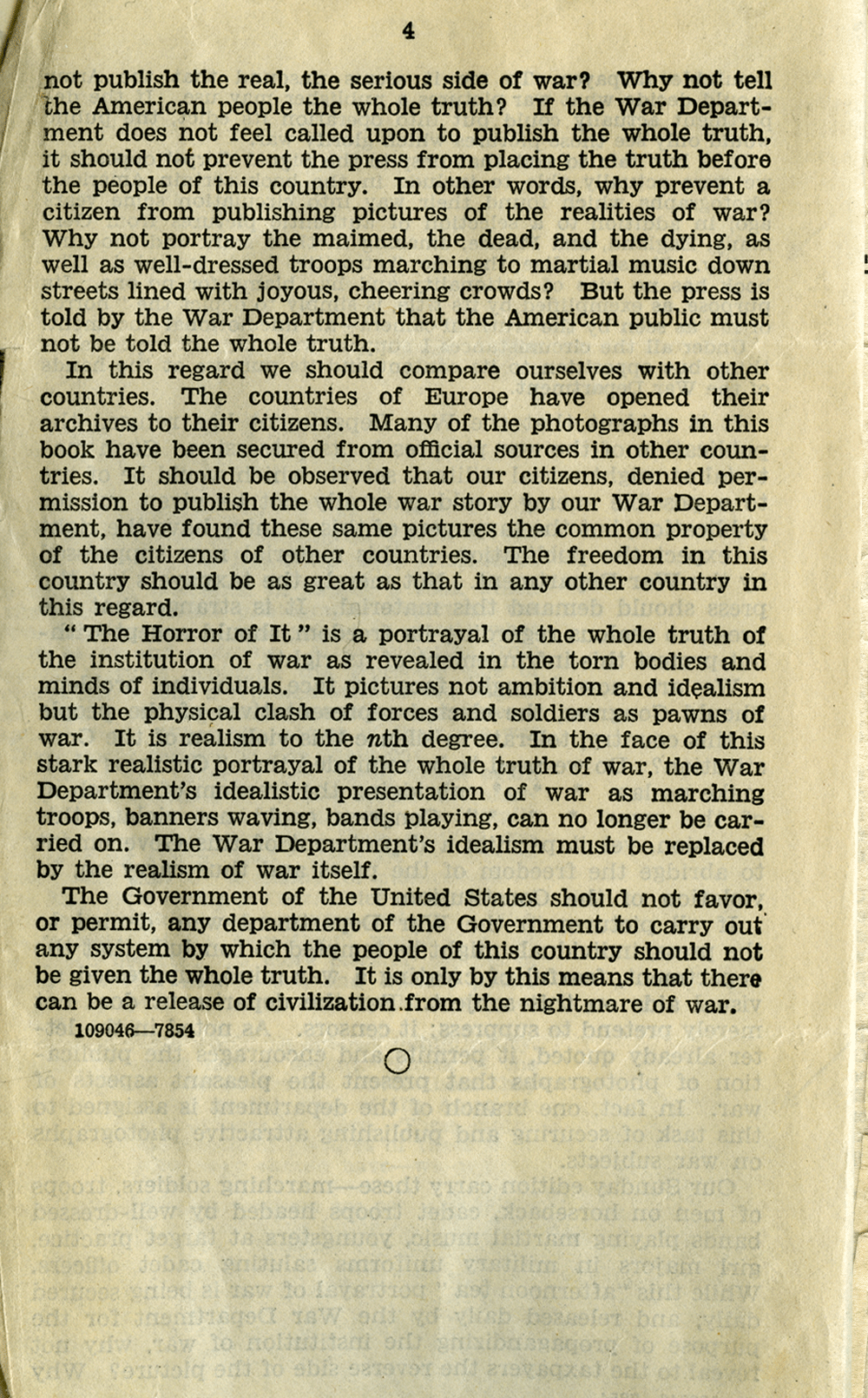
It is evident that the War Department has refused the publication of the war pictures in its possession. Such material as might reveal military secrets which would be of use to a possible enemy would naturally not be given out for publication, but the taxpayers of this country have the right to expect the publication of this material now suppressed by the War Department. Not merely the taxpayers but the press should demand this material. It is strange that the press, so zealous regarding its freedom, should accept without protest this infringement of its rights. We are now brought face to face with the problem. Should Congress, the elected representatives of the people of this country, tolerate in silence this violation of the Constitution? Do we need to be reminded that "Congress shall make no law *** abridging the freedom of speech or of the press ***." Congress could not violate this provision, yet it permits a department of this Government to abridge the freedom of the press and thus carry on, in violation of the Constitution. If all pictures in the War Department were denied to the press, individuals might be tempted to conclude that the department, fearful of creating a war mind, suppressed all visual aids on this subject. But the department does not merely pretend to suppress; it censors. As noted in the letter already quoted, it permits and encourages the publication of photographs that present the pleasant aspects of war. In fact, one branch of the department is assigned to this task of securing and publishing attractive photographs on war subjects. One Sunday edition carry these -- marching soldiers, troops of men on horseback, cadet troops headed by well-dressed bands playing martial music, youngsters at target practice, girl majors in military uniforms saluting cadet officers. While this "afternoon tea" portrayal of war is being secured daily, and released daily by the War Department for the purpose of propagandizing the institution of war, why not reveal to the taxpayers the reverse side of the picture? Why not publish the real, the serious side of war? Why not tell the American people the whole truth? If the War Department does not feel called upon to publish the whole truth, it should not prevent the press from placing the truth before the people of this country. In other words, why prevent a citizen from publishing pictures of the realities of war? Why not portray the maimed, the dead, and the dying, as well as well-dressed troops marching to martial music down streets lined with joyous, cheering crowds? But the press is told by the War Department that the American public must not be told the whole truth. In this regard we should compare ourselves with other countries. The countries of Europe have opened their archives to their citizens. Many of the photographs in this book have been secured from official sources in other countries. It should be observed that our citizens, denied permission to publish the whole war story by our War Department, have found these same pictures the common property of the citizens of other countries. The freedom in this country should be as great as that in any other country in this regard. "The Horror of It" is a portrayal of the whole truth of the institution of war as revealed in the torn bodies and minds of individuals. It pictures not ambition and idealism but the physical clash of forces and soldiers as pawns of war. It is realism to the nth degree. In the face of this stark realistic portrayal of the whole truth of war, the War Department's idealistic presentation of war as marching troops, banners waving, bands playing, can no longer be carried on. The War Department's idealism must be replaced by the realism of war itself. The Government of the United States should not favor, or permit, any department of the Government to carry out any system by which the people of this country should not be given the whole truth. It is only by this means that there can be a release of civilization from the nightmare of war.
|