|
THE GENIUS OF CHARLES DARWIN -- ILLUSTRATED SCREENPLAY & SCREENCAP GALLERY |
|
But I also understand why there is resistance to the idea.
Why would the genes for the parts of the brain
that involve giving at a cost to oneself
be inherited in nature's brutal struggle for existence? To explore this, I want to look at another case where individual survival doesn't appear to be the priority. A peacock's plumage is gorgeous, but it must get in the way of its own survival. It is easily spotted by predators, and its huge weight must hinder quick escape. So why isn't the peacock's tail eliminated by natural selection? Charles Darwin was puzzled. "The sight of a feather in a peacock's tail, whenever I gaze at it," he wrote, "makes me sick." But it was Darwin himself who hit upon the answer. Sex. The peacock's tail is a burden to himself, but a boon to the genes that built it. Why? Because the tail wins sexual partners. Something about the pea hen's brain is attracted to bright feathers and extravagant, maybe costly advertisement. Peacock evolution has been shaped not just by individual survival, but by pea hen brains. Pea hens in effect selectively breed peacocks as pigeon fanciers breed pigeons.
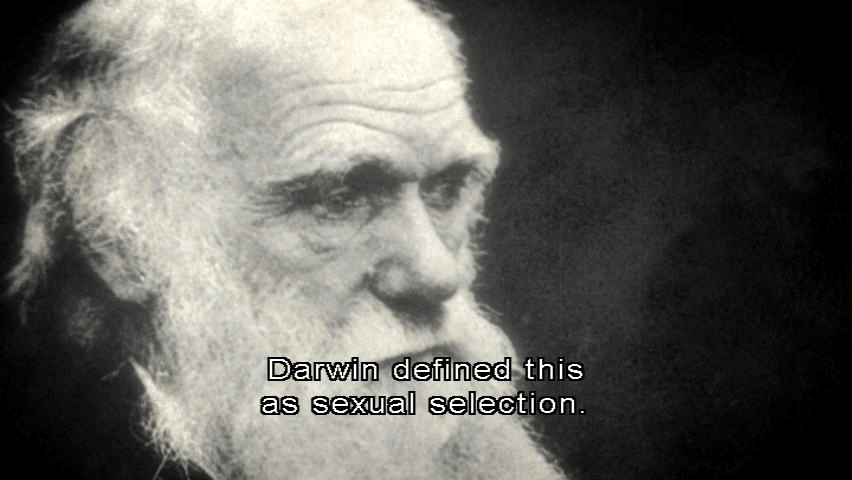
Darwin defined this as sexual selection.
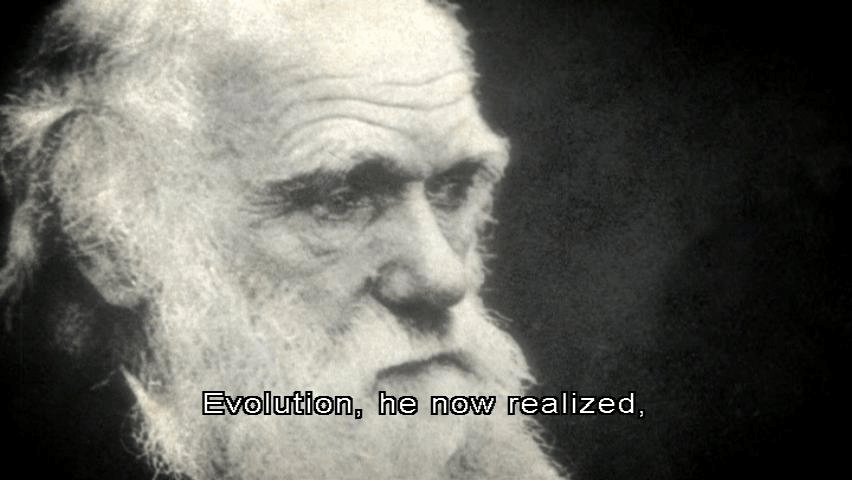
Evolution, he now realized,
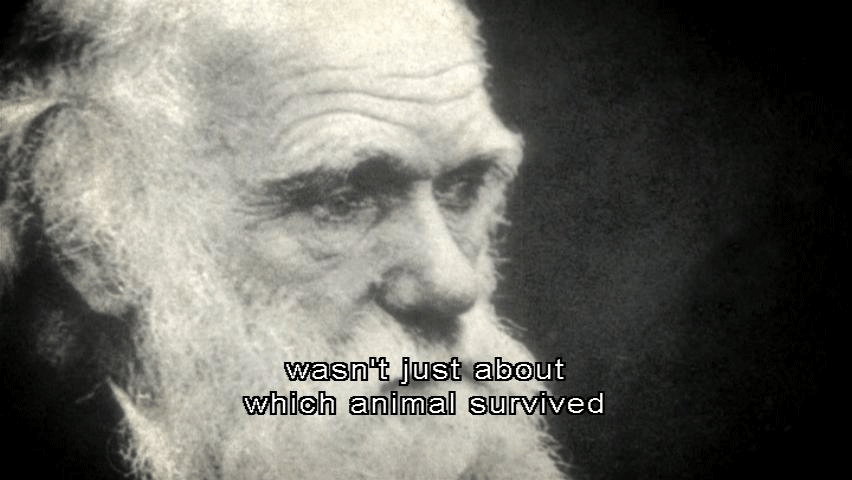
wasn't just about which animal survived,
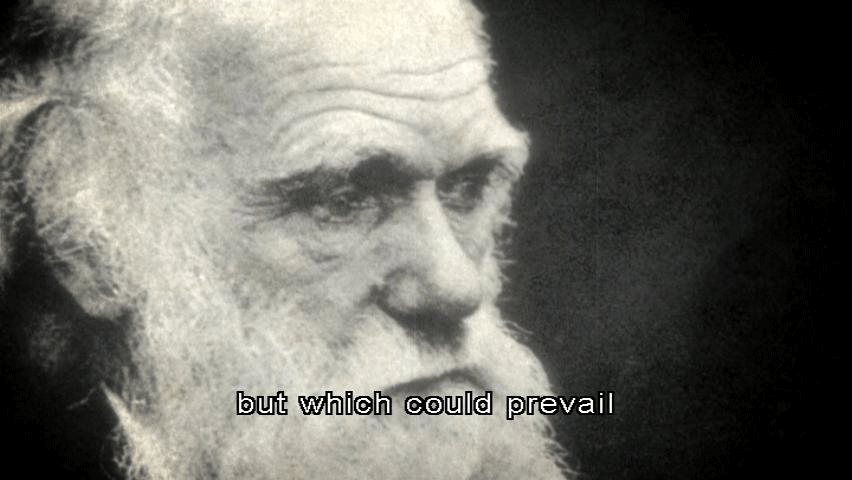
but which could prevail
|