|
CAPPADOCIA |
|
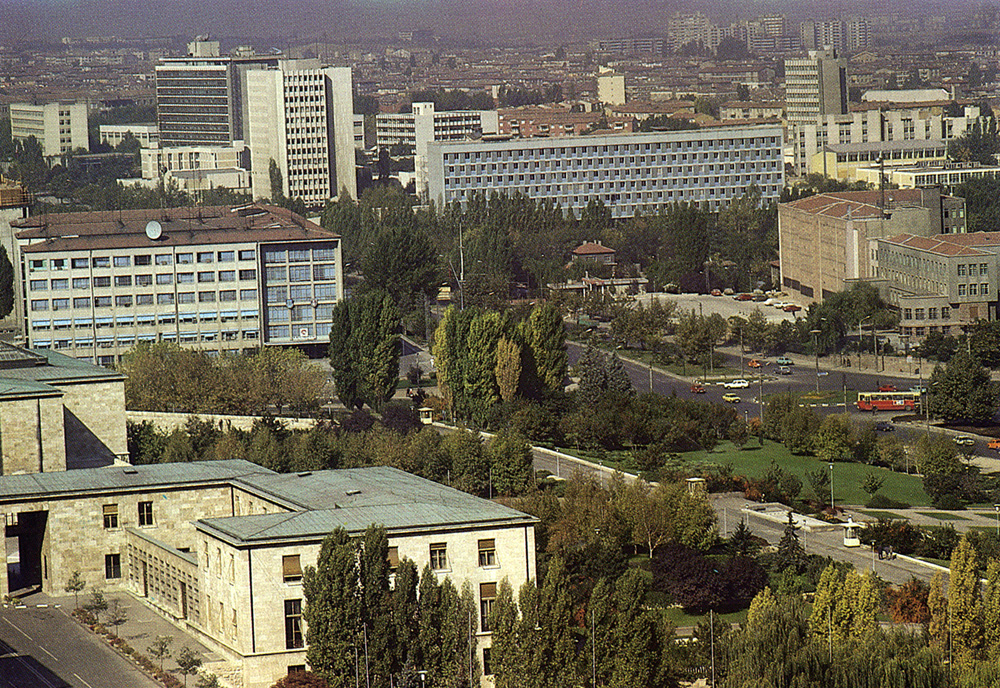
ANKARA On April 23rd 1920, Mustafa Kemal Ataturk convened the first Turkish National Assembly in Ankara. Since October 14th 1923, Ankara has been the capital of the Turkish Republic. Ankara was established neither at the sea, nor on an important river. In those days, the distinguishing feature about Ankara was its being in the heart of Anatolia. In about six to ten years, it developed from a small unimportant village to a metropolis with a population of 3,5 million. Today the city has a European atmosphere with its broad boulevards, squares, parks and modern buildings. All state institutions such as the educational system administration, state opera, ministries and parliament are concentrated here. In Ankara there is a dry climate with average temperatures of 23C in summer and -8C in winter. The city is famous in Europe for its beautiful Angora cats and its high quality mohair obtained from Angora goats.
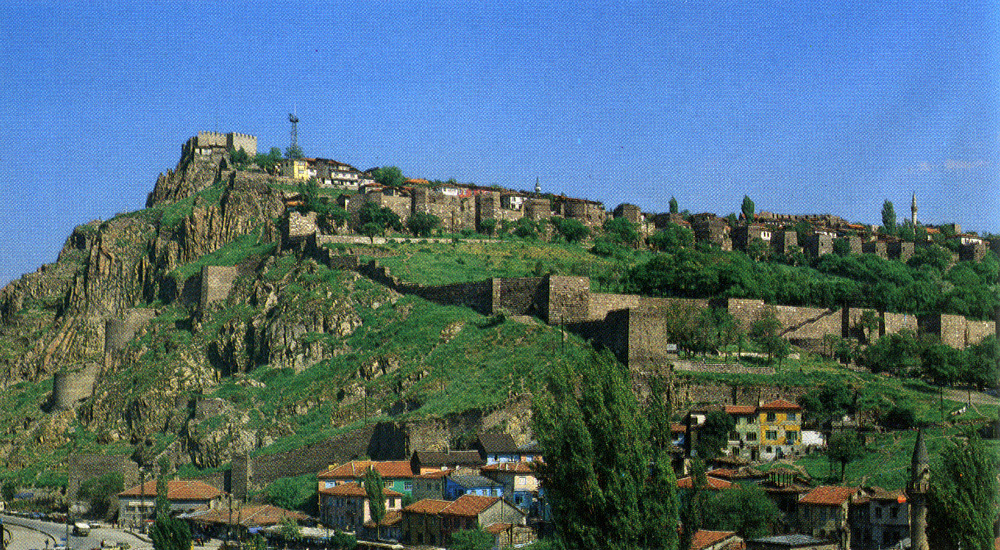
The old city of Ankara History According to excavation findings, the citadel hill was inhabited in the Stone Age. After hte fall of the Hittite Empire in 1200 B.C. Ankara fell into the hands of the Phrygians, who established a big city to the south of the hill. When Alexander the Great marched to the south through Asia Minor, cutting the famous knot in Gordion, he also captured Ankara. After his death, the city came under the authority of the Seleucids. In 278 B.C. the Celts (Galatians) came to Anatolia and made Ankara their capital, calling it Galatia. In 25 B.C. Galatia was a Roman province. With the Romans, the best period of this old settlement began. In this age also, the Temple of Augustus, the thermal baths and the column of Julian were built. Under the rule of the Byzantines Ankara became a metropolis. In the years 314 and 358 A.D. councils were formed here. In the 6th and 7th century A.D. the sovereignty of the citiy changed between the Persians and the Arabs. Later, Crusaders captured the city. In 1071 the city passed into the hands of the Seljuks, and later on the city was captured by Ottoman Turks in 1360. Places worth seeing The citadel This dates back to the time of Emperor Augustus (1st century A.D.). It was restored many times in later centuries. Ancient remains and inscriptioins are still recognizable on the walls. There are residential premises in the citadel. The Alaeddin mosque is easy to see in the narrow streets. Museum of Anatolian Civilisations
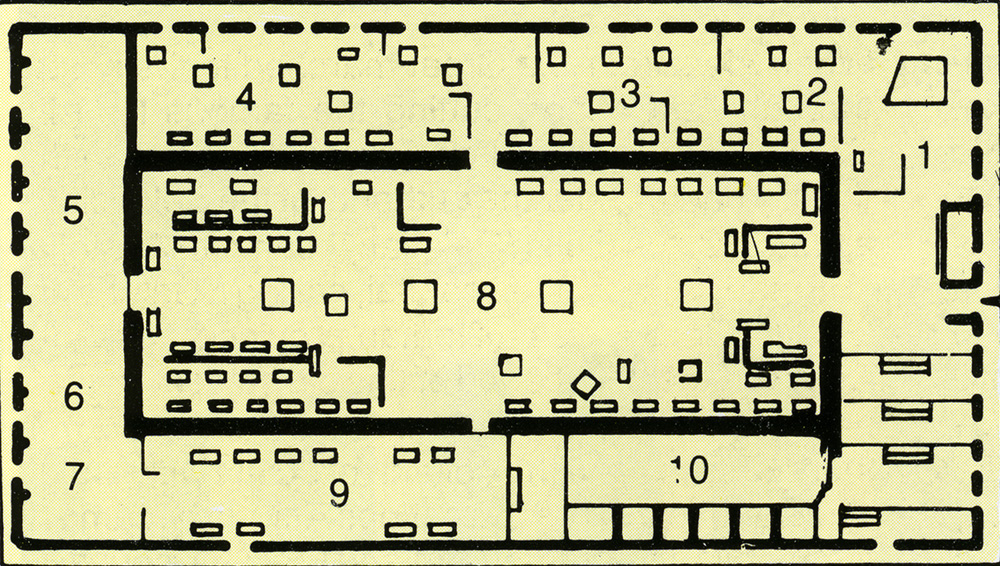
Museum of Anatolian Civilisations: 1. Early Stone period (Palaeolithic); 2. Late Stone period (Neolithic); 3. Chalcolithic; 4. Bronze Age; 5. Assyrian colonies; 6. Old-Hittit Age; 7. Hittit-Empire Age; 8. Neo-Hittit Age; 9. Phrygia; 10. Classic period The museum consists of valuable objects from sites discovered in Anatolia. The collection in this museum is the most important one in Ankara from the point of view of its historical and art-historical exhibits. It is a unique museum, having a rich collection of Hittite exhibits. This world famous museum is in a restored bazaar building (Mustafa Pasa Bedesten) dating from the 15th century, and in Kursunlu Han (khan). The works of art are exhibited in two sections: In the middle hall, items in stone can be found, and in the side halls are small finds exhibited in chronological order. Our tour starts with the display of exhibits from the Early Stone Age (Palaeolithic), situated on the right of the entrance. Here, finds from the cave of Karain near Antalya, including the cranial bones of Neanderthal human beings and others, can be seen. We continue with an exhibition from the later Stone Age (Neolithic), with human and bull head reliefs, mural paintings and finds from the oldest settlements of Anatolia (Hacilar and Catalhoyuk 6th-5th century B.C.). Apart from these, there are finds from the earlier Bronze Age (3000 B.C.-1950 B.C.), grave finds from emperors and princes' graves of West and Central Anatolia, old Assyrian cuneiform writing, seal cylinders and gold jewels from Kadesh (Kultepe). In the next hall are Hittite works from Alacahoyuk, Bogazkoy (Hattusa) and Corum. The important works in the following rooms are from the Lydians, Urartians, and Phrygians. Our tour ends here with models of Classical Age altars. The middle hall is crowned by ten domes resting on four pillars. The big Hittite sculptures of their greatest era and the late Hittite period (1450 B.C.-700 B.C.) are intersting. Other works to see are the orthostat reliefs from palaces and temples, the high relief of the weather god Teshub from the royal gate in Hattusa, the charioteer, and the goddess Cybele on a lion, are the most beautiful examples of Hittite art.
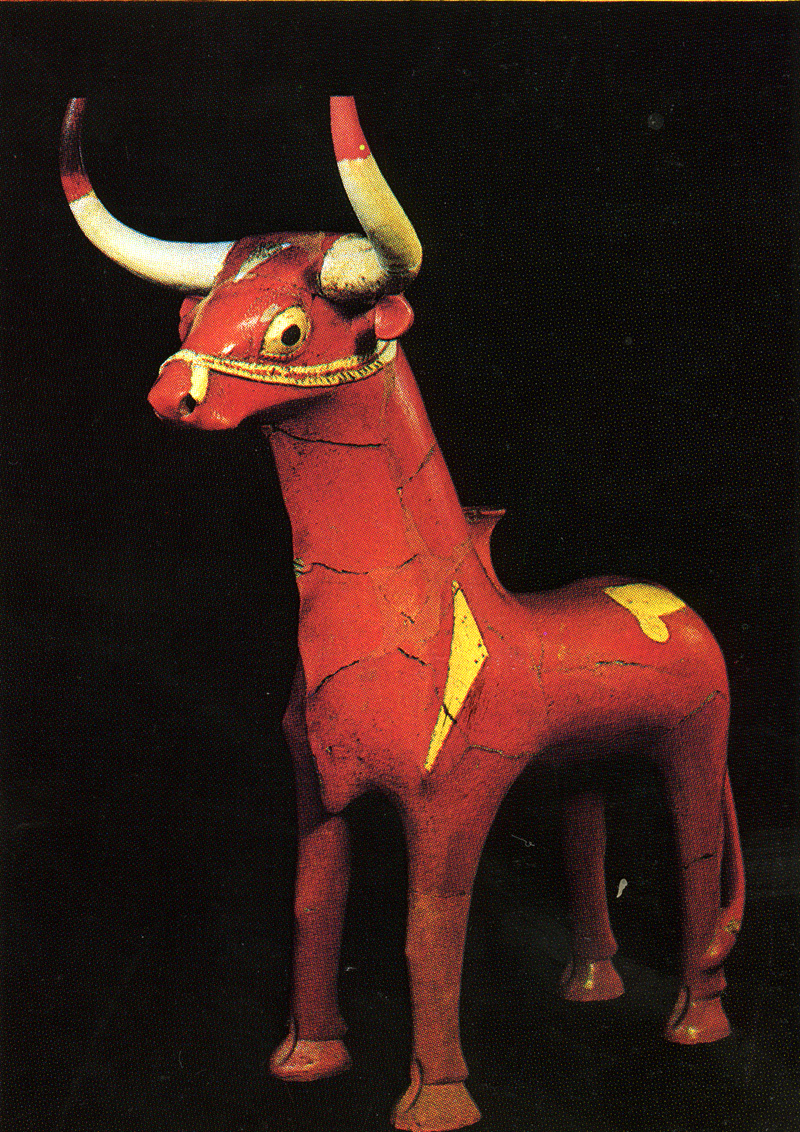
Pot in the form of an animal (museum) Mausoleum of Ataturk (Anit Kabir)
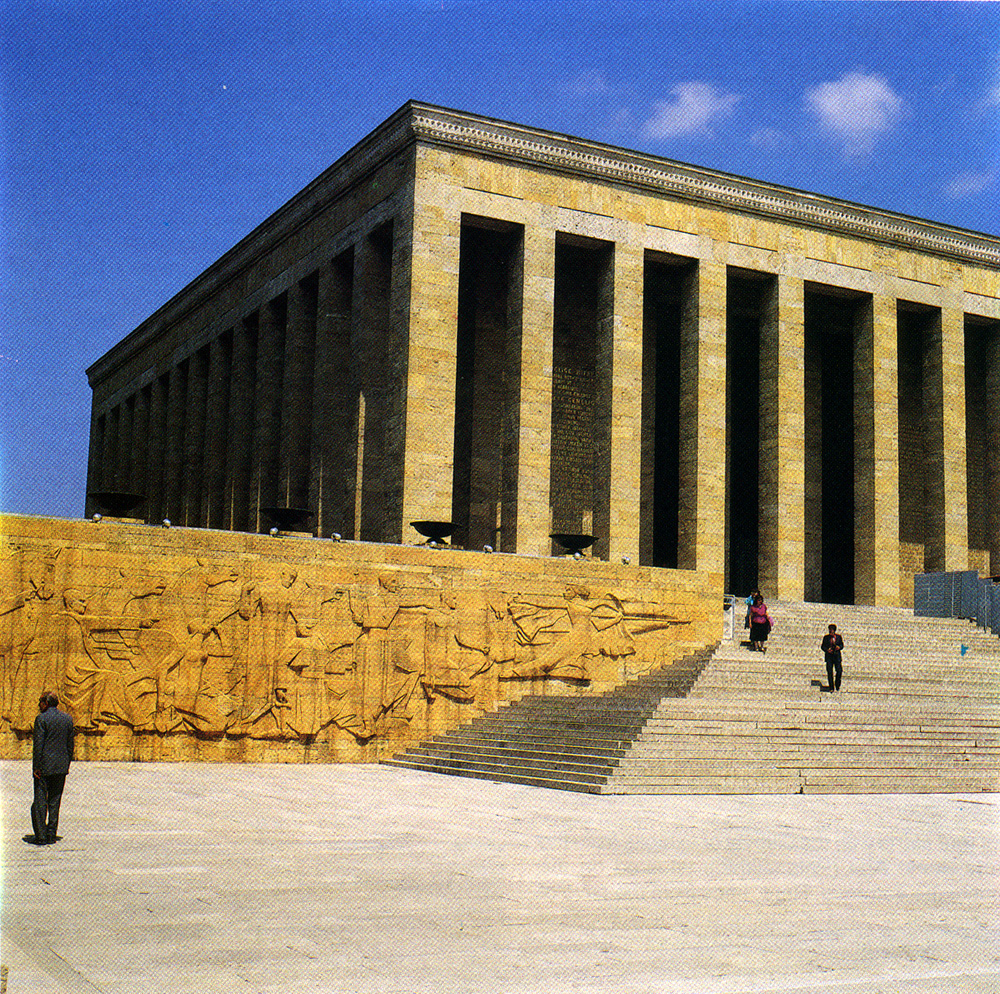
Mausoleum of Ataturk The construction of this colossal mausoleum was begun in 1944 and it was completed in 1953. The designer of the mausoleum is the Turkish architect Emin Onat. A 260m long street leads to the courtyard. It is planted with shady trees brought from various regions of the country and from foreign countries. It is also flanked with lions sculpted in neo-Hittite style. The stairs on the left of this courtyard lead into the tomb with the sarcophagus of Ataturk. The mausoleum is surrounded by an arcade with square columns. The walls of the hall are covered with red marble plates and the ceiling has a gold mosaic with Turkish ornamentation. On the right facade of the mausoleum is an extract taken from the famous speech given by Ataturk on the occasion of the 10th anniversary of the republic. On the left hand side we read his message to the youth of the nation. On the opposite side of the mausoleum is the sarchophagus of Ismet Inonu (1884-1974), the second president of turkey, and the closest military friend of Ataturk. From the mausoleum site there is a beautiful panorama of Ankara. The Ethnographical Museum This was built in 1925 in Ottoman style. Between 1938-1953 the mortal frame of Mustafa Kemal Ataturk rested here. When his mausoleum was finished, he was carried there on November 10th 1953, on the fifteenth year of his death. The museum consists of old Turkish art objects such as national costumes, textiles, copperwork, wood-engraving, and embroidery. In the courtyard beside the tombs there are stone sarcophagi from the Seljuk period. The Augustus Temple (Temple of Augustus and Rome)
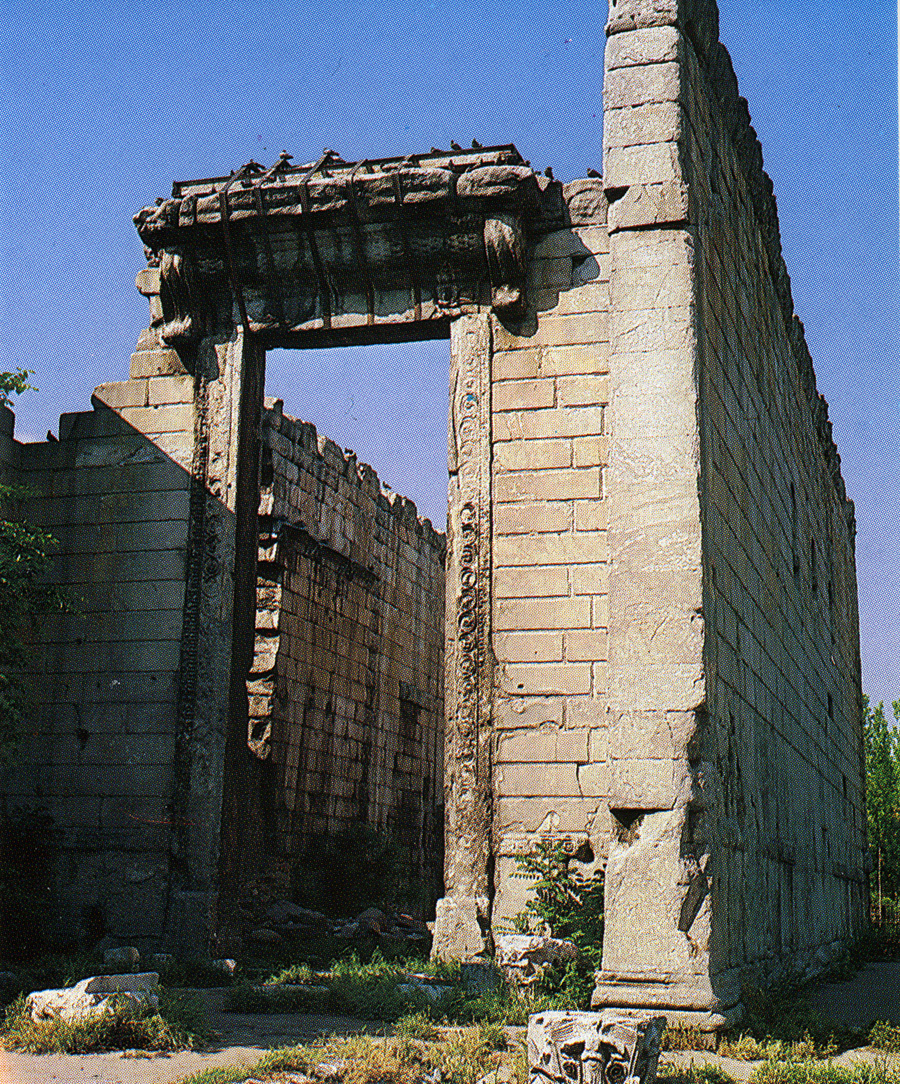
Temple of August This stands directly near Haci Bayram Mosque. This ancient temple now in ruins, is from the 2nd century B.C. and it was dedicated to the Phrygian divinity called Men. On the inner walls of the hall an engraving of the "Testament of Augustus" carved in stone can be seen. The inscription, written in Greek and Latin, gives information about the achievements of Emperor Augustus. The Roman Bath (Roma hamami) This dates from the 3rd century B.C. and gives us a good idea about the installation of old Roman baths. There was an underground heating system, where the hot water used to flow under the floor. You can still see the remains of pipes and channels. Haci Bayram Mosque (Haci Bayram camii)
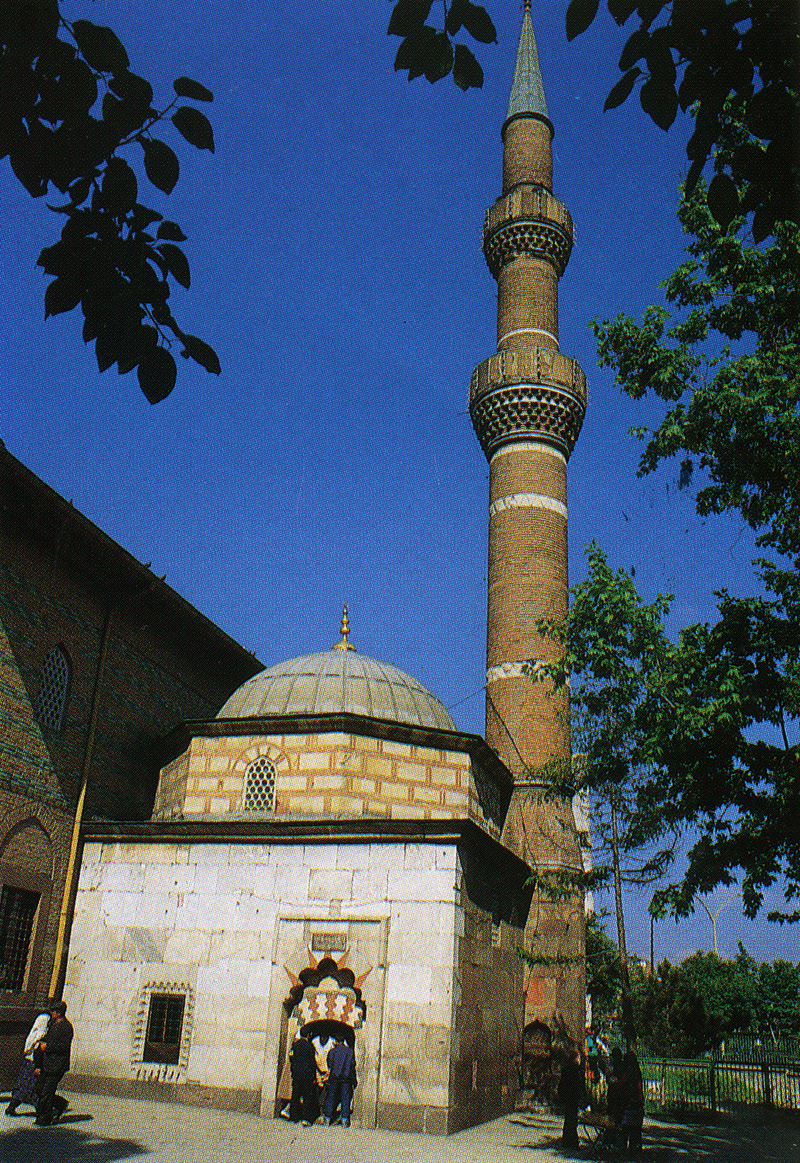
Haci Bayram Mosque This is situated near the ruins of the Augustus temple. It was built in the 15th century in honour of the city saint of Ankara, Haci Bayram Veli. The mausoleum (turbe) of Haci Bayram This was built next to the mosque. It is a place of pilgrimage for Moslems. Arslanhane Mosque (Arslanhane camii) This was built in 1290. It is also called Ahiserafettin camii. It takes its name from the marble lions in its courtyard. During the construction of the mosque, numerous Roman and Byzantine columns and capitals were used. The Column of Julian This is 15m high and dates from the 4th century A.D. It is known popularly as "Belkis minaret" or the "Column of Queen Saba." It has small inscriptions. The column was erected next to the Augustus temple.
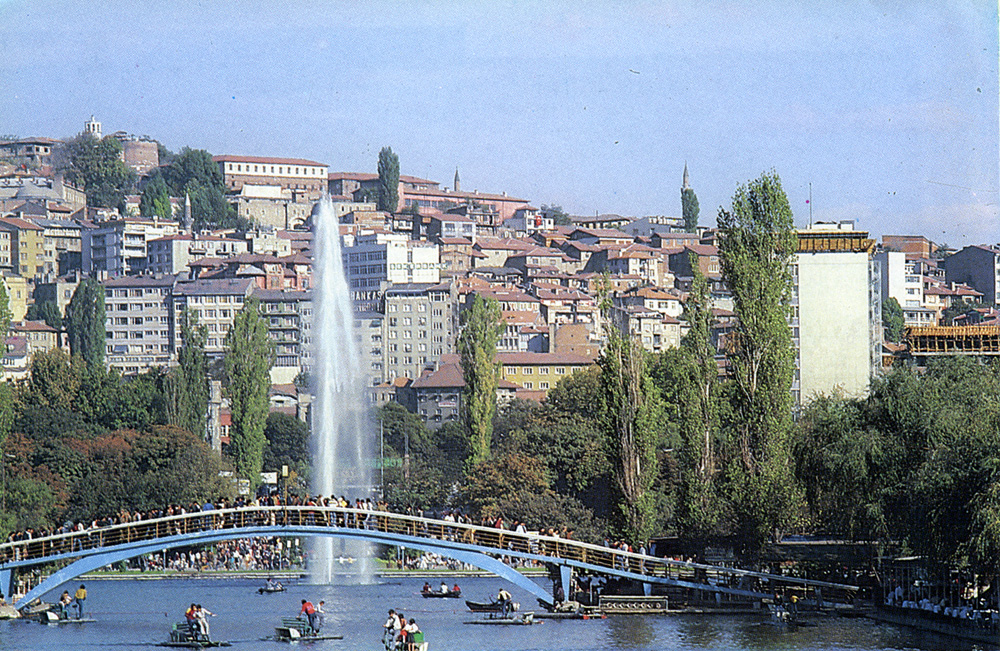
Genclik Park
Modern Ankara |