|
NATIONAL SECURITY STUDY MEMORANDUM 200 (NSSM 200) |
||||||||||||||||||||||||||||||||||||||||||||||||||||||||||||||||||||||||||||||||||||||||||||||||||||||||||||||||||||||||||||||||||||||||||||||||||||||||||||||||||||||||||||||||||||||||||||||||||||||||||||||||||||||||||||||||||||||||||||||||||||||||||||||||||||||||||||||||||||||||||||||||||||||||||||||||||||||||||||||||||||||||||||||||||||||||||||||||||||||||||||||||||||||||||||||||||||||||||||||||||||||
|
CHAPTER I - WORLD DEMOGRAPHIC TRENDS INTRODUCTION The present world population growth is unique. Rates of increase are much higher than in earlier centuries, they are more widespread, and have a greater effect on economic life, social justice, and -- quite likely -- on public order and political stability. The significance of population growth is enhanced because it comes at a time when the absolute size and rate of increase of the global economy, need for agricultural land, demand for and consumption of resources including water, production of wastes and pollution have also escalated to historically unique levels. Factors that only a short time ago were considered separately now have interlocking relationships, inter-dependence in a literal sense. The changes are not only quantitatively greater than in the past but qualitatively different. The growing burden is not only on resources but on administrative and social institutions as well. Population growth is, of course, only one of the important factors in this new, highly integrated tangle of relationships. However, it differs from the others because it is a determinant of the demand sector while others relate to output and supply. (Population growth also contributes to supply through provision of manpower; in most developing countries, however, the problem is not a lack of but a surfeit of hands.) It is, therefore, most pervasive, affecting what needs to be done in regard to other factors. Whether other problems can be solved depends, in varying degrees, on the extent to which rapid population growth and other population variables can be brought under control. HIGHLIGHTS OF CURRENT DEMOGRAPHIC TRENDS Since 1950, world population has been undergoing unprecedented growth. This growth has four prominent features:
For most of man's history, world population grew very slowly. At the rate of growth estimated for the first 18 centuries A.D., it required more than 1,000 years for world population to double in size. With the beginnings of the industrial revolution and of modern medicine and sanitation over two hundred years ago, population growth rates began to accelerate. At the current growth rate (1.9 percent) world population will double in 37 years.
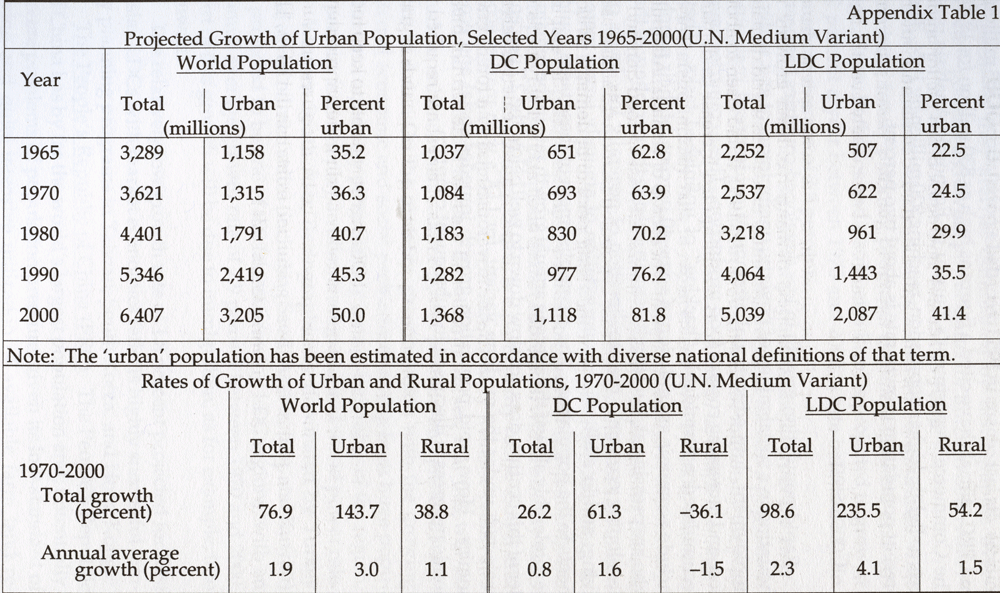
In the developed countries of Europe, growth rates in the last century rarely exceeded 1.0-1.2 percent per year, almost never 1.5 percent. Death rates were much higher than in most LDCs today. In North America where growth rates were higher, immigration made a significant contribution. In nearly every country of Europe, growth rates are now below 1 percent, in many below 0.5 percent. The natural growth rate (births minus deaths) in the United States is less than 0.6 percent. Including immigration (the world's highest) it is less than 0.7 percent. In less developed countries growth rates average about 2.4 percent. For the People's Republic of China, with a massive, enforced birth control program, the growth rate is estimated at under 2 percent. India's is variously estimated from 2.2 percent, Brazil at 2.8 percent, Mexico at 3.4 percent, and Latin America at about 2.9 percent. African countries, with high birth as well as high death rates, average 2.6 percent; this growth rate will increase as death rates go down. The world's population is now about 3.9 billion; 1.1 billion in the developed countries (30 percent) and 2.8 billion in the less developed countries (70 percent). In 1950, only 28 percent of the world's population or 692 million, lived in urban localities. Between 1950 and 1970, urban population expanded at a rate twice as rapid as the rate of growth of total population. In 1970, urban population increased to 36 percent of world total and numbered 1.3 billion. By 2000, according to the UN's medium variant projection, 3.2 billion (about half of the total) of world inhabitants will live in cities and towns. In developed countries, the urban population varies from 45 to 85 percent; in LDCs, it varies from close to zero in some African states to nearly 100 percent in Hong Kong and Singapore. In LDCs, urban population is projected to more than triple in the remainder of this century, from 622 million in 1970 to 2,087 in 2000. Its proportion in total LDC population will thus increase from 25 percent in 1970 to 41 percent in 2000. This implies that by the end of this century LDCs will reach half the level of urbanization projected for DCs (82 percent) (See Table 1).
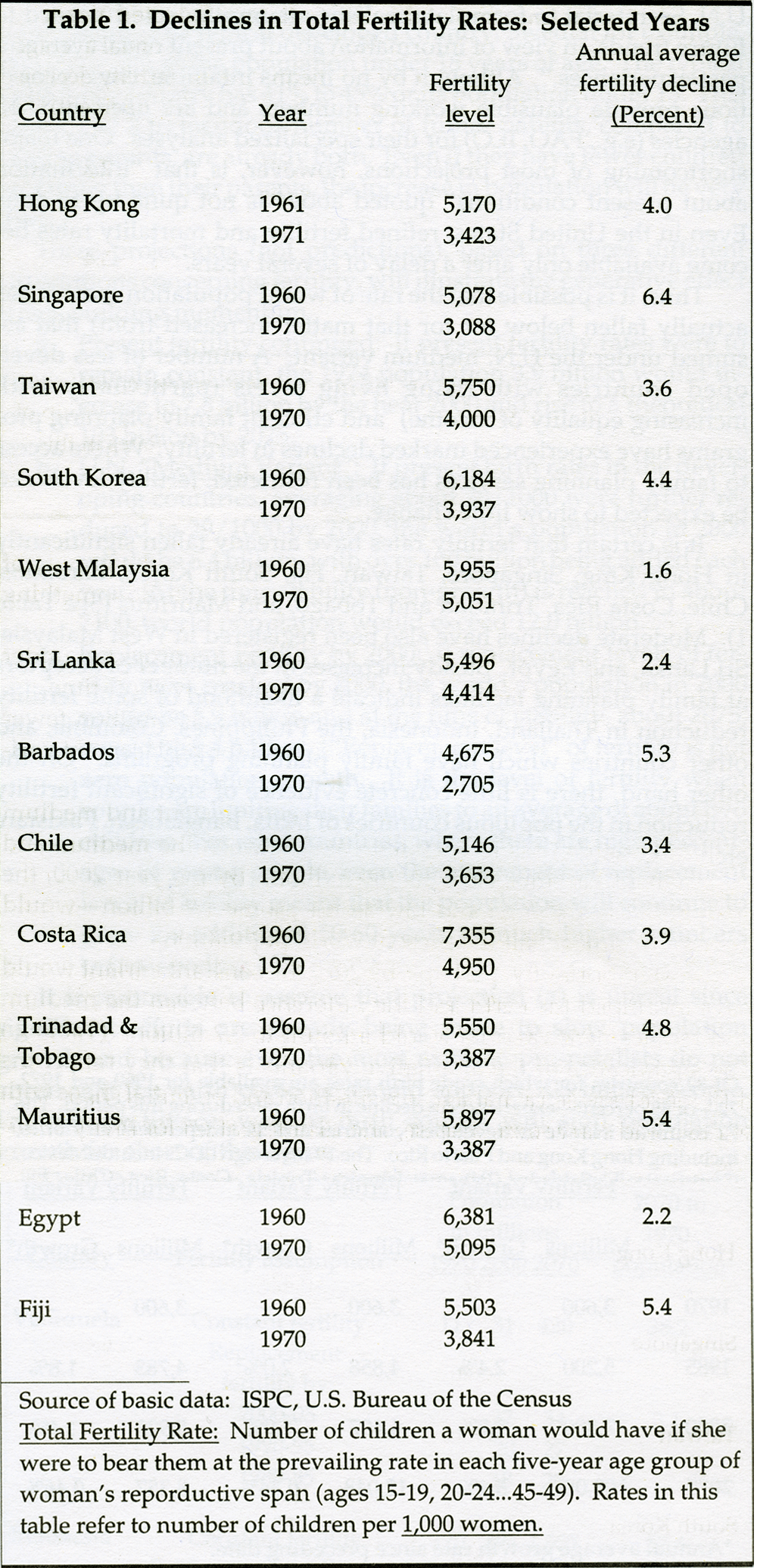
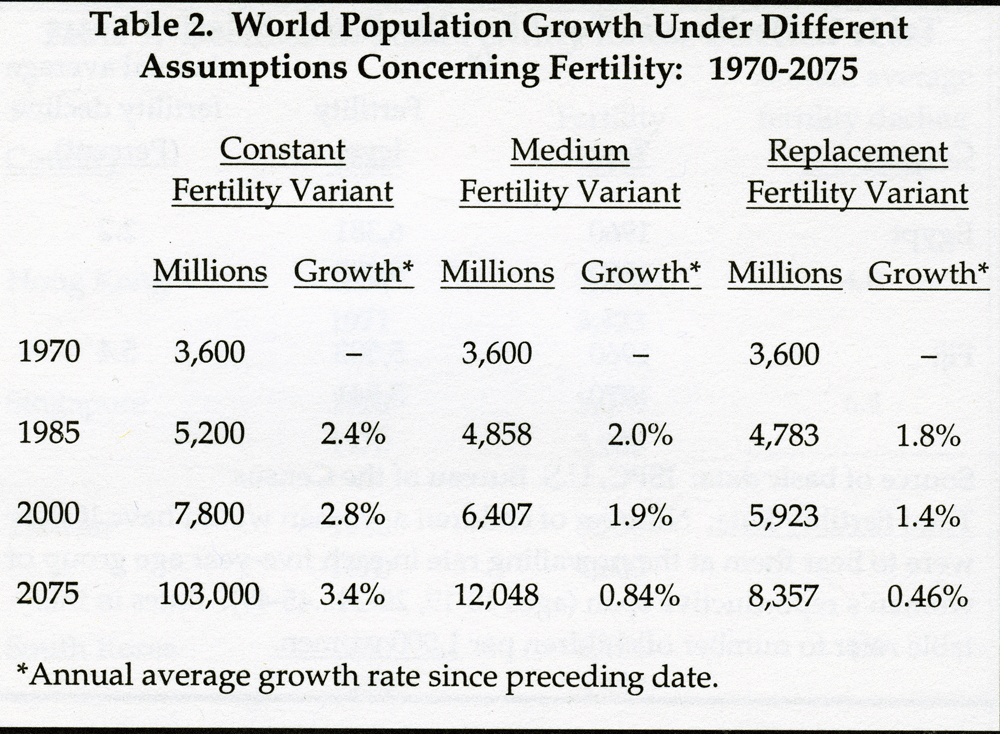
The enormous built-in momentum of population growth in the less developed countries (and to a degree in the developed countries) is, if possible, even more important and ominous than current population size and rates of growth. Unlike a conventional explosion, population growth provides a continuing chain reaction. This momentum springs from (1) high fertility levels of LDC populations and (2) the very high percentage of maturing young people in populations. The typical developed country, Sweden for example, may have 25% of the population under 15 years of age. The typical developing country has 41% to 45% or its population under 15. This means that a tremendous number of future parents, compared to existing parents, are already born. Even if they have fewer children per family than their parents, the increase in population will be very great. Three projections (not predictions), based on three different assumptions concerning fertility, will illustrate the generative effect of this building momentum. a. Present fertility continued: If present fertility rates were to remain constant, the 1974 population 3.9 billion would increase to 7.8 billion by the hear 2000 and rise to a theoretical 103 billion by 2075. b. U.N. "Medium Variant": If present birth rates in the developing countries, averaging about 38/1000 were further reduced to 29/1000 by 2000, the world's population in 2000 would be 6.4 billion, with over 100 million being added each year. At the time stability (non-growth) is reached in about 2100, world population would exceed 12.0 billion. c. Replacement Fertility by 2000: If replacement levels of fertility were reached by 2000, the world's population in 2000 would be 5.9 billion and at the time of stability, about 2075, would be 8.4 billion. ("Replacement level" of fertility is not zero population growth. It is the level of fertility when couples are limiting their families to an average of about two children. For most countries, where there are high percentages of young people, even the attainment of replacement levels of fertility means that the population will continue to grow for additional 50-60 years to much higher numbers before leveling off.) It is reasonable to assume that projection (a) is unreal since significant efforts are already being made to slow population growth and because even the most extreme pro-natalists do not argue that the earth could or should support 103 billion people. Famine, pestilence, war, or birth control will stop population growth far short of this figure. The U.N. medium variant (projection (b)) has been described in a publication of the U.N. Population Division as "a synthesis of the results of efforts by demographers of the various countries and the U.N. Secretariat to formulate realistic assumptions with regard to future trends, in view of information about present conditions and past experiences." Although by no means infallible, these projections provide plausible working numbers and are used by U.N. agencies (e.g., FAO, ILO) for their specialized analyses. One major shortcoming of most projections, however, is that "information about present conditions" quoted above is not quite up-to-date. Even in the United States, refined fertility and mortality rates become available only after a delay of several years. Thus, it is possible that the rate of world population growth has actually fallen below (or for that matter increased from) that assumed under the U.N. medium variant. A number of less developed countries with rising living levels (particularly with increasing equality of income) and efficient family planning programs have experienced marked declines in fertility. Where access to family planning services has been restricted, fertility levels can be expected to show little change. It is certain that fertility rates have already fallen significantly in Hong King, Singapore, Taiwan, Fiji, South Korea, Barbados, Chile, Costa Rica, Trinidad and Tobago, and Mauritius (See Table 1). Moderate declines have also been registered in West Malaysia, Sri Lanka, and Egypt. Steady increases in the number of acceptors at family planning facilities indicate a likelihood of some fertility reduction in Thailand, Indonesia, the Philippines, Colombia, and other countries which have family planning programs. On the other hand, there is little concrete evidence of significant fertility reduction in the populous countries of India, Bangladesh, Pakistan, etc. [1]
Projection (c) is attainable if countries recognize the gravity of their population situation and make a serious effort to do something about it. The differences in the size of total population projected under the three variants become substantial in a relatively short time. By 1985, the medium variant projects some 342 million fewer people than the constant fertility variant and the replacement variant is 75 million lower than the medium variant. By the year 2000 the difference between constant and medium fertility variants rises to 1.4 billion and between the medium and replacement variants, close to 500 million. By the year 2000, the span between the high and low series -- some 1.9 billion -- would amount to almost half the present world population. Most importantly, perhaps, by 2075 the constant variant would have swamped the earth and the difference between the medium and replacement variants would amount to 3.7 billion. (Table 2.) The significance of the alternative variants is that they reflect the difference between a manageable situation and potential chaos with widespread starvation, disease, and disintegration for many countries.
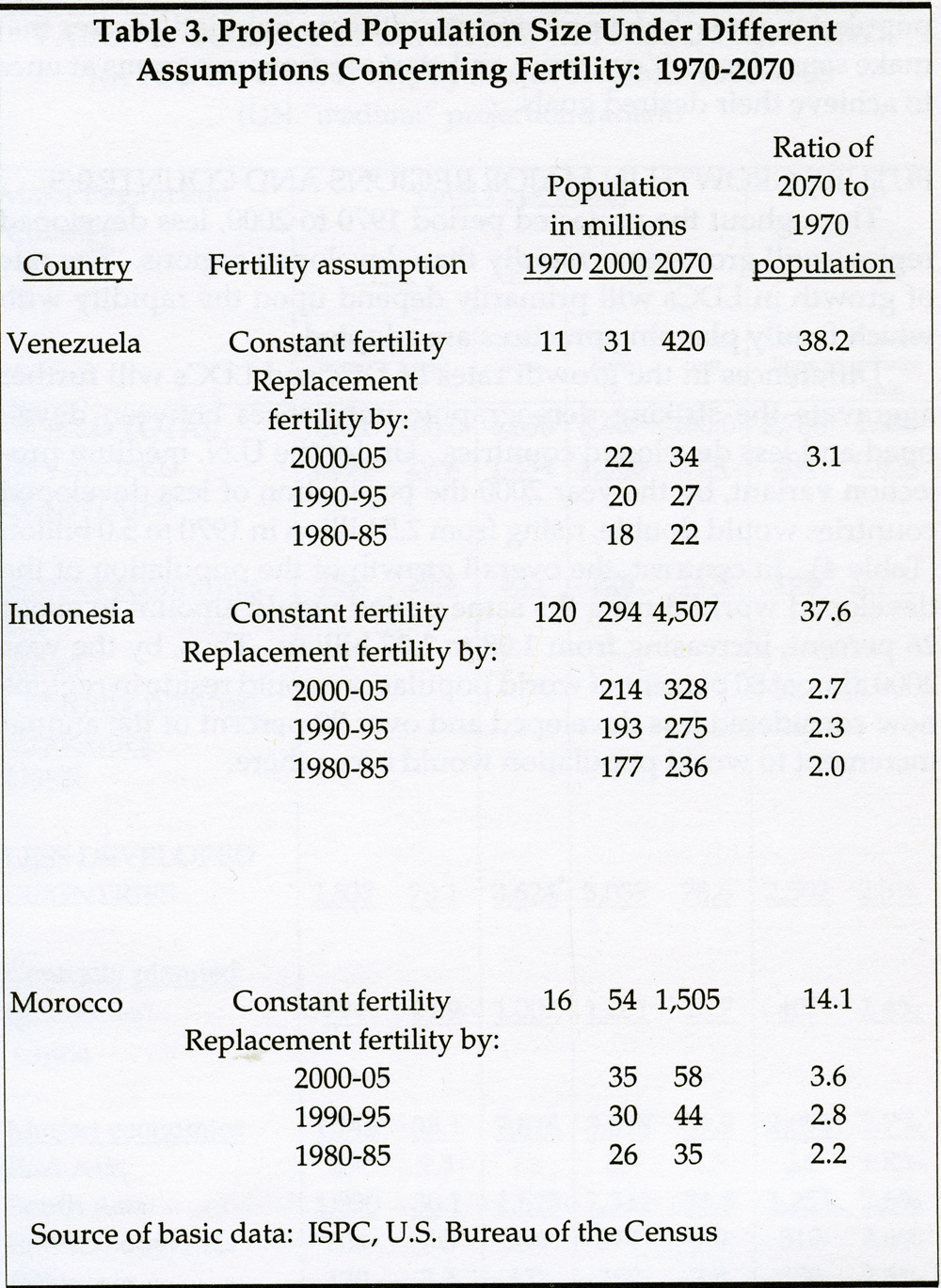
Furthermore, after replacement level fertility is reached, family size need not remain at an average of two children per family. Once this level is attained, it is possible that fertility will continue to decline below replacement level. This would hasten the time when a stationary population is reached and would increase the difference between the projection variants. The great momentum of population growth can be seen even more clearly in the case of a single country -- for example, Mexico. Its 1970 population was 50 million. If its 1965-1970 fertility were to continue, Mexico's population in 2070 would theoretically number 2.2 billion. If its present average of 6.1 children per family could be reduced to an average of about 2 (replacement level fertility) by 1980-85, its population would continue to grow for about sixty years to 110 million. If the two-child average could be reached by 1990-95, the population would stabilize in sixty more years at about 22 percent higher -- 134 million. If the two-child average cannot be reached for 30 years (by 2000-05), the population at stabilization would grow by an additional 24 percent to 167 million. Similar illustrations for other countries are given below. As Table 3. indicates, alternative rates of fertility decline would have significant impact on the size of a country's population by 2000. They would make enormous differences in the sizes of the stabilized populations, attained some 60 to 70 years after replacement level fertility is reached. Therefore, it is of the utmost urgency that governments now recognize the facts and implications of population growth determining the ultimate population sizes that make sense for their countries and start vigorous programs at once to achieve their desired goals. FUTURE GROWTH IN MAJOR REGIONS AND COUNTRIES Throughout the projected period 1970 to 2000, less developed regions will grow more rapidly than developed regions. The rate of growth in LDCs will primarily depend upon the rapidity with which family planning practices are adopted.
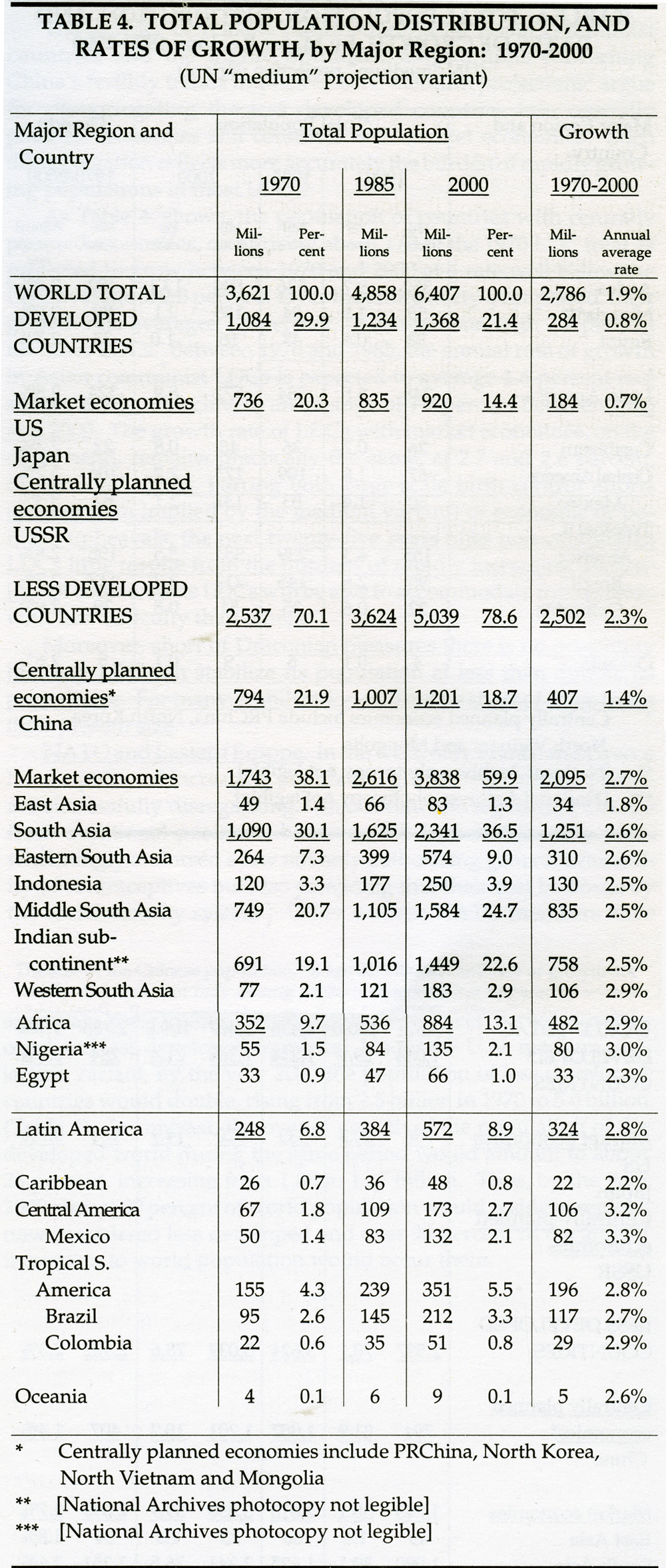
Differences in the growth rates of DCs and LDCs will further aggravate the striking demographic imbalances between developed and less developed countries. Under the U.N. medium projection variant, by the year 2000 the population of less developed countries would double, rising from 2.5 billion in 1970 to 5.0 billion (Table 4). In contrast, the overall growth of the population of the developed world during the same period would amount to about 26 percent, increasing from 1.08 to 1.37 billion. Thus, by the year 2000 almost 80 percent of world population would reside in regions now considered less developed and over 90 percent of the annual increment to world population would occur there. The paucity of reliable information on all Asian communist countries and the highly optimistic assumptions concerning China's fertility trends implicit in U.N. medium projections [2] argue for disaggregating the less developed countries into centrally planned economies and countries with market economies. Such disaggregation reflects more accurately the burden of rapidly growing populations in most LDCs. As Table 4. shows, the population of countries with centrally planned economies, comprising about 1/3 of the 1970 LDC total, is projected to grow between 1970 and 2000 at a rate well below the LDC average of 2.3 percent. Over the entire thirty-year period, their growth rate averages 1.4 percent, in comparison with 2.7 percent for other LDCs. Between 1970 and 1985, the annual rate of growth in Asian communist LDCs is expected to average 1.6 percent and subsequently to decline to an average of 1.2 percent between 1985 and 2000. The growth rate of LDCs with market economies, on the other hand, remains practically the same, at 2.7 and 2.6 percent, respectively. Thus, barring both large-scale birth control efforts (greater than implied by the medium variant) or economic or political upheavals, the next twenty-five years offer non-communist LDCs little respite from the burdens of rapidly increasing humanity. Of course, some LDCs will be able to accommodate this increase with less difficulty than others.
Moreover, short of Draconian measures there is no possibility that any LDC can stabilize its population at less than double its present size. For many, stabilization will not be short of three times their present size. NATO and Eastern Europe. In the west, only France and Greece have a policy of increasing population growth -- which the people are successfully disregarding. (In a recent and significant change from traditional positions, however, the French Assembly overwhelmingly endorsed a law not only authorizing general availability of contraceptives but also providing that their cost be borne by the social security system.) Other western NATO members have no policies. [3] Most provide some or substantial family planning services. All appear headed toward lower growth rates. In two NATO member countries (West Germany and Luxembourg), annual numbers of deaths already exceed births, yielding a negative natural growth rate. Romania, Hungary, Bulgaria, and Czechoslovakia have active policies to increase their population growth rates -- despite the reluctance of their people to have larger families. Within the USSR, fertility rates in RSFSR and the republics of Ukraine, Latvia, and Estonia are below replacement level. This situation has prevailed at least since 1969-1970 and, if continued, will eventually lead to negative population growth in these republics. In the United States, average fertility also fell below replacement level in the past two years (1972 and 1973). There is a striking difference, however, in the attitudes toward this demographic development in the two countries. While in the United States the possibility of a stabilized (non-growing) population is generally viewed with favor, in the USSR there is perceptible concern over the low fertility of Slavs and Balts (mostly by Slavs and Balts). The Soviet government, by all indications, is studying the feasibility of increasing their sagging birth rates. The entire matter of fertility-bolstering policies is circumscribed by the relatively high costs of increasing fertility (mainly through increased outlays for consumption goods and services) and the need to avoid the appearance of ethnic discrimination between rapidly and slowly growing nationalities. U.N. medium projections to the year 2000 show no significant changes in the relative demographic position of the western alliance countries as against eastern Europe and the USSR. The population of the Warsaw Pact countries will remain at 65 percent of the populations of NATO member states. If Turkey is excluded, the Warsaw Pact proportion rises somewhat from 70 percent in 1970 to 73 percent by 2000. This change is not of an order of magnitude that in itself will have important implications for east-west power relations. (Future growth of manpower in NATO and Warsaw Pact nations has not been examined in this Memorandum.) Of greater potential political and strategic significance are prospective changes in the populations of less developed regions both among themselves and in relation to developed countries. Africa. Assessment of future demographic trends in Africa is severely impeded by lack of reliable base data on the size, composition, fertility and mortality, and migration of much of the continent's population. With this important limitation in mind, the population of Africa is projected to increase from 352 million in 1970 to 834 million in 2000, an increase of almost 2.5 times. In most African countries, population growth rates are likely to increase appreciably before they begin to decline. Rapid population expansion may be particularly burdensome to the "least developed" among Africa's LDCs including -- according to the U.N. classification -- Ethiopia, Sudan, Tanzania, Uganda, Upper Volta, Mali, Malawi, Niger, Burundi, Guinea, Chad, Rwanda, Somalia, Dahomey, Lesotho, and Botswana. As a group, they numbered 104 million in 1970 and are projected to grow at an average rate of 3.0 percent a year, to some 250 million in 2000. This rate of growth is based on the assumption of significant reductions in mortality. It is questionable, however, whether economic and social conditions in the foreseeable future will permit reductions in mortality required to produce a 3 percent growth rate. Consequently, the population of the "least developed" of Africa's LDCs may fall short of the 250 million figure in 2000. African countries endowed with rich oil and other natural resources may be in a better economic position to cope with population expansion. Nigeria falls into this category. Already the most populous country on the continent, with an estimated 55 million people in 1970 (see footnote to Table 5), Nigeria's population by the end of this century is projected to number 135 million. This suggests a growing political and strategic role for Nigeria, at least in Africa south of the Sahara. In North Africa, Egypt's population of 33 million in 1970 is projected to double by 2000. The large and increasing size of Egypt's population is, and will remain for many years, an important consideration in the formulation of many foreign and domestic policies not only of Egypt but also of neighboring countries. Latin America. Rapid population growth is projected for tropical South American which includes Brazil, Colombia, Peru, Venezuela, Ecuador and Bolivia. Brazil, with a current population of over 100 million, clearly dominates the continent demographically; by the end of this century, its population is projected to reach the 1974 U.S. level of about 212 million people. Rapid economic growth prospects -- if they are not diminished by demographic overgrowth -- portend a growing power status for Brazil in Latin America and on the world scene over the next 25 years. The Caribbean which includes a number of countries with promising family planning programs (Jamaica, Trinidad and Tobago, Cuba, Barbados and also Puerto Rico) is projected to grow at 2.2 percent a year between 1970 and 2000, a rate below the Latin American average of 2.8 percent. Perhaps the most significant population trend from the viewpoint of the United States is the prospect that Mexico's population will increase from 50 million in 1970 to over 130 million by the year 2000. Even under most optimistic conditions, in which the country's average fertility falls to replacement level by 2000, Mexico's population is likely to exceed 100 million by the end of this century. South Asia. Somewhat slower rates are expected for Eastern and Middle South Asia whose combined population of 1.03 billion in 1970 is projected to more than double by 2000 to 2.20 billion. In the face of continued rapid population growth (2.5 percent), the prospects for the populous Indian subregion, which already faces staggering economic problems, are particularly bleak. South and Southeast Asia's population will substantially increase relative to mainland China; it appears doubtful, however, that this will do much to enhance their relative power position and political influence in Asia. On the contrary, preoccupation with the growing internal economic and social problems resulting from huge population increases may progressively reduce the ability of the region, especially India, to play an effective regional and world power role. Western South Asia, demographically dominated by Turkey and seven oil-rich states (including Saudi Arabia, Iraq, and Kuwait) is projected to be one of the fastest growing LDC regions, with an annual average growth rate of 2.9 percent between 1970 and 2000. Part of this growth will be due to immigration, as for example, into Kuwait. The relatively low growth rate of 1.8 percent projected for East Asian LDCs with market economics reflects highly successful family planning programs in Taiwan, South Korea, and Hong Kong. The People's Republic of China (PRC). The People's Republic of China has by far the world's largest population and, potentially, severe problems of population pressure, given its low standard of living and quite intensive utilization of available farm land resources. Its last census in 1953 recorded a population of 583 million, and PRC officials have cited a figure as high as 830 million for 1970. The Commerce Department's Bureau of Economic Analysis projects a slightly higher population, reaching 920 million by 1974. The present population growth rate is about two percent. Conclusion Rapid population growth in less developed countries has been mounting in a social milieu of poverty, unemployment and underemployment, low educational attainment, widespread malnutrition, and increasing costs of food production. These countries have accumulated a formidable "backlog" of unfinished tasks. They include economic assimilation of some 40 percent of their people who are pressing at, but largely remain outside the periphery of the developing economy; the amelioration of generally low levels of living; and in addition, accommodation of annually larger increments to the population. The accomplishment of these tasks could be intolerably slow if the average annual growth rate in the remainder of this century does not slow down to well below the 2.7 percent projected, under the medium variant, for LDCs with market economics. How rapid population growth impedes social and economic progress is discussed in subsequent chapters. _______________ Notes: 1. Of 82 countries for which crude birth rates are available for 1960 and 1972, 72 -- or 88 percent -- experienced a decline in birth rates during this period. The 72 countries include 29 developed countries and 24 independent territories, including Hong Kong and Puerto Rico. The 19 sovereign LDCs include Mexico, Guatemala, El Salvador, Panama, Jamaica, Tunisia, Costa Rica, Chile, Fiji, Jauritius, Trinidad and Tobago, Singapore, Barbados, Taiwan, Egypt, Sri Lanka, Guyana, West Malaysia, and Algeria. (ISPC, US Bureau of the Census). 2. The size of the Chinese population, its age distribution and rate of growth are widely disputed, not only among western observers but apparently within China itself. Recent estimates vary from "over 700 million," a figure used consistently by PRChina's representatives to U.N. meetings, to 920 million estimated for mid-1974 by U.S. Department of Commerce, Bureau of Economic Analysis. 3. Turkey has a policy of population control.
|
||||||||||||||||||||||||||||||||||||||||||||||||||||||||||||||||||||||||||||||||||||||||||||||||||||||||||||||||||||||||||||||||||||||||||||||||||||||||||||||||||||||||||||||||||||||||||||||||||||||||||||||||||||||||||||||||||||||||||||||||||||||||||||||||||||||||||||||||||||||||||||||||||||||||||||||||||||||||||||||||||||||||||||||||||||||||||||||||||||||||||||||||||||||||||||||||||||||||||||||||||||||