|
CRITICAL ISSUES IN POLICING SERIES: MANAGING MAJOR EVENTS: BEST PRACTICES FROM THE FIELD |
||||||
|
CHAPTER 6: Mutual Aid is Critical to Event Management in Mid-Size Cities Most police departments do not have the resources to manage a major event on their own; they must rely on mutual aid, calling on departments throughout the region to lend personnel and other resources to manage the event. However, mutual aid can raise difficult issues regarding coordination, training, and responsibilities. Vail, CO
Chief Dwight Henninger: We will be hosting the 2015 World Alpine Ski Championships, which is one level below the Olympics, and we’re going to have to rely on mutual aid to make it work. If we agree in advance on a structure for that partnership, then we share a common language. Then, in the event of an unplanned incident, we can immediately understand how our different protocols can work together. I think we’re moving in the right direction on this major event.
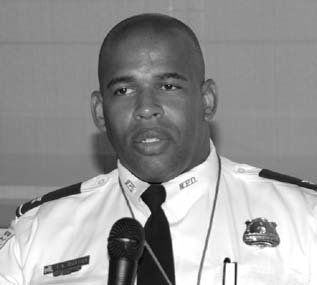
Vail, CO Chief Dwight Henninger Pasadena, CA
Lieutenant Bruce George: We have 250 sworn officers in our department. The Rose Bowl brings about 90,000 people to Pasadena every year. The local Sheriff’s Department helps us out on the parade ground the night before, and they do some of the work at the game. A lot of smaller cities also assign officers to work with us. And we have the Threat Assessment Response Team, which is made up of representatives from the FBI, Secret Service, Department of Homeland Security, and a number of other government agencies. We have a command center that’s a half-mile from the Rose Bowl, and that team is there all night and throughout the game. We have FBI officers working the parade route and monitoring the crowd. We also have them working the parking lots and inside the stadium.
Pasadena, CA Lt. Bruce George We’re fortunate that this is an annual event, so we’re constantly learning from the years before. After each Rose Bowl, we do a lot of debriefing immediately afterwards, in which we discuss what worked and didn’t work. And the results show a lot of improvement over the years. When I started in the 1980s, we were making 600 arrests on the parade route; last year, we made 28 arrests. Now we know where the problems are likely to be. We know that gang members hang out at a certain intersection in the city on that night. We know that our entertainment district is where people loiter. People coming out of the bars can give us some problems. And we learn from our mistakes. One year we decided we were going to take all of the traffic off of the boulevard the day before. But all that did was allow people to go out into the streets, and they found newspaper racks to light on fire. So now we leave cars on the streets as part of our crowd control plan. Prince
William County, VA. Major Stephan Hudson: Mutual aid is a huge part of what we do. We’re a relatively small agency in the big pond of the Washington, D.C. region. We have fewer than 600 sworn officers. The larger events that we deal with always require mutual aid.
Prince William County, VA Asst. Chief Stephan Hudson Last week we had a protest when the extremist Westboro Baptist Church decided to protest at a high school and a Coast Guard recruiting station in our county, and we relied on assistance from state police and one of the cities inside our county. We’re accustomed to doing that; the mutual aid in the national capital region is very good. We also assist the Metropolitan Police Department in Washington, the U.S. Park Police, and others with events that occur on a regular basis. It has become a routine part of our business. I think that the memoranda of understanding around the region have worked very well. However, we’ve found that there is a lack of coordinated regional training, especially with regard to special events management. We’ve sent personnel to some small classes in Key West, Fla. and San Diego. But with all of the large agencies in the national capital region and all of the events that we deal with, I think there should be some organized regional training. Toronto
Superintendent Tom Russell: In Toronto, we needed about 2,000 additional officers from across Canada to come in and assist us with the 2010 G-20 protests. Immediately we had training issues. How do you train these officers if you can’t physically have them in the same room? We ran an online web-based program through the Canadian Police Knowledge Network. It helped us tremendously in terms of getting all the officers exposed to command and control systems, our use-of-force policies, professional standards issues, and crowd theory. We also trained another 5,000 officers internally. Former Miami
Chief John Timoney: I came from New York City and Philadelphia, two big departments that didn’t need much outside assistance for managing big events. But Miami is a relatively small city and department. For the Free Trade Area of the Americas (FTAA) meeting in 2003, or for any of these types of big events, you need 3,000 to 3,500 officers or more. So you have to depend on mutual aid.
John Timoney, former Miami Police Chief and Philadelphia Police Commissioner But mutual aid has its limits, especially for a chief. For instance, other agencies may not send you their best people. You may get the 50 officers that they want to give a week off. And the only way you have control over somebody is if you have the ability to discipline them. You can’t really discipline someone from another agency, so you don’t have the same kind of strong control that you have over your own officers. That came home during FTAA. I made some promises that we wouldn’t use tear gas. But during the event, an officer from another department lobbed a tear gas canister into the crowd. There was nothing I could do about it. However, in the subsequent lawsuits I was held fully accountable. You’re the overall commander; it’s your responsibility. So in some ways, mutual aid is problematic. Minneapolis
Deputy Chief Rob Allen: Chief Rob Allen discussed the Emergency Management Assistance Compact (EMAC), a Congressionally ratified organization that helps states provide mutual aid to each other during disasters such as hurricanes or terrorist attacks. EMAC is designed to help states resolve issues of liability and reimbursement upfront, so that aid can be provided quickly and efficiently when it is needed. (Further information is available at www.emacweb.org.) I know that managing the 2008 Republican National Convention was difficult for the City of St. Paul, because they needed 4,000 to 5,000 officers, and there are only 10,000 cops in the entire state of Minnesota. So we brought in mutual aid from out of state, and that’s incredibly challenging. There’s a model for mutual aid called EMAC, and it works great for emergencies and natural disasters. It creates accountability for the out-of-state officers, because those officers are working for the state that they come from. But a planned event is not an emergency, and you can’t use EMAC as a means to deputize outside officers. Having something like EMAC for planned events would greatly simplify the difficulties of mutual aid.
Former FEMA Director Dave Paulison: I would add that you can use EMAC for planned events, but it won’t provide for reimbursement. That’s the big problem. Norman, OK
Chief Phil Cotten: From what I’m hearing here today, it sounds like we’re doing a lot of things right, but on a smaller scale. Mutual aid is significant for us. The University of Oklahoma has a pretty good football team, and they have been selling out games for many years, which means that eight times a year, 85,000 or more people flood into the area. Our population is about 112,000, so you can see that it’s a tremendous influx.
Norman, OK Police Chief Phil Cotten The University Police Department has jurisdiction on the campus. The stadium is considered the highest-risk target for a terrorist attack in the region on the eight Saturdays a year when it’s hosting a football game. It’s a huge operation. Not only do we have very close partnerships with the local law enforcement agencies, but also with the university athletic department, university administration, and other key players in that arena. Also crucial for our operations are private security personnel. They make up the vast majority of security on the field. They are unarmed but are visible security, and they play a big part. U.S. Secret
Service Deputy Assistant Director David O’Connor: In many of these major events, city officials have made a lot of promises to get the event for their city. They say, “We have all these police officers, we’ve got the best fire department, we can secure the hubcaps on your car, we can do anything you want.” So it needs to be emphasized that it’s in the early stages of the process, when cities are soliciting to get these events, that they’re promising the things that law enforcement will have to deliver. If you’re the local police chief, you need to find a way to get in on the ground floor when your city decides to try to put together a host committee to get one of these events.
CHAPTER 7. Preparing for Protesters at Major Events Large-scale political events often present police with a dual challenge: managing crowds of peaceful participants or demonstrators, while at the same time managing violent or aggressive protesters who are smaller in number but more difficult to control. At the PERF Executive Session, representatives of the St. Paul Police Department and the Minneapolis Police Department shared their experiences dealing with protesters at the 2008 Republican National Convention. And Toronto Superintendent Tom Russell offered advice based on the 2010 G-20 protests in his city. St. Paul and Minneapolis, Minnesota 2008 Republican National Convention St. Paul
Police Senior Commander Joseph Neuburger: There was a mix of people at the 2008 Republican National Convention. Some protesters wouldn’t break the law for any reason, and at the other end of the spectrum were small groups who wanted to cause as much destruction as they could. In the middle there was a group that flowed with the tenor of the crowd. We ended up arresting a number of locals who got caught up in the emotion of the moment. Rocks were flying; windows were breaking; they got involved in it and we captured it on tape. Some denied they were part of the violent crowd, and they might not have been black bloc members, but they were every bit a part of the problem after they ignored orders to disperse.
St. Paul, MN Senior Commander Joseph Neuberger The biggest thing to remember when planning is the importance of flexibility. When your command staff is planning, some will say, “We just need turtle suits,” and others will say, “We just need bikes.” Listen to all of them, and make sure you have a wide array of resources in your toolbox. That way, as things come up, you’re not locked into one course of action. You’ve got to have a lot of versatility, and you need to have a big plan. And even if you have a comprehensive plan, you have to be able to adapt on the fly. These incidents take on a life of their own sometimes, and no matter how many after-action reports you’ve looked at, the solutions are unique to each individual situation. Minneapolis
Deputy Chief Rob Allen: Almost everything that happened at the Republican National Convention happened in the city of St. Paul. The event was there, so most of the protests were there. But on the third night, our city-owned arena in Minneapolis hosted a “Rage Against the Machine” concert. We’d been told by folks who had hosted “Rage” concerts in the past that we could expect some issues that night, and we had intelligence that there were going to be large marches and so forth. We had officers doing sweeps in the downtown area during the daytime, and we found caches of vodka, as well as chunks of concrete and other possible projectiles stashed in various places. So we were thinking, “Yes, people are preparing for a fight.” We had two or three mobile field force divisions staffed right outside the Target Center. There were about 300 cops in turtle suits. A group of maybe 50 protesters started putting bandanas across their faces and occupying the street. We shut off traffic in the streets, and we occupied the roads. We set up a cut-off; we were going to let them march one direction out to Lauren Park, which is about a mile from there. We weren’t letting them get anywhere but that one place. The crowd turned down the first side street and met a barricade of mobile field officers in turtle suits. The crowd made their stand against this group of officers in turtle gear. The cops got on megaphones saying, “You have to move, you’re in violation.” The officers started suiting up. The mobile field forces were all commanded out of St. Paul, even though this event was in Minneapolis. We had a deputy chief in that command post in St. Paul, and he was commanding the officers and bringing in other divisions of the mobile field force to confront this group of 50 people. I was on the streets in my regular soft uniform with Chief Dolan, and Chuck Wexler was there just in shirt and tie. We were looking at these 50 kids, and yes, they had bandanas on, but we could see they weren’t hard-core anarchists. We talked to them, asking “What’s going on?” They replied, “Well, we want to go this way, but they won’t let us.” The mobile field force commander, who was our deputy chief, was looking at this on video and saw close ups of these guys with masks in the context of what had been going on the past couple days. He said, “Do not let them move. Take action.” In the meantime, TV crews started showing up and filming this stare-down. I thought there was no way that this was going to end well if we started taking action. We had these big hulking cops in turtle suits, and it looked like we were going to be taking on little kids. There were people watching from every angle. So I contacted my colleague in the command post and said, “Don’t put the mobile field forces on these guys, it’s not going to go well.” He got a little upset with me. The orthodoxy is that the mobile field force commander is God, and you can’t overrule him. Well, I talked to our chief and said, “We’re going to overrule them and tell them to move aside and let these kids move down the streets.” The commander said, “Fine, you’re in charge.” And that was the end. We did get on the radio with the private security folks to say, “Hey, just so you know, we’re going to let these guys go and we think they’re going to go south on 7th Street. You may want to have security stand out in front of your buildings.” We let them run a few blocks, and then we corralled them with our bike cops about four blocks away and made arrests there. My point is that I think you really need to have someone in an ultimate decision-making position on the ground so you can see what’s happening. Having the command post make decisions based on a video feed can be dangerous. Video can make things look worse than they really are, and you can’t get a sense of the tenor of the crowd unless you’re there. Being on the ground made a big difference. It’s also important to consider how inflexible mobile field forces are. Once you’re turtle suited up, you’re not moving anywhere. It’s impossible to move those guys a couple blocks away without a major production. But bike cops and officers in soft uniforms are incredibly flexible. They were able to corral the group very quickly. We made around 80 arrests, and every single one of those persons was convicted. Toronto, Canada Toronto
Superintendent Tom Russell: We support Vancouver’s strategy of engaging people, keeping the crowd upbeat, and reaching out to protesters. That was our original plan, too. We started our planning six months out. Our Community Relations Group met with the organizations that had publicly announced that they were going to protest. We talked to them about the rules of protesting, and explained that we were going to help facilitate the protests and keep everyone safe. But there were a number of groups who essentially said, “No.” We reached out repeatedly to those groups over a six-month period. Even these outreach attempts turned ugly. They were relaying false allegations against our officers to the mainstream media. They accused us of trying to suppress their right to free speech. That wasn’t the case whatsoever. But of course these things were printed in the newspapers. They were trying to take a run at us. So we tried the outreach, but there are some organizations that just aren’t going to listen to you.
Toronto Police Superintendent Tom Russell In Toronto, at the height of the riots we had about 20,000 protesters. Within that protest group were approximately 1,000 black bloc protesters. One problem in dealing with black bloc protesters is that they infiltrate the crowd in street clothing, get to the center of the larger crowd, and then put on black clothing and masks. You’ve got a large group that’s going down the street and a smaller group dressed in black within that larger group. You know what they are going to try to do at some point; they haven’t done it yet but they are going to do it. How do you go into that crowd now and extract that group preventatively without agitating the rest of the crowd and provoking a larger fight? You can’t forget about the other people who are there. There are tens of thousands of people coming just to protest and march legitimately, and you have to look after their rights. There were many things we did well. For example, in downtown Toronto there are 27 kilometers of underground walkways beneath all of the office towers. That created a huge security problem for us, as they were actually underneath the Summit venue itself and our fenced security zones. There are hundreds of access points from the ground level into these pathways. So we worked with our corporate partners downtown to lock down those pathways. The Toronto Police Service is part of a group called TAPPS, the Toronto Association of Police and Private Security. We have a very close relationship with our private corporate partners. We have a web-based tool that allows us to send out digital police alerts from our major incident command center to our partners so they can move resources around the downtown corridor.
CHAPTER 8: Technology’s Role in Major Events: Communications, Video and Social Media Improvements in law enforcement technology have changed the way police manage crowds, maintain situational awareness, and communicate directions to officers on the ground and to the public. New social media platforms—such as Facebook, Myspace, and Twitter—have also provided law enforcement with new tools for gathering intelligence on agitators. Police leaders at the PERF Executive Session shared their thoughts on the most important emerging technologies and how agencies can take advantage of them in the context of managing a major event. Seattle
Assistant Chief Paul McDonagh: More than a decade ago, during the WTO protests in Seattle, our commanders and higher level personnel were looking out and seeing peaceful protests. But they didn’t see the whole picture. Working behind the peaceful demonstrators, other protesters were launching metal nuts and bolts and throwing rocks at our police officers and some were breaking into businesses and assaulting citizens. What we’re looking to do now is stream real-time video to the people on the ground. That will give on-site commanders a better sense of what the crowd is actually doing and help them make better decisions. The field commanders need accurate and timely information. They’re the ones who are going to implement tactics. Once commanders have the information needed to determine they need to act, they must have the intent to implement the actions. They also need support prior to and when taking action. We had difficulty with those higher in the chain of command supporting the need to take action. This lack of support hindered the field commander’s abilities. During major special events, police departments need to have the capacity to take action, but as importantly, the commanders need support for their actions in three key areas: the department, the political arena, and with the public. At WTO we did not have these three. Former
Boston Police Director of Telecommunications Dave Troup: During the Democratic National Convention in 2004, we tried some things for the first time. That was the first time we really used video from the street. We knew where the venues were, so we set up cameras and sent videos back to our command center.
Boston Director of Telecommunications (ret.) Dave Troup We also brought in a lot of outside agencies, and we wanted to make sure we could all communicate with each other. One of the advantages we have in the Boston area is a radio system called the Boston Area Police Emergency Radio Network (BAPERN). All the outside agencies coming in have these frequencies in their radios, and could be patched into the Boston channel. They could listen to ongoing radio traffic so they knew what was going on all the time, and when necessary they could talk to the dispatchers and their supervisors. We also put up a VHF radio channel so that the federal agencies in Boston could hear what was going on. We felt during the DNC that everyone involved knew what was going on at all times. Washington,
DC Commander Hilton Burton: Any time a major rally is coming to D.C., we look to see what the organizers are doing, how many people they’re planning for, and the type of people who are coming. For the Glenn Beck rally in August of 2010, the organizers told people what subway stations to get off at and what routes to take into the city. Using that information, we could anticipate where the crowds would be and try to deal with traffic around those locations.
Washington, DC MPD Commander Hilton Burton But with the Jon Stewart/Stephen Colbert Comedy Central rally in October of 2010, the initial information we got wasn’t accurate. The organizers expected around 80,000 people to arrive, but close to 300,000 people showed up. I was right there in the middle watching the traffic, and I was getting information from the Park Police and Metro Transit about what the crowd situation was. Metro Transit was able to tell us that at 10 a.m. there were about 200,000 people using the subway system. On a normal Saturday you would get a third that number throughout the entire day. So we knew that we had to keep modifying our plan based on the incoming information, and expand the perimeter for the rally. One other issue is that many of our people can’t communicate when the cell phone networks overloads, and that’s what happened during the Comedy Central rally. Most people at the rally had a cell phone or PDA, and it overloaded the system. We couldn’t use our cell phones in some areas on some of the network providers. We’ve got to find a better way to communicate. Detroit
Police Chief Ralph Godbee: It is extremely important to have someone from the Police Department monitoring social media sites. We have a full-time person at our intelligence resource center who follows social media. Following Facebook and other social networks is important because you can gather some very important intelligence from those sources.
Detroit Chief Ralph Godbee There are three types of people who frequently organize large gatherings of people, or who spread information about such gatherings: “flash mob” types, entertainment people, and social activists. So we have someone following all of these types of social media outlets. We have “Tip-411,” which allows citizens to anonymously send in crime alerts via text. We also have a system called Citizen Observer, which allows us to send an e-mail blast out to the public regarding certain events. Finally, we have a Facebook and a Twitter account. You have to engage these new types of resources because a lot of people don’t have home phones anymore; cell phones, smartphones, and apps dominate communications. We need to engage those media. Tip-411 has produced a lot of substantive crime tips that have helped us close out major crime incidents. University
of Wisconsin Police Chief Sue Riseling: I never thought I would “tweet” as a police chief, but I have become a believer. President Obama came to visit a couple of months ago, and we had a line outside over a mile long. We knew that the venue was not going to be able to hold the number of people who wanted to come see the President. So we tweeted that if you’re in line and you’re west of a certain block, you won’t get into the venue, and provided them with a list of alternative sites where they could go to hear the speech and maybe even catch a glance of the President. It worked pretty well. I have a community that is very plugged in to technology; whatever device you can imagine, they’re using it.
University of Wisconsin Chief Susan Riseling Former FEMA
Director Dave Paulison: On the topic of social media, there are two YouTube videos that I highly recommend watching. They’re called “Social Media Revolution” and “Social Media Revolution 2,” and they demonstrate how quickly social media are spreading. For example, it took radio 38 years to reach 50 million people. Facebook reached 100 million people in nine months. There’s a whole communications system out there they we aren’t tapping into sufficiently. Fifty percent of the U.S. population is under 30 years old. Ninety seven percent of those under 30 are on some type of social media platform. We talk about cell phones not working when a network is overburdened, but text messaging works even when the system is overloaded. It pretty much always works. A lot of us are still on a system where one person picks up the phone and calls one operator to report an incident, when really there could be two hundred people on the ground all seeing the same thing who could get you the information a lot quicker. But we really don’t have a method for gathering information from crowds that way. We’ve got to pick up on that. Communication has to be our next step. First, we have to ensure that we have enough broadband to continue doing the things we’re doing, and then we have to try to find some way to tap into the social media system. We’re just scratching the surface on that now. The people using this system are so far ahead of us it’s just remarkable. NYPD
Assistant Chief Harry Wedin: We’re using social media a lot—not just for major events, but every weekend. Our intelligence division tracks Twitter and Facebook. There are a lot of underground “after-parties” in New York after the nightclubs and bars close, and these events result in violence if we don’t police them. We get ahead of the curve by knowing when and where they’re going to be. During the 2004 Republican National Convention in New York City, we used a blimp to get live shots of protesters. We could see people’s faces clearly. In addition, we have live video on our helicopters that feeds right into our command centers. We can monitor where the groups are moving and then immediately alert the officers in the field that there’s a group of 300 people coming down Madison Avenue from 45th Street, for example. We could move the field forces to cut off groups of protesters and keep them away from the delegates. We could tell where people were going before they got there. Philadelphia
Commissioner Charles Ramsey: We’ve got to get over this fear of videotaping our own people. During the 2002 World Bank protests in Washington, D.C., one of the reasons we didn’t have as much video as we could have had was a fear that we would capture something that we didn’t want to see. But you’re going to get far more video showing officers doing the right thing than video showing improper actions by officers.
Philadelphia Commissioner Chuck Ramsey And a police department needs to have its own video, because most of the protesters will have their own cameras and their own video clips. And they may edit their video in ways that are misleading, showing little clips that are entirely out of context, so you miss the real picture. We need to help our officers get over any fear of being videotaped. We need to record these major events and be able to show everything that went on. We also need to preserve the video recordings, so if people later accuse us of violations, we can determine exactly what took place and have proof of it. Arlington,
TX Lieutenant Leland Strickland: Dealing with Dallas Cowboys games, we have found out how much we rely on cell phones. You don’t realize it until you lose service. AT&T is a sponsor of Cowboys Stadium, and they’re at every event, tweaking and upgrading the system to make sure that the wireless network can support 120,000 people in that building using cell phones and PDAs on game day. It’s a constant struggle, and they’ve worked hard to manage that level of strain on the system.
Arlington, TX Lt. Leland Strickland We also have a public safety radio system with repeaters throughout the stadium to ensure that we can effectively communicate. When we have hundreds of public safety personnel on post, the system has to be able to handle that load. To my knowledge, we have no dead spaces. And certainly we have found that you can never have enough intelligence. Monitoring the social networks is critical. When handling major events like the 2010 NBA All-Star Game or Super Bowl XLV, one of our major initiatives is to combat the prostitution and human trafficking that accompany those events. We’ve found that monitoring social media is a good way to identify hot spots for that kind of activity as we prepare for a major event.
CHAPTER 9: Post-Event Litigation: Strategies to Prevent Lawsuits While Ensuring Accountability Many police chiefs have learned that the impact of a major event doesn’t end when the crowds disperse. Lawsuits can trouble cities, police departments, and police executives for decades. Thus, police should consider the possibility of post-event litigation, and should start thinking about it on the first day of planning for a major event. Former Miami
Chief John Timoney: I was commissioner of police in Philadelphia in 2000, during the Republican National Convention, and we thought it went pretty well. For the first time, instead of using officers in riot gear, we used about four or five hundred police officers on bikes to handle the protesters, which gave us great mobility. And for the first time we embedded reporters with us. They reported every day on how great things were going. It felt pretty good. But about two weeks after the event was over, the press started to take a second look. They said, “Well, maybe they weren’t that good, and maybe the police violated these rights and those rights.” And all of a sudden we were hearing from lawyers. “We’re filing a lawsuit. You did this, you did that; you made illegal arrests.” To this day, I look back and think, “What the hell happened there?” We thought we did it right, and I still think we did it right. But there’s this third part to major events, after the preparation and the event itself: the post-event. Two years later, when I was chief in Miami, we began to plan for the Summit on the Free Trade Area of the Americas (FTAA), and we understood that we needed a postgame plan, in addition to the training, planning, practicing, and managing of the event itself. One key to keep in mind from the beginning is that you need to document what you do. You need to keep meticulous records. I was fortunate to have John Gallagher, then an Assistant Chief in Miami and previously police commissioner’s counsel in Philadelphia, doing all that with a lawyer’s eye towards the future. And after the event, he sat down and wrote the after-action report in two weeks. All of our recordkeeping didn’t prevent lawsuits, but it helped us to fight them. This postgame element involves two institutions: the press and the legal community. And they can tie you up for years. The FTAA event was in 2003, and I’m still doing depositions. Once again, the lesson here is to keep your eye on the postgame plan from the beginning, because that’s going to envelop you over the next five, seven, or ten years. Asst. U.S.
Attorney John Gallagher: Before joining the U.S. Attorney’s Office in Philadelphia, John Gallagher served with John Timoney as counsel to the Philadelphia Police Commissioner, and later as assistant chief of police in Miami. Once a major event is over, you have to move on, because you’re policing a major city and new things are happening all the time. New issues and crises don’t wait for you.
Asst. U.S. Attorney John Gallagher But if you make the mistake of thinking that the major event is completely behind you, you’re going to pay for it through lawsuits. As John Timoney said, when the RNC ended in Philadelphia in 2000, the police were the darlings of the country. Governor Bush accepted the nomination, and everything appeared to be great. The press was on our side; the politicians were on our side; and even some of the civil rights and community groups were on our side. And then this drip began. The whole story started to go out of control. Stories began to come out about the police oppressing protesters and suppressing civil rights and free speech. We knew that none of that had happened, but we weren’t ready for the aftermath. Doing a good job during the event isn’t good enough. In the aftermath, if there’s a vacuum of information about what happened, the vacuum will be filled by people who have an agenda. People who are upset because they weren’t allowed to disrupt the event, people who simply don’t like the police, people who want to make money off of it, lawyers who want to raise their profile—they’re all lying in wait. That’s why we concerned ourselves with the aftermath of these events. Why do you need an after-action report? Because we all have short memories, and things happen quickly during a major event. You will be asked about different situations in the litigation long after the fact. We took the lessons that we learned in Philadelphia to Miami, and instead of documenting things in a cursory way, almost as an afterthought, we started documenting the FTAA Summit from the initial planning meeting. We started our after-action report on day one, at the first meeting. Everything we did was documented for the after-action report. By and large, the initial impression from the public and the media after the FTAA Summit was, “Nice job, Miami PD.” But, again, the drip of false information started very soon afterwards. We saw it coming, and we released our after-action report as soon as possible. Within 14 days of the event, we had a 100-page document that captured everything that we did. And yes, we made some mistakes during the event, but we confessed to those mistakes; we didn’t try to gloss them over. We didn’t want people to look at our report and say, “Look, they’re just blowing sunshine in our faces.” There were some things we could’ve done better, some lessons we learned. If you don’t put those in the report, not only does your report lose credibility, but when other agencies look to your report, they may repeat the same mistakes. When our FTAA report came out, I think we caught our adversaries by surprise. We filled the information vacuum with our account of the event. In addition to the written report, we had boxes and boxes of supporting documents. We made sure that there wasn’t a thing in that report that we couldn’t justify with hard proof. Within two weeks, we allowed the press to look at the supporting information. We also put out a video after-action report. That helped push back some of the false information that was circulating. I wrote the report not only to fill the information void and share the lessons learned, but also with an eye towards the post-event litigation. Miami’s city solicitor used the report as the basis for defending the lawsuits against the City of Miami. The city had to put out some money, but it was nothing compared to what it could have been. With the report, no one could say that the Miami Police Department had acted with “deliberate indifference,” which is the legal standard for getting a “payday” in civil court. We did so much planning, preparation, and training that you couldn’t prove deliberate indifference. Maybe we made some mistakes in the heat of the moment, but that’s a lot less expensive than being found guilty of deliberate indifference. Philadelphia
Commissioner Charles Ramsey: Make sure that you have everything in an after-action report centralized, and that there’s a single report with interviews and other documents. Documenting the times where you didn’t make arrests is probably more important than the times you did make arrests. Be able to show when you tolerated illegal behavior and when you let it go. We had a situation in D.C., which I’m still fighting now, where arrests were made, and the lieutenants who made the arrests sent in their own after-action reports. Well, some of those reports contained personal opinions that weren’t based on facts. So you’d better know everything that’s in those reports, because one day you’re going to be sitting on the stand and the lawyers will wave them in your face.
Oklahoma University Police Chief Elizabeth Woollen Also, be sure to keep track of the documents. When an order comes from the court to save and preserve all documents, that’s exactly what you’re supposed to do. If documents get lost, it looks like you’re trying to hide something. Now we all know that there’s no way that you can keep anything secret in a police department for longer than five minutes. So how could you get an entire department to conspire to hide documents? It’s impossible. But in a court, that’s exactly what it looks like. So not only do you need to know exactly what’s in your after-action report, you also have to preserve those documents. Toronto
Superintendent Tom Russell: I agree with what Commissioner Ramsey and John Gallagher have said. I think our biggest take-away from the G-20 protests in Toronto last year is that it is incredibly important to begin your preparation on day one for managing the after-event phase. Immediately after the riots, our chief stepped forward and faced criticism from all directions. He has weathered that storm, but now it’s continuing in the form of lawsuits and inquiries. You may want to consider hiring a professional contractor for project management documentation. The information for after-action reporting is incredibly important. We have information management systems that we use for criminal investigations like most agencies do, but they don’t always lend themselves well to an event like this. Keeping the project moving forward with milestones and documenting every step are essential. Assistant
U.S. Attorney John Gallagher: Many arrests at major events are for minor charges like disorderly conduct. For example, we lock people up because they’re blocking traffic, and they spend a night or two in jail because the system’s backed up. They go before a judge, the case gets dismissed, and they are released with time served. They don’t get a criminal conviction, but later the police are criticized in the media because of the high percentage of cases that are dismissed.
Washington, DC MPD Assistant Chief Alfred Durham But the judges don’t see it that way. We had a judge in Philadelphia who was a former homicide prosecutor, a very strong law-and-order guy. We had 40 or 50 protesters blocking I-95; they stopped traffic and shut it down. That’s against the law, and it’s on videotape. The cops have to catch these guys, which takes hours, and it’s a huge inconvenience for everyone. But even this law-and-order judge says, “No harm, no foul,” and releases them two days later. Well, guess what? That’s 40 or 50 potential lawsuits because the incident is now perceived as an unlawful arrest. Of course, it’s not really an unlawful arrest; they were lying in front of the cars on an interstate highway. Philadelphia
Commissioner Charles Ramsey: Say you have a case of protesters blocking a major road. If you send that to criminal court, it’s treated like a nuisance. Those judges are handling more important cases and feel like they don’t have time to deal with someone who was blocking traffic. So the case will get tossed, and the minute they toss it, it’s almost considered a false arrest, as if the police had no justification at all. Instead, you should send a case like that to traffic court. Those judges don’t think it’s beneath them; they’ll do something with it. NYPD
Assistant Chief Harry Wedin: At the 2004 RNC, we tried to make sure there was an attorney from our legal bureau who was on the scene during any mass arrests. Also, we made sure that the officer making the arrest was fluent in what he was charging, and that he knew how to articulate that to the Assistant District Attorney (ADA). Here’s why this is important: If you’re not careful, you end up with ranking officers on the ground ordering cops to make arrests without explaining exactly why. For example, the officer should specify that protesters were impeding vehicle traffic for five minutes, and had ignored repeated warnings before they were arrested. It’s very important to make sure that someone is there instructing the officers who are making these decisions about how to articulate that to the ADA, so the charge isn’t declined before it even gets to the court process. If a charge is declined by the prosecution at the very beginning, you’ll have a lawsuit on your hands. There are still depositions going on to this day. We thought we had everything in place, but it’s very complicated, especially in New York. Even when these cases do go to court, judges will say the same thing, “No harm, no foul,” and cut them loose right away. Then when it becomes a civil lawsuit, the city will end up settling with them. Settling with someone— spending ten or twenty thousand dollars to make the case go away—is cheaper for the city than defending itself in court. St. Paul
Senior Commander Joseph Neuburger: We recently got a summary judgment on our first mass arrest from the 2008 Republican National Convention in St. Paul. The allegation was that we used excessive force and arrested people without cause. The protesters and their lawyers pieced together bits of recordings from the event as evidence. Probably one of the best investments we made was a little over $2 million worth of closed circuit TV and seven terabytes of storage. We made our video available to the judge. The judge watched hours of tape, and it had context, unlike the little snippets that the defense attorneys were showing. If you only looked at the short clips, some of it looked bad. But if you put it in context, it’s completely different. So two years later, we got a major judgment in our favor which we think is going to take us through the rest of our lawsuits and hopefully set the pattern for Tampa and Charlotte when they host the national political conventions in 2012. The other thing to mention about this is that we told all of our officers, particularly the mobile units and crowd control units, that they were going to be videotaped by us. So we told them, “If you don’t want to see it on TV, then don’t do it.” Chicago
Assistant Deputy Superintendent Steve Georgas: In Chicago, we’re trying to go on the offensive when it comes to litigation in the wake of a major event. If the event has a permit with a known organizer and they either exceed their permit or we have arrests with convictions, then we document everything and take the organizer to civil court for cost recovery. The idea is that we try to get our costs back for their actions. This is a recent change in strategy. I know there are three or four cases right now in which, after we’ve had arrests with convictions, we’re billing the organizer for our costs. Philadelphia
Commissioner Charles Ramsey: My advice is to avoid arrests if at all possible. You have to make up your mind in the beginning that there are certain behaviors you just have to tolerate. You can’t lock people up for everything they do. There are a couple reasons for that. First, the more arrests you make, the more likely it is that you’ll wind up in court for a long time, and it can be difficult to remember what happened seven or eight years ago. Second, you deplete your own resources by making a lot of arrests. If you make a mass arrest, you take your people off the line to go process prisoners and so forth. You’re losing personnel that you may need later on. Protesters will often send out groups who try to get arrested. They’ll do all kinds of things to provoke you into making an arrest. Maybe they’ll block an intersection, but so what? Just direct traffic around them and let them sit there. You really need to think about these situations in advance to determine whether or not you should make an arrest in different scenarios. If they’re blocking an Interstate highway, of course you have to do something. But a city street where you can just redirect traffic is a different ballgame. You can’t fall into the trap of feeling like you’ve got to lock everyone up. It winds up being a situation where you take personnel off the line, and you wind up with a lot of lawsuits. San Antonio
Police Chief William McManus: I agree with Commissioner Ramsey. I remember an incident back when I was in Washington, D.C., shortly after the World Trade Organization protests in Seattle. I was standing at an intersection at about 5:30 or 6:00 a.m. on the second day of a major event. It was foggy and not quite light out, and you could hear off in the distance the pounding of drums and the rumbling of a lot of people shouting. We couldn’t quite see how many people were there. And all of a sudden they came through the mist, a couple hundred protesters. I had a squad of motors with me, and they were all ready to react. This protest group sat down in the middle of the intersection at 23rd Street and Pennsylvania Avenue, and the motormen were all ready to jump up and start arresting them. But instead, we just pulled away and diverted traffic around them. After a while, the group got tired and left. It wasn’t a big deal. So if you don’t have to arrest, don’t do it. It will save you a lot of problems. We don’t need to go after every single person who acts aggressively towards a police officer unless there’s a danger of an officer getting hurt.
San Antonio Chief William McManus Boston
Superintendent-In-Chief Daniel Linskey: Arrests are our problem. We need to let our cops know that there are other ways to maintain peace besides making arrests. But it’s tough to get them that message. During senior commander meetings, you tell them your expectations. You say that you expect some rocks and bottles to be thrown and some names to be called, but you want your officers to be calm. You tell them that everyone has a video camera out there, and their officers should behave accordingly. And you tell them that if an officer does make an arrest, he should be saying “Please stop resisting” the whole time, because you’re going to end up on YouTube. But when you go out in the street and you talk to your cops, you find that they didn’t get these messages from their senior commanders. Somewhere down the chain, the message goes awry. So now, we’ve instituted a new policy in which every supervisor has to come in an hour before a special event. We do a supervisors’ brief, and we give them the mission statement with the things we want our cops to know. Afterward, I go out on the street and quiz the cops on the street. What’s our policy on public drinking? What are you going to do if this or that happens? And that’s helped to get that message out. There is another tactic that we have found to be effective. When we encounter people who are drunk and fighting or causing other problems, we put them in protective custody. They have the right to blow into a breathalyzer. If they pass the breathalyzer, they can go home. If they fail it, they stay with us until they sober up. This method doesn’t take a cop off the street to go fill out hours of paperwork. And it’s easy to defend in court, because the person was under the influence of alcohol and likely to hurt himself.
CHAPTER 10: Advice from Federal Agencies Representatives from the FBI, the U.S. Secret Service, and ATF attended the PERF Summit to discuss their roles in helping local police departments manage major events. Participants shared their thoughts on the value of pre-event tabletop exercises and the appropriate role of an assisting federal agency in event management. Are tabletop exercises worthwhile? Former FBI
Critical Incidents Response Group Section Chief Matt Chapman: One of the things we like to do in support of these major events is a tabletop exercise. It gives you the opportunity to get eye-to-eye with all the different organizations involved. There may be some people in the room you don’t know. It’s an exercise with a great bang for the buck. You’re in a low-risk environment where you can discuss difficult topics and perhaps make some course corrections if you need to. It’s a good tool, it’s easy to do, and our experience has been that most people have found them productive.
FBI Special Agent in Charge Matt Chapman, Mobile, AL U.S. Secret
Service Deputy Assistant Director David O’Connor: In my opinion, a tabletop exercise is most useful if you have plenty of disagreements at the tabletop. We want to expose not only the vulnerabilities in a security plan, but also any disagreements between stakeholders. We want people to say things like, “No, you’re not in charge of that; that’s ours.” If everybody sits at the tabletop and nods their head and you don’t air out any of the potential problems, then you’re going to have the problems on the day of the event, and by then it’s too late to fix them. Working with state and local agencies on managing major events U.S. Secret
Service Deputy Assistant Director David O’Connor: The local agencies run the event. It’s their city, it’s their event, and most of the federal agents we bring in are going to leave when the event is over. At the end of the day, the city has to deal with the fallout of how successful or unsuccessful the event was. So we realize the importance of these events to the state and local organizations, and we try to come in and just facilitate. Are we always successful? No. But I think we’ve really improved our ability to work hand-in-hand with our state and local partners. Former FBI
Critical Incidents Response Group Section Chief Matt Chapman: Every one of our field offices has a special events coordinator who can work with local law enforcement on any major event. You can reach out to your local FBI office at any time and we’ll be happy to begin as early as you want. We’re working closely with Arlington, Texas on the Super Bowl right now, just as we did with Tampa and Miami before. Early is better from our perspective. For planning a major event, “next year” becomes “tomorrow” faster than you’d think. It’s your event, your town, your resources. We can add resources to an extent. Our primary role for being involved is counter-terrorism. That’s why we bring the Joint Terrorism Task Forces to bear. FBI Critical
Incidents Response Group Unit Chief James Ammons: One difficulty I’ve noticed is the need to translate federal language into state and local terms. Sometimes we will be talking about the same things in two different languages. But once we’ve had some face-to-face time, and an opportunity to explain where the federal government and those assets are coming from, we can translate it into a language that we can both understand. Then we can overcome most of our obstacles.
FBI Unit Chief James Ammons ATF Special
Events Branch Special Agent In Charge Michael Draper: I really appreciate when local authorities keep us involved in the planning subcommittees from an early stage and keep our people involved informed regarding the logistics and any resource needs. Our main focus is making sure that we have enough of a heads-up to pull together the resources that we need to be as helpful as possible.
ATF Special Agent in Charge Michael Draper
About the Police Executive Research Forum The Police Executive Research Forum (PERF) is a professional organization of progressive chief executives of city, county and state law enforcement agencies who collectively serve more than 50 percent of the U.S. population. In addition, PERF has established formal relationships with international police executives and law enforcement organizations from around the globe. PERF’s membership includes police chiefs, superintendents, sheriffs, state police directors, university police chiefs, public safety directors, and other law enforcement professionals. Established in 1976 as a nonprofit organization, PERF is unique in its commitment to the application of research in policing and the importance of higher education for police executives. PERF has developed and published some of the leading literature in the law enforcement field. The “Critical Issues in Policing” series provides up-to-date information about the most important issues in policing, including several recent reports on the impact of the economic downturn on police agencies. Other Critical Issues reports have explored the role of local police in immigration enforcement, the police response to gun and gang violence, “hot spots” policing strategies, and use-of-force issues. In its 2009 book Leadership Matters: Police Chiefs Talk About Their Careers, PERF interviewed 25 experienced police chiefs about their strategies for succeeding as chiefs and working well with their mayors, their officers, and their communities. PERF also explored police management issues in “Good to Great” Policing: Application of Business Management Principles in the Public Sector. Other publications include Managing a Multijurisdictional Case: Identifying Lessons Learned from the Sniper Investigation (2004) and Community Policing: The Past, Present and Future (2004). Other PERF titles include the only authoritative work on racial profiling, Racial Profiling: A Principled Response (2001); Recognizing Value in Policing (2002); The Police Response to Mental Illness (2002); Citizen Review Resource Manual (1995); Managing Innovation in Policing (1995); Crime Analysis Through Computer Mapping (1995); And Justice For All: Understanding and Controlling Police Use of Deadly Force (1995); and Why Police Organizations Change: A Study of Community-Oriented Policing (1996). To learn more about PERF, visit www.policeforum.org. We provide progress in policing. About Motorola Solutions and the Motorola Solutions Foundation Motorola Solutions is a leading provider of mission-critical communication products and services for enterprise and government customers. Through leading-edge innovation and communications technology, it is a global leader that enables its customers to be their best in the moments that matter. Motorola Solutions serves both enterprise and government customers with core markets in public safety government agencies and commercial enterprises. Our leadership in these areas includes public safety communications from infrastructure to applications and devices such as radios as well as task-specific mobile computing devices for enterprises. We produce advanced data capture devices such as barcode scanners and RFID (radio-frequency identification) products for business. We make professional and commercial two-way radios for a variety of markets, and we also bring unlicensed wireless broadband capabilities and wireless local area networks— or WLAN—to retail enterprises. The Motorola Solutions Foundation is the charitable and philanthropic arm of Motorola Solutions. With employees located around the globe, Motorola Solutions seeks to benefit the communities where it operates. We achieve this by making strategic grants, forging strong community partnerships, and fostering innovation. The Motorola Solutions Foundation focuses its funding on public safety, disaster relief, employee programs and education, especially science, technology, engineering and math programming. Motorola Solutions is a company of engineers and scientists, with employees who are eager to encourage the next generation of inventors. Hundreds of employees volunteer as robotics club mentors, science fair judges and math tutors. Our “Innovators” employee volunteer program pairs a Motorola Solutions employee with each of the nonprofits receiving Innovation Generation grants, providing ongoing support for grantees beyond simply funding their projects. For more information on Motorola Solutions Corporate and Foundation giving, visit www.motorolasolutions.com/giving. For more information on Motorola Solutions, visit www.motorolasolutions.com. Participants at
the PERF Executive Session November 18, 2010, Washington, D.C. Captain Mike Adams Deputy Chief Rob
Allen Unit Chief James
Ammons Deputy Chief
Michael Bates Assistant Chief
John Bennett Commander Craig
Bettis Supervisory
Special Agent. Deputy Chief Kirk
Bouyelas Commander Hilton
Burton Special Agent in
Charge. Social Science
Analyst. Inspector Philip
Chatwin Chief Phil Cotten Special Agent in
Charge. Assistant Chief
Alfred Durham Principal Deputy
Director Senior Policy
Advisor. Assistant Chief
Mark Eisenman Captain Jennifer
Evans. International
Science & Program Analyst
Patrice Floria Captain Philip
Fontanetta Sergeant at Arms
Terry Gainer Assistant U.S.
Attorney Major Doug Gallant Deputy Chief
Patrick Gannon Assistant Deputy Lieutenant Bruce
George Chief Ralph Godbee Major Lane Hagin Assistant Chief
Marc Hamlin Assistant Chief
Janeé Harteau Captain Thomas
Helker Chief Dwight
Henninger Director of
Government Assistant Chief
for Operations Deputy Chief
Jeffrey Humphrey Assistant Chief
Wayne Jerman Corporate Vice
President. Communications
Director. Special Operations
Bureau Chief Cathy Lanier Deputy Chief Doug
LePard Superintendent in
Chief Assistant Chief
Paul McDonagh Staff
Superintendent. Chief William
McManus Captain Darryl
McSwain Chief Security
Officer Chief Rodney
Monroe Chief Phillip
Morse Vice President for
Government Senior Commander Deputy Chief James
Newman Deputy Assistant
Director. Consultant Dave
Paulison President Carl
Peed Commissioner Chuck
Ramsey Captain Luther
Reynolds Chief Susan
Riseling Lieutenant Johnny
Romero Superintendent Tom
Russell Deputy Assistant
Secretary Director Frank
Straub Lieutenant Leland
Strickland Senior Vice
President Executive
Assistant to the City Assistant Section
Chief Senior Vice
President Assistant Chief
Drew Tracy Director of
Telecommunications Chief George
Turner Assistant Chief
Harry Wedin Lieutenant Jason
Whitney Lieutenant Charles
Wilson Chief Elizabeth
Woollen CRITICAL ISSUES IN POLICING SERIES Challenge to Change: The 21st Century Policing Project Exploring the Challenges of Police Use of Force Police Management of Mass Demonstrations A Gathering Storm— Violent Crime in America Violent Crime in America: 24 Months of Alarming Trends Patrol-Level Response to a Suicide Bomb Threat: Guidelines for Consideration Strategies for Resolving Conflict and Minimizing Use of Force Police Planning for an Influenza Pandemic: Case Studies and Recommendations from the Field Violent Crime in America: “A Tale of Two Cities” Police Chiefs and Sheriffs Speak Out On Local Immigration Enforcement Violent Crime in America: What We Know About Hot Spots Enforcement Violent Crime and the Economic Crisis: Police Chiefs Face a New Challenge – PART I Violent Crime and the Economic Crisis: Police Chiefs Face a New Challenge – PART II Gang Violence: The Police Role in Developing Community-Wide Solutions Guns and Crime: Breaking New Ground By Focusing on the Local Impact Is the Economic Downturn Fundamentally Changing How We Police? Police Executive
Research Forum We provide progress in policing. We are grateful to
the
|