|
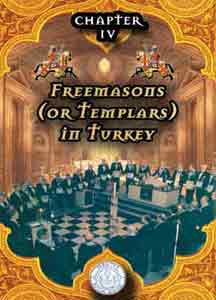
THE DARK HISTORY OF THE TEMPLARS: FREEMASONS (OR TEMPLARS) IN TURKEY |
||||||||||||||||||||||||||||||||
|
CHAPTER 4
The roots of Turkish Masonry go back to the middle of the 19th century. Sources on the subject speak of five phases of Masonry in Turkey, the first of these being the period before 1909. A number of lodges were founded during the Ottoman Empire, but could not get properly organized, since Sultan Abdulhamid systematically prevented this. At this stage, the lodges depended on lodges outside of the Empire, who also provided their management. The second period, between 1909 and 1935, began with the March 31 uprising (April 13, 1909 corresponds to March 31, 1325 in the Muslim calendar) that removed Abdulhamid from the throne and let the Masons become the ruling political power. To reduce opposition from the people, the local lodges, hitherto run from abroad, took on a national identity for the first time in Masonic history. At the beginning of this period, the Committee of Union and Progress (Ittihat ve Terakki Cemiyeti) controlled by Masons came to the forefront. The third period runs between 1935 and 1948. In 1935, president Ataturk ordered the closure of the lodges, on the grounds that they were destructive institutions run from abroad, and so Masonry entered a period of hibernation. But during these 13 years of "sleep," the Masons continued with their activities in the Halkevi Community Centers. In the years between 1948 and 1966, Masonic activities intensified, but in two distinct branches: the Scottish and the French rites. The final period began in 1966 and leads up to the present day, wherein the two branches are increasingly more active and better organized. The Tanzimat Reforms, Mustafa Reshid Pasha, and August Comte The Masons' first real impact in the Ottoman Empire was felt in 1839, during the Tanzimat ("reorganization" in Turkish) era (1839-1876). Although there had been lodges founded well before that, they were neither effective nor well organized. All this changed, however, with Mustafa Reshid Pasha, Masonry's shining star and known as the architect of the Reform Edict (Tanzimat Fermani). According to Masonic sources, Mustafa Reshid Pasha made first contact with Masonry in London and was admitted into the order in the 1830s, though which lodge actually admitted him is not known. Of Mustafa Reshid Pasha, the Turkish Masonic journal Mimar Sinan has this to say: "If, on your path, you have to fight forces more powerful than yourself, you must fight their thoughts relentlessly. If you are positive that your path is the true one, you must proceed, even if you are alone. Never hide your deeds." Was this piece of ritual advice not the Great Mustafa Reshid Pasha's and other brothers' leading principle? Did he not heed this advice, when he took the appeal for his own execution to the Sultan or when he read out the Imperial Edict (Hatti Humayun), standing bolt upright, self-confident and self-conscious, knowing what he was doing and wanted to do and prepared to die for this if necessary? We bow before the memory of the Great Mustafa Pasha, who had been the leading light for the people, and in remembrance of his courageous reading of the Hatti Humayun, 135 years ago in the Gulhane Square. [72] In another issue of the journal:
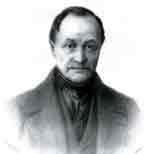
Great Mustafa Pasha, shaped by Masonry, is a monument of love of country and people. He rests in the loyal bosom of history, content in having received the light of the temple and having lit the way for his homeland. [73] But what are the meaning and the consequence of the Reform Edict, of which Mustafa Reshid Pasha was the architect? Its positive as well as negative consequences have been argued over for more than 150 years. True, the Reform Edict's starting point was the Ottoman Empire's desperate need for reform, since in terms of development it had fallen way behind the Western world. The Reform Edict didn't only kick-start the process of reform, but also imported the materialistic world view then dominant in Europe. When this subject is examined closely, we see that the European Masons, via the lodge, were bombarding Mustafa Reshid Pasha and other leaders of the Tanzimat movement with propaganda for the materialistic philosophy. In this respect, the famous atheist philosopher August Comte, who was close to Mustafa Reshid Pasha, played an important role. Comte tried to influence the Pasha with his anti-religious positivism and wrote him countless letters filled with atheist, anti-religious content. At one point, the Sultan sacked Mustafa Reshid Pasha as chief minister because of the relationship between the two. One of Comte's letters reads as follows: Since you have been removed from the office you held so successfully, the free time you now have on hand gives rise to my hope that you will invest time into considering my positivist philosophy, which I present to you in general terms, and the universal positivist political system it will create … For many hundreds of years the West as well as the East have searched for a universal, unifying religion. Faith in one religion engages the human emotions and gets a hold on them, whereas experience and reason prove that such hope is unfounded. While progressing from Islam to Positivism, without any need for a metaphysical transformation period, Muslims will soon understand the real maintainers of such elevated thoughts as peculiar to their great Prophet who will systematize religious faith and humanitarian understanding with universal victory. If the Muslims could be distanced from such an unnecessary sense of political unity, they won't feel sad about the Ottoman Empire's inevitable collapse. On the contrary, they will see that their temporary rule actually limited their society's social development. As for the Ottoman chiefs still engaged with the occupation of their lands by lesser nations and the like -- once the inevitable takes place, their imaginary fears will disappear and the people will be freed. The political implication of accepting humanitarianism instead of a universally believed God will bring a sense of unity among the people, which Islam's core philosophy so desires. Once the Ottomans replace their faith in God with Humanism, this goal will quickly be attained. [74] In his letters to Mustafa Reshid Pasha, Comte recommended that the Ottomans should replace their Islamic religion with the "religion" of positivism and drop their dream of political unity with other Muslim peoples. Comte also recommends replacing God with Humanism -- in reality, the same as the Masonic ideology of secular humanism. (For detailed information about secular humanism, see Global Freemasonry by Harun Yahya, Global Publishing, Istanbul, 2003) It's easy to recognize the irrationality of Comte's advice. God created all people and therefore, they are answerable to Him. The suggestion to drop the Creator in favor of Humanism suggests that people adopt one another as their life purpose. Throughout history, the prophets have fought misleading, misguided philosophies like this. Shu'ayb (peace be upon him) said to his nation (Qur'an, 11: 92): "… My people! Do you esteem my clan more than you do God? You have made Him into something to cast disdainfully behind your backs! But my Lord encompasses everything that you do!" In reality, Comte and all other leading 19th-century atheists (Darwin, Marx, Freud, Durkheim, etc.) did nothing more than rework old, mistaken beliefs and ideas and present them as new and progressive. To a great extent, Masonry is responsible for the dissemination and acceptance of these beliefs and ideas across Europe and from there, around the globe. Freemasonry has adopted positivism like a religion along with other materialistic philosophies and begun a systematic campaign to impose them first on the intellectual élite, then on the masses in general. Masonry's activities in the Ottoman Empire and later in Turkey must be considered from this perspective. The lodge acted like a propaganda machine, making the fight against religion its mission. When different phases of Masonry's history in Turkey are examined, an interesting picture emerges. Young Turks, the Committee of Union and Progress, and Freemasons
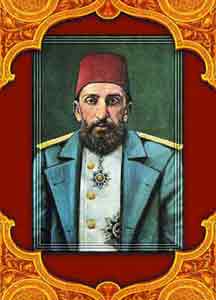
After the Tanzimat period came the first Constitutional Period (I. Mesrutiyet) (1876-1878). On February 14, 1878, Abdulhamid sacked the Constitutional government and ruled the nation directly until the second constitutional government was declared in 1908. Some historians have therefore chosen to portray this era as a dictatorship. The truth is different, however. Sultan Abdulhamid inherited an Empire at the verge of collapse. With skill and balanced diplomacy, he not only kept the Empire alive, but prevented warfare and bloodshed between 1876 and 1909. He reformed many areas of the Ottoman government, including the institutions of justice, education, and the military. During his reign, the Dar-ul-Funun (The House of Sciences) was established and later became the University of Istanbul. His government built the foundations of the railway system and the infrastructure of telegraphy. The generation that was to establish the Republic of Turkey, including Ataturk, received its education in the modern schools Abdulhamid had built. Claims that his regime was "bloody" are baseless and unfair, considering that not even his fiercest enemies were sentenced to death, but instead were exiled. The real reason for the hostile propaganda against him was that he was a devout Muslim, ruling his Empire according to Islamic morality. The opposition facing him during the 40-odd years of his rule was the Young Turks. Theirs was not a united front with a common ideology -- some of them actually held religious values. Most Young Turks believed that the way forward for the Ottoman Empire was to adopt Western philosophies and systems. Most were well-meaning and hoped to save the Empire but history was to prove their ideology faulty soon enough. The Young Turks did succeed in bringing down Abdulhamid's government, but their own lasted only ten years, during which time the Empire disintegrated. One fraction within this movement was the Union and Progress Party. They were in charge from 1910 onwards and became the Empire's ruling party in 1913. But simply opposing Abdulhamid was not sufficient to improve the situation in the Empire. Masonic elements within the Young Turks' movement and the Union party were responsible for their wholesale adoption of Western philosophies, ideologies and systems. An article in the Paris daily Le Temps on August 20, 1908, based on an interview with Mr. Refik and Colonel Niyazi -- two Union party members in Thessalonica -- reveals the extent of the Masons' influence on the movement: The journalist conducting the interview asked the extent of the aid received from Masonry between 1905 and 1908. Their answer to this question is interesting. "Masonry, especially Italian Masonry, supported us. Many lodges in Thessalonica were active. In practice, the Italian lodges helped the Committee of Union and Progress and protected us. Because most of us were Masons, we met in the lodges, and this was where we were trying to recruit. Istanbul became suspicious and managed to introduce a few agents into the lodges." [75]
After the declaration of the second Mesrutiyet (Parliamentary Monarchy), a British MP and the founder of the Balkans Committee, Roden Buxton visited Istanbul and recorded that the initiation ceremony of the committee of Union and Progress was an identical copy of the Freemasons': Candidates who wanted to be admitted to the Committee of Union and Progress were informed that they were about to be told a great secret. After their trustworthiness was established, they were made to swear an oath. Then the initiation stage began. The candidates were blindfolded and taken to another chamber, where the blindfolds were removed. The candidates found themselves in semi-darkness, facing three hooded strangers. Here they were required to put their hand on a sword and swear an oath of absolute secrecy and to kill anyone who committed treachery against the party, even if it were a friend or relative. [76] Prominent Turkish journalist Ilhami Soysal writes about the relationship between Masonry and the Committee of Union and Progress: The Macedonia Rizorta lodge and the Veritas [Latin for "Truth"] lodge in Thessalonica where the Turks were a minority to begin with, gradually became the meeting and recruiting center of the Committee of Union and Progress, then eventually came under their control. The leaders of the Committee of Union and Progress -- Talat Pasha, Mithat Sukru Bleda, Kazim Pasha, Manyasizade Refik, Kazim Nami Duru, Colonel (later MP for Mus) Naki, Drama Gendarmerie Commander Huseyin Muhittin, Financial Controller Ferit Aseo -- belonged to the Macedonian Rizorta lodge. Emmanuel Karasu, Cemal Pasha, Faik Suleyman Pasha, Ismail Canbolat, Hodja Fehmi Efendi, Mustafa Dogan, Mustafa Necip (later shot dead during the raid on the Babiali), were all illuminated at the Veritas lodge. Talat Pasha, who was to become Prime Minister, and Colonel Naki were active in both the Veritas and Macedonian Rizorta lodges. [77]
While these activities in Thessalonica continued, Abdulhamid was anticipating great danger from the Masons and tried to contain the Masonic lodges. He had organized a network of informers to report the activities taking place in the lodges. Grand Master Kemalettin Apak relates the events of that period, from his perspective: Sultan Abdulhamid II was afraid of the Masons. He systematically persecuted and tried to contain the Freemasons, nor was he wrong in being afraid of Masonry. Honorary Mason Sultan Murad V passed away in 1904, relieving Abdulhamid of one of his nightmares. A few years later a new movement, in which the Rumelia Masons played an important part, brought freedom and light to the nation's firmament. Those who forced Abdulhamid to accept and declare the Second Parliamentary Monarchy in 1908 were all Masons ... Abdulhamid wasn't persecuting Masonry in Istanbul and leaving us alone here [in Thessalonica]. His agents were at work here [Rumelia] too. Especially in Thessalonica, the undercover officers were watching the lodges and recording the people's comings and goings. But his influence and might weren't the same here as in Istanbul, because Thessalonica, Kosovo and Manastir were under the foreigners' control. [78] In short, Masonry played an active role in the last half century of the Ottoman Empire and the conflict between Abdulhamid and the Young Turks. The Masons, siding with the Young Turks, became powerful within the movement. Masonry was a serious influence in politics and, to the detriment of Turkish people, they imposed their European brothers' materialistic philosophies as a lasting influence. We will examine one example to see the extent of Masonry's materialistic philosophy. Abdullah Cevdet: An Anti-Religious Mason of the Ottoman Era Abdullah Cevdet, one of the founders of the Committee of Union and Progress, was an early leader of Turkey's anti-religion movement. He had formulated a worldview that he hoped would break the link between society and religion. According to him, any modern society should be founded on an anti-religious culture. Since Islam was preventing progress, it should be excluded from social life. Abdullah Cevdet made his name in the founding of the Union and Progress Committee. He had been greatly influenced by the views of Mason Ibrahim Temo, a fellow founder of the Committee and took his first steps towards materialism by reading the books that Temo gave him: Felix Isnard's Spiritualism and Materialism and Louis Büchner's Force et Matiére (Force and Matter). Later he confronted strong opposition from religious circles for his article on biological materialism. [79] Darwin's theory of evolution also made a great impact on Cevdet, and he was also influenced by eugenics, popular with European racists of the time. The Tanzimat'tan Cumhuriyet'e Turkiye Ansiklopedisi (Turkish Encyclopedia from the Reform Edict Period to the Republic) writes the following about Cevdet's views: Another aspect of Abdullah Cevdet's biological materialism is its theoretical clarity in the creation of a social élite. Ernest Haeckel's theory on inequality in the evolutionary process and Darwin's natural selection theory, made Abdullah Cevdet believe it was possible for some men to develop to a higher level of intellect by means of education, and that social progress can be achieved only under the leadership of such an élite. [80] In 1903, Cevdet began Ictihat magazine, in which he published articles against Islam and the Prophet Mohammed (may God bless him and grant him peace). In February 1909, with the aid of Masonry, he established the Ictihat Evi Publishing House. But the books Cevdet published were received by the public with such hostility that first the publishing house, then the magazine Ictihat were forced to close down. His subsequent prosecution and sentencing made the newspapers with words like these: "A warning to the transgressors of our religion: For denigrating the religion of Mohammed in one of his articles, Abdullah Cevdet has been sentenced to two years' imprisonment." [81] Soon after the closure of Ictihat, he began to publish the Istihat, Ishad and Cehd magazines and also worked as the editor of the Hak and Ikdam newspapers. On numerous occasions, he received warnings from the Sheikh ul-Islam, the the Ottoman Empire's highest religious authority, for his anti-Islamic articles. He aided the process in which Abdulhamid was removed from the throne but, fearing for his safety, didn't return to Turkey for many years. When he finally did, he was appointed to the office of Director for General Health. But here too, his views managed to offend. When he began to issue certificates permitting prostitution, members of society protested, and he had to be relieved of his post. Abdullah Cevdet has written and translated 70 books. His strongest anti-religion propaganda is contained in one he translated from the French, full of 19th-century atheist theories and titled Akli Selim (Common Sense). In the foreword to this book, Abdullah Cevdet worships humanist "idols" like freedom and virtue, writing that: Akli Selim (common sense) is a holy rebellion, and the flames of its love are burning in our hearts and can never be extinguished. Prometheus is not on the mountains of the Caucasus, but in our hearts, and his chains are broken. Our god is virtue, but virtue is not possible without freedom. The most valued freedoms are the freedoms of thought and faith. The subject of this translation is service and worship -- service and worship to the god of freedom. [82] Abdullah Cevdet was studying the French materialists and was greatly influenced by Gustave Le Bon. In line with his master's theories, he developed a project titled "Project to the effect of improving the Turkish race by use of breeding males." It is interesting to observe that Cevdet, who came from a devoutly religious family, spent his life fighting religion. He was the most radical representative of a generation poisoned with Masonic teachings and upon his death, he didn't receive the traditional Islamic funeral ceremony. Historian Konyali Ibrahim Hakki recounts Cevdet's funeral: Abdullah Cevdet said that he did not believe in God. He was strongly opposed to the Islamic-Arabic letters [and] was continually writing or speaking against Islamic values. His coffin was brought to the Hagia Sophia Mosque, where the Imams refused to give him an Islamic funeral. Eventually, his coffin was removed by the borough council. [83] Halkevi Community Centers, Village Institutes, and the Imposition of Masonic Teachings on the Masses After the founding of the Turkish Republic, the Masons penetrated the CHP (Republican People's Party) and began to get organized within. In 1935 Ataturk was informed of these activities and ordered the closure of the lodges, but the Masons moved into organizations like the Halkevi Community Centers and the Village Institutes. And their philosophy lived on. The establishment of the Halkevi Community Centers was trusted to Dr. Resit Galip, the Mason chief judge of the Ankara Istiklal Court that had sent many innocent men to the gallows. In one of his speeches before the Turkish parliament (TBMM) about the launching of Halkevi Community Centers, he claimed that Islam could not be the guiding principle for Turkey. As Dr. Anil Cecen, the owner of the Halkevleri journal relates: Dr. Resid Galip said that the national goal of the Turkish nation had now changed, Islamism and Ottomanism would no longer be the national goals, the Turkish nation's new goal was to take the place it deserved towards being a part of the modern civilization; that after the drought in Middle Asia, Turks in all parts of the world were seeking to attain civilization; and that in certain periods of history, the Turks had established the highest levels of science and civilization ... [84] Another immediately recognizable name involved with the Halkevi Centers is Sukru Kaya, a Mason and Minister of the Interior at the time. In the foreword to Behcet Kemal Caglar's book 1935 Halkevi, Kaya wrote: To understand the Halkevi Centers' cultural, social and economic benefits in such a short time, it is enough to study the statistics recorded in this book. The Halkevi Centers cater to the educational, social developmental and entertainment needs of society. Every citizen there teaches what he knows and learns what he doesn't. Every Turkish intellectual owes his knowledge to the nation's rather than his own effort. No office, no achievement, and no civil servant can fully repay his debt to the nation. [85] By 1934, the number of Halkevi Centers had reached 103, and their village subsidiaries (called Halkodalari) 4,322. The members numbered 55,000 and by that time, more than two million had been "educated" in Masonic ideals. In 1935, when Ataturk closed down the lodges, the Masons didn't seem to be too bothered about it. Interior Minister Sukru Kaya, one of the most senior Masons of the era, told members of the press that since the Halkevi Centers were fulfilling the functions of the lodges anyway, he didn't mind this development. In his book Turkiye'de Masonluk Tarihi (Masonic History in Turkey), Grand Master Kemalettin Apak phrases it like this: In the meeting of 33rd degree Masons, Brother Sukru Kaya stated that the Halkevi and Halkodasi Centers have practically been carrying out Masonry's social and cultural activities for a long time. The party considered it necessary for the lodges to rest these activities, and the government had to oblige and put this decision into effect. [86]
In other words, according to Sukru Kaya, the lodges and the Halkevis were representatives of the same philosophy. Over the years, the Halkevi project was developed further with the introduction of the Village Institute, which covered a wider spectrum of activities. Formed by Education Minister and Mason Hasan Ali Yucel, the Village Institute was disseminating the Masonic philosophy among the population just like the Halkevi. This philosophy's real core message became apparent in 1945 when the Hasanoglu Village Institute in Ankara began to publish the magazine Koy Enstituleri, which openly attacked the religion of Islam and its values, as well as with "between the lines" articles. In one issue of the magazine, Ismail Hakki Tonguc, an author with Marxist sympathies, writes: Let's hope that tomorrow's world won't have a faith looking to heaven for salvation and living off metaphysical ideas. If we want this new world to rest upon solid foundations, we must give the people a new, comprehensive religion of a humanist, realist and rational nature, free of greed and lies… The Village Institute has tried to save from scholastic dogma the children it has educated. [87] Hollow terms like humanist, rational, realist, and new are the same ones used by the Masonic philosophy of secular humanism. Among the Village Institute's publications were poems by Nazim Hikmet that defend materialist philosophy and consist of lines intended to lead students to deny God; also stories in which religion and its values were mocked. They even relied on the views of Ethem Nejat and Mustafa Suphi, members of the first steering committee of the secret Communist Party. Peyami Safa, a leading author of the time, wrote an article about the Village Institute's Marxist propaganda: Not one Turkish intellectual isn't aware that the Village Institutes are Communist propaganda centers where children learn the poems of Nazim Hikmet, where Marxist conferences are given, and where Marxist articles are published. Radio Moscow regularly praises graduates of the Village Institute. Only recently, the high school teacher sentenced to imprisonment for being caught in the act of Marxist propaganda in the school, was not a graduate of Philology-as he had stated on his application form-but was from the Village Institute. If closing the Village Institutes is the victory of the dark forces, does it follow that these institutes, likened to the 30th August victory, were representing the victory of the Red forces? Does it follow that if it's not Red, it must be dark? Are the free nations ... also the dark nations? According to this false logic and the voices from Moscow, the new teacher schools that have replaced the Village Institute are also "dark" teacher schools, because Marx is not praised here, Moscow's agent Nazim Hikmet's records are not played and his poems not read. Villagers who have the same rights and responsibilities as the townspeople are not considered a separate class, and the national unity is not split and rearranged into social classes. [88]
When this systematic Marxist propaganda from the Village Institutes hit the news, the public put great pressure on the TBMM. Criticism could be heard even from the members of the CHP. Education Minister Hasan Ali Yucel was sacked and replaced by R. Semsettin Sirer, who ordered an investigation into this affair. Here are some excerpts from the report his assistants prepared, which became a source of embarrassment: Document 1 - 12: In the years between the founding of the institute and 1947, girls were frequently harassed by their teachers. This document, signed by ministry inspector Ziya Karamuk, disciplines committee members and head teachers, further establishing that girls were forcefully kissed, fondled, molested and in some cases, forced into sexual intercourse. Some teachers had to marry these girls by the force of law. Document 2 - 13: On a number of occasions, boys and girls were caught in the act in the dormitories or on the nearby Kalayci area. Document 3 - 14: A village schoolteacher, himself a graduate from the Village Institute, molested and then raped a girl from his class ... it is proven that students who witness the practices of their teachers, adopt the same unethical practices after their graduation. This report offers still more examples of unacceptable practices. Besides the harassment of girls under the name of sexual freedom, all-night drinking sessions between teachers and students are recorded. Document 47 states that "filthy" propaganda was endemic in word and print, and that The Village Institute Magazine encouraged these unethical sexual practices which in some cases, even led to incest. Ministry of Education chief investigator Fethi Isfendiyaroglu states that: Village Institutes were built in remote areas, away from towns and villages. This separated students and their parents created an environment well suited for the unethical suggestions and practices of teachers devoid of morals and patriotism. More than 40,000 villagers were being conditioned and exposed to left-wing propaganda and suggestions of sexual freedom. Consequently, some of the weaker students were poisoned with this filth. Fortunately, most village students were of solid character and thus endured the Village Institute practices without coming to harm, left with their decency and morality intact, and developed hostility towards the these institutions' practices and propaganda. [89] Moral degeneration of the people by the atheist, materialistic propaganda was part of the Masons' strategy. For years, Masonic writers and journalists kept protesting the closure of these Village Institutes by writing articles in their support and demanding they be reinstituted. An article in the Mason Dergisi (Mason Magazine) praises the Village Institute: The education policies required that the curriculum be of a universal, humanist, secular and of positivist nature. Religious education had been abolished. The rural population's education was one of the biggest policy problems facing the Republic of Turkey. There was urgent need to create an effective education system to train sufficient numbers of teachers aware of the need for development and progress within the village population, for methods and practical solutions to achieve the goals of educating the huge rural population, and also to implant a sense of belonging and patriotism among the rural community. The Village Institute was founded for this purpose and, in my opinion, became the grandest education project in the history of Turkey. [90] The same article refers to the Halkevis as "the product of a missionary mentality." This "mission" was obviously victory in the ongoing Masonic war against religion since the times of the Templars. The Masons' War Against Religion
As the preceding chapters established, Masonry has traditionally represented the anti-religious front. The Templars, having left Christianity and adopted deranged teachings, then engaged in their historic war against Christianity. Over the centuries, the war against religion in Europe has been fought under the leadership of Freemasonry, heir to the Templars, operating in Turkey and actively trying to impose positivist and materialistic philosophies on the masses to encourage anti-religious sentiments. We can read the Masons' antagonistic views on religion, including their recommended action plan, in articles printed in their own publications. For instance, one says, "For as long as the Madrasahs [religious schools] and the Minarets are not destroyed and the scholastic ideas and dogmatic beliefs not eliminated, the captivity of thought and suffering in the conscience will continue." [91] From the words of Grand Master Haydar Ali Kermen, Masonry's dislike of religious institutions becomes obvious:: The totally improper screeching calls to prayer from mosques in the vicinity of the Parliament, are nothing but a scream saying, "I'm not dead and I'm not going to die." They should be understood as a wake-up call to all intellectuals of this nation and a call to duty. [92] The Islamic call to prayer is a "screeching" reminder to the Masons, calling them to duty. To silence the religion that's declaring "I'm not dead" is their greatest duty. In their fight against religion and religious morality, Masons have used a number of different strategies. The Halkevi and the Village Institute were two of these. Yet others were Mason-controlled media and book publishing. Beginning with Abdullah Cevdet, the Masons have continued this tradition in the Republican period with authors like Cemil Sena Ongun and Orhan Hancerlioglu, both master Masons of the highest degree. In Hz. Muhammed'in Felsefesi (Prophet Mohammed's Philosophy), Cemil Sena Ongun writes-indirectly but very insistently-that the Prophet Mohammed (may God bless him and grant him peace) invented Islam. (We absolve Islam of such allegations) In books like Toplumbilim Sozlugu (Dictionary of Social Sciences) and Islam Inanclari Sozlugu (Dictionary of Islamic Beliefs), both used as references at universities, Grand Master Orhan Hancerlioglu slanders religious authorities and makes unfounded allegations against people of religious importance in his quest to further his atheist and anti-religious views. As a result of all these Masonic theories and propaganda, whole generations of atheist intellectuals have arisen. Because they adopt a materialistic and anti-religionist world view and believe in Darwin's theory of evolution like a religion, they believe themselves to be progressive and science-oriented. But in reality they live in ignorance, and arrogance is their trademark. The Masons' activities to separate the Turkish people from their religion has another dimension: oppression. A little booklet by the lodge says that "Hidden cultural elements of Islamic origin in our society wish to reintroduce Islamic culture. Their existence must be denied, but we must find methods to crush them." [93] Such Masonic "methods" can be found behind the persecution of great Islamic thinkers like Sehbenderzade Filibeli Ahmed Hamdi, Iskilipli Atif Hoca, Bediuzzaman Said Nursi and Suleyman Hilmi Tunahan in the last century. In various parts of his book Risale-i Nur, Bediuzzaman Said Nursi refers to the forces opposing Islam: ... the greatest damage to the nation and to Islam has been done by Masonry, Communism and atheism. [94] ... Masonry, Communism and atheism create anarchy, and the only thing that can stop these forces is Islamic unity and the guidance of the Qur'an. [95] On another occasion, Bediuzzaman says about the Masons' animosity to religion: A certain group, intent on severing the 1,000-year-old link of the Muslim Turks to their religious values, says; "We no longer believe in God as the purpose. We have created our own purpose. Our purpose is not God, but Mankind." [96] This quote of Bediuzzaman's can be traced to an article printed in Mesriki Azam Ictimai Zabitlari (Grand Lodge Inner Proceedings) in 1923. The "certain group" Bediuzzaman referred to is undoubtedly the Masons, with their belief in secular humanism. In Risale-i Nur, this great thinker mentions the personal enmity, injustices and oppression the Masons subjected him to: The sufferings I have to endure here in one day are more than what was done to me in one month while I was in Eskisehir. They have sent a callous Mason who does his best to get me to the point where I can't endure the torture any longer and I say, "Enough," so they can then justify their lies. [97] In Bediuzzaman's Son Sahitler (Last Witnesses) he explains that he was imprisoned unlawfully because of the Masons and tells of the hardship and sufferings they made him endure. In Fourteenth Ray, he refutes the allegations made against him by the hostile Masons. The court did not accept the view that Bediuzzaman had secret enemies, but he replied that the court was wrong and that Masons and Communists regarded him as their sworn enemy. He went on to say that his mission in the Risale-i Nur Collection had been only to prove the existence of God and to protect Islamic faith against the anti-religion movement. From closer inspection of a letter he wrote, it is evident that the forces behind the campaign against him were Masons and Communists: I took a look at politics three times in recent times. As I said in my defense, two-faced elements in the pay of the Masons and the Communists used bribery and pressure to mete out torture on me in order to crush my resistance. But now I'm feeling a new breeze in society, though I couldn't look any closer, for my profession forbids this. [98] Bediuzzaman was explaining that his specific mission was to save faith, to fight against Masonry, irreligion, and the anti-religion lobby. With these famous words, he advised his pupils to be positive, because their struggle would be rewarded with success and Islam would be the strongest voice in the land: "Yes, be hopeful! The loudest and strongest voice in the coming upheavals and changes will be that of Islam!" [99] Since Bediuzzaman's era, the Masons, fearing that Islam would again be "the loudest and strongest voice in the land," have continued their war of propaganda against religion. This war actually began in the 14th century with the Templars in Europe, and the Masonic organization continues to fight it with oppressive policies around the globe, as well as in Turkey. As examined in previous chapters, the Templar-Masonry organization engages in illegal activities for political and economical gain, and Turkish Masons operate along the same lines as their foreign brothers. P-2s of Turkey: Secret Lodges One of Masonry's unchanged, fundamental principles is secrecy, concealing their activities since the times of the Templars, who successfully hid their real activities behind the façade of a religious Christian order, while worshipping an idol named Baphomet; having left Christianity for a self-made faith of a perverse nature, engaging in abnormal sexual practices, and managing to keep secret that they were de facto enemies of Christ. Masonry inherited their tradition of secrecy and created the image of a charitable cultural and ethical organization with no political interests. But the importance Masonry attaches to secrecy contradicts this. Why would an innocent charitable foundation have such a strict policy of secrecy? In an article in Mimar Sinan, Mason Uner Birkan writes that, "Masonry too can take an interest in social affairs, thereby presenting itself as a charitable organization." [100] To some extent, the methods of secrecy Masonry employs to cover up its real activities are explained in Masonic publishing. For example the Anderson's Constitutions (sort of a constitution of Freemasonry), under the subsection "Of Behavior," reads as follows: You shall be cautious in your Words and Carriage, that the most penetrating Stranger shall not be able to discover or find out what is not proper to be intimated. [101]
The Masonic journal Sakul Gibi (Like a Plummet) explains this rule: Bees cannot work unless in darkness …Your left hand must not know what your right hand does. Symbols are effective in the countless purposes of secrecy, and also in greater things. [102] The Mason Dergisi (Masonic Magazine) for March 1993 states, "it is strictly forbidden to talk about ritualistic activities outside the lodge." In Issue 11 of Buyuk Sark (Grand Orient), another Masonic publicaton, it says, "It is wholly unethical to reveal the symbols and things done and discussed in the lodge; it is treachery against the cause and oath of Freemasonry." The Masons' "secrecy oath" proves the importance of absolute discretion within the organization. The second-degree apprentice rite goes like this: I promise and swear that I will always hele, ever conceal, and never reveal any of the secret arts, parts or points of the hidden mysteries of Freemasonry, which may have been heretofore, shall be at this time, or any future period communicated to me as such, to any person or persons whomsoever, except it be to a true and lawful brother Mason, or within a regularly constituted Lodge of such, and not unto him or them, until by strict trial, due examination, or legal information, I shall have found him or them as lawfully entitled to the same as I am myself. I furthermore promise and swear that I will not write, print, paint, stamp, stain, cut, carve, mark or engrave them, or cause the same to be done, upon anything movable or immovable, capable of receiving the least impression of a word, syllable, letter or character, which may become legible or intelligible to any person under the canopy of heaven, and the secrets of Freemasonry thereby unlawfully obtained through my unworthiness. [103]
What secret are the Masons so sensitive about? The answer to this question was revealed by the P-2 Lodge in Italy. Behind a front of a charitable and ethical organization, they were engaged in illegal activities for political and economical gain. But other lodges doing so are not visible. Again, lodges are separated into two categories: known lodges and the secret ones like the P-2. Unlike the usual lodges, these have no known addresses, and are disguised so that you can't see their existence. For this purpose, the P-2 occupied part of Licio Gelli's villa, which was located in a remote area. Italy's famous politicians, bureaucrats, businessmen and media bosses couldn't have attended the P-2's lodge meetings without secrecy, for otherwise, the organization would soon have been discovered. The secret of Turkey's P-2 lies hidden in this fact: Only a small part of the Freemasonry's activities are known officially and in the public domain. There are a number of officially well-known lodges in Istanbul's Nuru Ziya street and in Tepebasi, but the organizational brain lies hidden in the secret lodges, hidden away where no one would suspect them -- in the cellars of mansions belonging to the Grand Masters, in secret bunkers under factories and the headquarters of large holding companies, accessed through entrances concealed behind mirrored glass and wardrobe doors. The secret members of these lodges can thus look as if they were attending a business meeting or simple social gathering among friends without drawing attention. The highest-ranking Turkish Masons belong to these lodges and frequently receive their fellow brothers from Tel-Aviv, Chicago, or Paris to share decisions taken by the international lodges and coordinate future actions with their local brothers in Turkey. If these lodges were investigated, a number of documents would be found confirming their connections and illegal activities. Recently, some of the strange rites taking place in these lodges caught the attention of the media. These rites prove that the forbidden Templars live on in Turkey today and practice the same perverted rituals as they did six centuries ago. Footage from the Lodge: Templars' Secret Rites on the Screen 1997 was a hard year for the Masons. Footage filmed inside two separate lodges by hidden cameras was shown on Channel 7 of Turkey repeatedly for days. The scenes captured shocked the Turkish people as well as the Grand Masters of Freemasonry. Some footage recorded the Satan-worshipping rite that can be practiced only at the 33rd degree Grand Master level. The Grand Master conducting the ritual was drinking the blood of a goat killed in the middle of the lodge, and ending the ceremony by offering prayers in Hebrew to Satan. In another scene, as part of a Masonic ritual, two new Masons had swords pushed against their chests and were threatened with death. In yet another scene filmed in the same lodge, a Masonic "marriage ceremony" was being conducted -- something that Freemasonry had always denied as non-existent.
After the airing of this footage, Freemasonry made the center of the news for days. Some newspapers and magazines had also obtained relevant material. Some of the media coverage read: The 7th of January, Monday. It's the 1900 hours news on Channel 7. The main news stories of the day are listed, one after the other, and then the bomb is dropped: footage of rites showing Masons of the 33rd degree. What the Masons are, who they serve, and what kind of activities they engage in, is known but, because of their policy of total secrecy, cannot be exposed. But that's exactly what is being done on the screen! Shocking scenes of a lodge that only the highest-ranking bureaucrats and other select personalities can attend. Music playing, Satan worship, white robes, swords, a six-pointed star and a slaughtered goat. The blood of the goat fills a bowl; its head is burned on a spit, to the Hebrew prayers of the Grand Master. These strange scenes took place in the middle of Turkey, in Istanbul. Oaths of a strange and confusing content: "Honorable Kadosh Knights, if you break your oath, may your body be torn to pieces by wild horses [and] turned to ashes, the ashes blown away by winds blowing from the four directions …" Channel 7 had penetrated the most secret of secret societies and, presumably, were expecting to get the credit for achieving this "world's first." But they were stunned at the silence of the mainstream Turkish media. Instead of basking in the glory of this incredible journalistic achievement, they were perplexed by the silence that greeted it. No other channel aired the footage; no newspaper gave it any columns. Total silence. With the practice of getting married by the Imam in the current headlines, the Masonic marriage ritual should have been of interest. The footage shot by Channel 7 with a hidden camera actually explains the reason for this silence: Freemasonry's initiation ceremony is almost like a religious ritual. Candidates are made to wait in a chamber that the camera could not enter, and then have to bend down so as to pass under a bar. While blindfolded, they feel a sword thrust against their chest and are asked to touch it. "If you reveal what you have learned here, you will bear the consequences." The message is clear. When the blindfold is removed, before they do or say anything, all the brothers facing them make the cut-throat sign. [104] For days now, Channel 7 is airing footage of Freemasonry. This is a journalistic first ... Via the secret camera, footage of a Masonic lodge's initiation ritual is made public. The Masonic front, despite being asked to respond by the media, keeps total silence. Though scenes from inside the oldest and most secretive sect in European history are being aired by Channel 7, no other TV channel takes up the subject. Despite the incredible scenes in the footage, no reaction, no response, nothing. The media ignores the whole thing … Could the oath of secrecy taken by the new recruits on acceptance into the lodge -- who go on to become influential and important personalities -- be playing a role in this media blackout? [105] After the Masons' spectacular TV debut, two former Masons who had left the lodge years ago -- Mumin Kilic and Onder Aktac -- went in front of the cameras to make statements about the dirty practices of Masonry. This issue was also discussed in the Turkish Parliament. Tokat MP Ahmet Fevzi Inceoz requested that the Interior Ministry begin an inquiry into Masonic lodges. Based on the footage shown on TV he reasoned: As seen in the footage, the Masonic Society threatens national security and interests. In these lodges, citizens are threatened, illegal marriage ceremonies are conducted, and monies are collected and spent, and unlicensed weapons kept. They operate outside the control and regulations of the security forces, maintain their operational headquarters outside the country, clearly represent a threat to the state -- and must therefore be closed down. But to no avail. The Masons didn't respond in any way, and the media they control kept quiet about the affair. Thus the media moved on to other themes and subjects. Today's Templars, still addressing each other as "Kadosh Knights" managed once more to remain underground as they had for centuries. The Templars and the Mafia To understand the Masonic activities in one country, one can take a look at another and draw comparisons. Since Masonry is an international organization operating everywhere under the same rules and principles, scandals in one country can provide insights into what might be going on in another. One enlightening example shows the close relationship between the Italian Masons and the Mafia. The P-2 investigation revealed that the two are very much interlinked, and the Italian prosecutors' "Clean Hands" operation of the 1990s, while managing to clear up the Mafia to some extent, proved the links between it and Masonry. The parliamentary commission in charge of the Mafia investigation (Commissione Parlamentare Antimafia) said in its report: The fundamental terrain on which the link between Cosa Nostra [Mafia] with public officials and private professions was created and reinforced is the Massoneria [Freemasonry]. The Massoneria bond serves to keep the relationship continuous and organic. The admission of members of Cosa Nostra, even at high levels, in Massoneria is not an occasional or episodical one, but a strategic choice ... Massoneria associations offer the mafia a formidable instrument to extend their own power, to obtain favors and privileges in every field: both for the conclusion of big business and "fixing trials", as many collaborators of justice have revealed. [106]
What is the situation like in Turkey, a country with cultural, historical and sociological similarities to Italy? Is the relationship between Mafia and Masonry the same as in Italy? In recent years, Turkish government officials have given some answers to this question while investigating the Susurluk Case, which revealed the country's politician-Mafia-police relationship. After a traffic accident, it was discovered that a deputy, Istanbul's police chief, and a man implicated in various terrorist attacks and sought by the local police and the Interpol for more than a decade were traveling in the same car. Based on the yields of the Turkish Parliament Susurluk Commission's inquiry, MP Hayrettin Dilekcan made this statement: In Italy, they had the P-2 Lodge. We can now say that something similar to the P-2 exists in Turkey ... To call the present case a Mafia scandal would not do it justice. You cannot call the P-2 case a simple Mafia affair. The lodges are ruling in Turkey. If some people want to take a serious position, the decisions about it are made in the lodges. For as long as these lodges cannot be overcome, Turkey will not progress easily … In the P-2 case, the lodge was in effect "appointing" the Prime Minister and the ministers … In Turkey, they have reached the level of power and influence where they determine the leaders of political parties. The rest I leave to your imaginations. [107]
MP and spokesman of the Susurluk Commission, Bedri Incetahtaci: We now have in Turkey something we cannot ascribe a name to. But the Gladio affair in Italy -- where there was a state within the state and behind that, there was the lodge -- will help us find a name for what we have in our own country. We know that this organization exists, and we also know the things they have done. There are similarities between theirs and ours … [108] In short, the investigating commission found strong evidence that the lodge was the organizing force behind these cases and reported this in their conclusive papers.
Behind the corruption, injustices and persecution of innocent people in Turkey are the modern day Knights Templars or, if you prefer, the Masons. They are manipulating the country for their political and economical purposes, and in order to achieve their goals they never hesitate to adopt dark and dirty methods. And all the religious voices who oppose Masonry and their philosophy are targeted, slandered, pressurized and persecuted. For this reason, everyone who believes in the moral values of Islam must make a stand against the activities of the modern Templars. This anti-religion and gain-oriented organization must be combated by the use of the law, and also on an ideological and philosophical platform. We must be aware of their propaganda. We believe that this ideological struggle will be won and that Turkey will be a strong and modern state in the 21st century with her moral values. _______________ Notes: 72 Mimar Sinan (A Turkish Mason
Magazine), no. 15 pp. 105-106. |
||||||||||||||||||||||||||||||||