|
REPORT OF THE GRAND JURY INTO SEXUAL ABUSE OF MINORS BY CLERGY IN THE PHILADELPHIA ARCHDIOCESE |
|
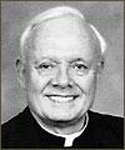
Monsignor David Walls, ordained in 1960, was a sexual abuser of both boys and girls, yet served as Vicar for Catholic Education in the Philadelphia Archdiocese, Cardinal Bevilacqua left him living in a parish rectory, ministering to all ages, even after learning of the priest's sexual offenses. When the Cardinal testified that he did so because he did not know at the time that the victims were minors, the Grand Jury did not find his explanation credible or consistent with the evidence. The Cardinal's testimony did, however, provide a window into the deceptions, half-truths, and rationalizations with which the Archdiocese has. sought to justify and cover up practices that systematically abetted the abuse of children. Monsignor Walls presented an early test of Archbishop Bevilacqua's handling of sexually abusive priests. Within weeks after taking over the Philadelphia Archdiocese in February 1988, the Archbishop learned that Msgr. Walls, then serving as Vicar for Catholic Education, was accused of attempting to sexually assault a 17-year-old girl in his rectory bedroom two years earlier and also of making inappropriate advances toward two boys (one the brother of the female victim). Shortly thereafter the Archbishop received a memo that Msgr. Walls had admitted the incidents. The pastor of Saint John Neumann, the parish to which Msgr. Walls was transferred following the incidents, told Archbishop Bevilacqua that several parishioners "have stated that he has been involved in "what the parishioners characterized as 'pedophilia.'" The Archbishop's response became his standard practice through the years: he acted to fend off legal liability for the Archdiocese, but gave the priest continued opportunity and cover for his crimes by permitting him to go on ministering while enjoying unrestricted access to parish youth. The Archbishop did remove Msgr. Walls from his high-profile job in the Office of Catholic Education, but solely to avoid legal action. In a May 4, 1988 memo, Archbishop Bevilacqua explained that the 'perception of inaction could very well trigger the parents to resort to some kind of further procedure through court action." The Archbishop's effort to avoid the "perception of inaction" characteristically included no attempt to protect parish children. Archdiocese managers contacted neither victims nor civil authorities. Instead, despite pleas from the priest's therapists, from his pastor, and from the Cardinal's own Secretary for Clergy, Cardinal Bevilacqua allowed Msgr. Walls to remain unmonitored in his parish residence in Bryn Mawr, with no formal assignment, few obligations, and limitless unsupervised time in which to procure new victims. For 14 years after learning of the priest's admitted sexual offenses against minors, Cardinal Bevilacqua permitted him to live in the parish rectory, to celebrate Mass with altar boys, to hear confessions, and to counsel parishioners and others through Catholic Human Services. Cardinal Bevilacqua learns in 1988 of Monsignor Walls' abuse of minors. On February 25, 1988, a therapist, Eileen Egan, informed the Archdiocese that Msgr. David Walls had sexually accosted a client of hers, later identified as "Colleen," two years earlier, when the girl was 17 years old. Vice Chancellor Joseph Pepe met with Egan and recorded the report: Ms. Egan alleged that one evening this young woman went to the rectory where Monsignor Walls resided to discuss some family difficulties. He brought her up to his suite of rooms, turned the lights out, and proceeded to make sexual advances. He got the young girl down on the floor. She escaped his grasp, got up and he began to pursue her around the room. He used words which Ms. Egan did not explain. The young woman eventually ran out of the rectory and Monsignor Walls pursued her for four blocks. This Ms. Egan assured me was not to assault her client but from what she could learn to calm her client down. Father Pepe also recorded reports from Egan that Walls had "approached" two boys, one of them the brother of Egan's client. The therapist told Fr. Pepe that she was concerned about Msgr. Walls potential to damage other children because he was still performing parochial duties and was still Vicar for Catholic Education for the Archdiocese. Later that day, Chancellor Samuel Shoemaker and Vice Chancellor Pepe met with Msgr. Walls. Father Pepe's notes from the meeting record that Msgr. Walls "minimized" but "did not deny" the allegations regarding Colleen, her brother, and the other boy known to Eileen Egan, Monsignor Walls stated that he had been under the care of a psychiatrist since July 31, 1987, but would not give the name of his therapist. Father Pepe prepared a memo recording the meetings with Egan and Msgr. Walls. Monsignor Shoemaker told the Grand Jury that Archbishop Bevilacqua was immediately informed of the charges against Msgr. Walls and provided with the written report that included the priest's admissions. A victim's therapist reports Monsignor Walls' sexual assault to the Archdiocese, but not to the police, and asks Church officials to remedy the matter. Eileen Egan explained to Fr. Pepe that she did not report the assault against her client to civil authorities for reasons relating to her therapy, but was relying on the Archdiocese to "do its duty in looking into the allegations and coming to some resolution on the matter and incident." Egan offered that her client and a colleague who knew of another victim were available to talk to Archdiocese managers if necessary "to get some action on these allegations." She also asked "that the Archdiocese in some way let her client know they were sorry concerning the incident ..." After Msgr. Shoemaker and Fr. Pepe discussed with the therapist the legal duty to report child abuse, Archdiocese managers decided that another priest, Fr. John McFadden, should be asked to act as a "go-between" with the family of the victim. This decision was originally recorded in Fr. Pepe's February 25, 1988, report, but was whited out on the copy provided to the Grand Jury, presumably because the advice to use a go-between was provided by legal counsel. The Grand Jury was able to ascertain what Fr. Pepe originally wrote in his report because a subsequent handwritten "file summary" prepared by Fr. Vincent Welsh included a summary of Fr. Pepe's report, including: "-- approved Fr, [John] McFadden as go between w/ family." The designation of Fr. McFadden as a go-between is significant because Archdiocese managers testified before the Grand Jury that legal counsel had advised them that they were required to report suspected sexual abuse only when it was reported to them directly by a victim. Therefore, under their interpretation of Pennsylvania's reporting requirements, the use of Fr. McFadden as a go-between might free Archdiocese managers of the legal duty to report Msgr. Walls' criminal behavior. (The Child Protective Services Act in 1988 required anyone who, in the course of their employment, came into contact with a child he suspected was abused, to report that abuse. Clergy were not explicitly included or excluded from this requirement. In 1995, the legislature made it explicit that clergy were included.) There is no evidence to show whether Fr. McFadden ever contacted the victim's family. Father McFadden may have been chosen to communicate with the victim's family because he was well aware of Msgr. Walls' problems. Eileen Egan's client, Colleen, and her family had gone to Fr. McFadden shortly after Msgr. Walls had accosted her in 1986 in his rectory bedroom at Saint Matthias. In addition, according to an October 1990 letter from Msgr, James Meehan, Msgr. Walls' subsequent pastor at Saint John Neumann, 11 people from Msgr. Walls' previous parish, Saint Matthias, had protested to Fr. McFadden about Msgr. Walls ' "deviate sexual behavior" before the Archdiocese reassigned him in 1987. The parishioners told Fr. McFadden they thought Msgr. Walls needed to be institutionalized. But Msgr. Walls had not been institutionalized. Instead, in June 1987, Cardinal Krol had quietly transferred Msgr. Walls' residence to Saint John Neumann in Bryn Mawr. At the same time, he promoted Walls to be Vicar for Catholic Education for the Archdiocese, It was eight months later that Eileen Egan informed the new Archdiocese administration about Msgr. Walls' abuse of her client. Monsignor Walls is returned to a parish residence after admitting sexual abuse of minors, despite his therapist's warning not to mingle with youth. Four days after receiving Eileen Egan's report of her client's abuse, Chancellor Shoemaker arranged for Msgr. Walls to go to Saint Luke Institute in Suitland, Maryland, for an evaluation. On March 14, 1988, Msgr. Walls began a ten-day evaluation. The Institute's assessment confirmed Msgr. Walls' earlier admissions. The therapists, according to Fr. Welsh's notes, urged that Msgr. Walls "abstain from working w/ or mingling w/ youth or young adults in unsupervised capacity." Saint Luke staff also recommended a re-evaluation at the Institute in six to nine months. Monsignor Shoemaker told the Grand Jury that he sent this evaluation to Archbishop Bevilacqua, Nevertheless, Cardinal Bevilacqua allowed Msgr. Walls to live, unsupervised, in the rectory at Saint John Newman, a parish with a school. The pastor at Monsignor Walls' parish pleads with Archbishop Bevilacqua for guidance in supervising his resident, but the Archbishop ignores him. Upon Msgr. Walls' return to Bryn Mawr after his evaluation in March 1988, Msgr. James Meehan, his pastor, began writing letters to the Archdiocese describing his concerns about the priest and pleading for instructions from the Archbishop. In a letter of April 11, 1988, to Chancellor Shoemaker, the pastor described Msgr. Walls' situation as "potentially explosive." He expressed extreme concern for the priest, the Church, "and others." He wanted Archdiocese managers to know that he was not in regular or close contact with Msgr. Walls, and was not supervising him. Monsignor Meehan sent a copy of this letter to the Archbishop and requested a meeting with him. On May 3, 1988, Archbishop Bevilacqua telephoned Msgr. Meehan in preparation for a meeting with Msgr, Walls the next day. The Archbishop's notes of the phone call record that Msgr. Meehan told him that "reports about Monsignor Walls are becoming more and more public," and that "severa1 women have stated that he has been involved in" what the women characterized as "pedophilia." The Archbishop also wrote that Msgr. Meehan expressed concerns about his responsibilities as pastor and about what Msgr. Walls was allowed to do. Monsignor Meehan had heard informally, while discussing another matter with Msgr. Shoemaker, that Msgr. Walls was not supposed to be celebrating Mass. Monsignor Meehan told the Archbishop that the Chancellor needed to tell Msgr. Walls not to perform Masses if that was the Archbishop's wish. Archbishop Bevilacqua recorded in his memo to the file that he told Msgr. Meehan he "would look into the matter." Chancellor Shoemaker testified to the Grand Jury that the Archbishop did not thereafter ask him to instruct Msgr. Walls to refrain from celebrating Mass. The Chancellor said that, had he been asked, those instructions would have been communicated to Msgr. Walls verbally and in writing, with a copy in the file. Monsignor Shoemaker told the Grand Jury that it was his understanding that the Archbishop was handling this matter himself. On May 4, 1988, Archbishop Bevilacqua met with Msgr. Walls. Rather than tell Msgr. Walls that he could not celebrate Mass, the Archbishop, according to his own notes, explicitly permitted the priest to "remain at St. John Neumann and continue to assist Monsignor Meehan." He later confirmed to the Grand Jury that he meant for Msgr. Walls to assist with parish duties, including saying Mass and hearing confessions, even of youth. Monsignor Walls is asked to resign his high-profile position as Vicar for Catholic Education, but continues to minister at Saint John Neumann for 14 Years. After hearing that reports about Msgr. Walls were becoming "more and more public," Archbishop Bevilacqua, at his May 4, 1988, meeting with the priest, asked him to resign as Vicar for Catholic Education. According to his memo on the meeting, the Archbishop explained that Msgr. Walls could not continue in this high-profile position. He cited in particular "the fear that the parents of recent victims were not likely to take any action of a legal nature as long as the Archdiocese has acted strongly." (Appendix D-20) Having taken action to quiet the parents of Msgr. Walls' victims, Cardinal Bevilacqua left the priest in residence at St. John Neumann for 14 more years. He did this knowing that Msgr. Walls would be working and mingling with young people in complete disregard of the St. Luke Institute's recommendations. He left the priest in place without restrictions, supervision, or follow-up evaluations despite numerous reminders, warnings, recommendations, and pleas from Msgr. Meehan, Secretary for Clergy John J. Jagodzinski, and the Vicar for Delaware County, Msgr. Francis A. Menna. Monsignor Walls' pastor, Msgr. Meehan, continued to convey warnings and ask for direction. On August 22, 1990, he wrote to Msgr. Jagodzinski, who forwarded the letter to Archbishop Bevilacqua, that he felt he was "sitting on a keg of dynamite." Monsignor Meehan told the Archdiocese managers that Msgr. Walls "leaves early in the morning and comes in around 10 or 11 at night." In three years, he estimated, Msgr. Walls had eaten two meals at the rectory. The pastor wrote, "It is nearly impossible to know what his lifestyle is like." Monsignor Meehan's letter referred to the Church's recent problems with pedophilia and requested "for my own personal peace of mind, a statement in writing indicating exactly what my position is. Specifically, it would be extremely beneficial to have a diocesan lawyer outline the legal responsibilities to the people in the parish and the liabilities I might have if the matter should ever come to the attention of the press or become a future concern." He concluded with a "P.S." apologizing for the length of the letter, but stating: ''as you know from our conversations, it leaves out much more than it includes." On September 26, 1990, prior to a parish visit by the Archbishop to St. John Neumann, Msgr. Jagodzinski sent a memo about Msgr. Walls' situation to Vicar General Edward P. Cullen, headed: "FOR INFORMATION OF THE ARCHBISHOP." In it, the Secretary for Clergy noted several "difficult and complicating factors," including: "the high profile nature of Msgr. Walls' earlier position"; "the extremely sensitive nature of the earlier accusations against him"; and "the continuing 'explosive' potential for future acting out." Monsignor Jagodzinski pointed out that Msgr. Walls had been on "leave of absence," residing at St. John Neumann, since May 1988, and that his pastor, Msgr. Meehan, had repeatedly but unsuccessfully asked for some definition of his responsibilities. Monsignor Jagodzinski attached Msgr. Meehan's most recent plea, dated August 22, 1990. The Secretary for Clergy also forwarded for the Archbishop a letter from Msgr. Walls describing his parish activities, which included performing Mass, hearing confessions, counseling, and covering the parish when the pastor was away. The priest even reported that he was doing individual and group addiction counseling. Among the recommendations Msgr. Jagodzinski made to the Archbishop were: that Msgr. Walls "undergo full re-evaluation by Saint Luke's Institute, in accord with the Institute's recommendation in April 1988, that such re-evaluation take place 'in six to nine months"'; that Msgr. Meehan's role and responsibility in relation to Msgr. Walls be defined and communicated to Msgr. Meehan; and that, depending on the advice of therapists, Msgr. Walls be advised that he would be reassigned in the spring of 1991. Archbishop Bevilacqua had Msgr. Cullen respond that the Archbishop needed more "background material on Monsignor Walls" before acting on Msgr. Jagodzinski's recommendations. On October 1, 1990, Archbishop Bevilacqua had an opportunity to get more information and to deal with these issues when he made his parish visit. Afterwards, Msgr . Meehan wrote to his Regional Vicar, Msgr. Menna, expressing disappointment after again pleading for action: "The Archbishop's response, as best I can recall it, was 'these problems are serious and we cannot handle them as they were handled in the past.' He said no more." In frustration, Msgr. Meehan attached a packet of information about Msgr. Walls to his October 25 letter to Msgr. Menna, and sent copies to Msgr. Jagodzinski. He wrote that he had learned about his resident priest's past not from the Archdiocese, but only because 11 parishioners from Saint Matthias, Msgr. Walls' previous parish, had insisted that another priest inform Msgr. Meehan about Msgr. Walls' "deviate sexua1 behavior." The Saint John Neumann pastor also informed the Secretary for Clergy that Msgr. Walls, shortly after arriving at his parish in June 1987, had "admitted to inappropriate affection with altar boys and a 'run-away girl' who came to the rectory on one occasion." Monsignor Meehan reported that Cardinal Krol, who had originally transferred Msgr. Walls to Saint John Neumann, had recently warned him that the pastor was "sitting on a keg of dynamite," referring to Msgr. Walls. On November 12, 1990, Msgr. Jagodzinski sent a seven-page memo to Archbishop Bevilacqua summarizing Msgr. Walls' entire Secret Archives file. All of the information relating to his sexual abuse of minors had previously been provided to the Archbishop. Monsignor Jagodzinski's memo repeated the recommendations he had made in September 1990. This time, Archbishop Bevilacqua responded by signing the memo: "Thanks for the report. AJB 11/24/90." None of Msgr. Jagodzinski's recommendations was followed. Archdiocese files reflect that Msgr. Walls continued to live at St. John Neumann, performing all of the functions of a parish priest, with full access to young people. He continued to counsel addicts without himself ever being reevaluated at Saint Luke or any other institution. There is no evidence that Cardinal Bevilacqua ever gave the requested guidance or instructions to Msgr. Meehan. After receiving Msgr. Jagodzinski's memo in November 1990, Archbishop Bevilacqua gave his approval to Msgr. Walls' reentry into full-time ministry, but he was never assigned. The next year, the Archbishop approved of Msgr. Walls serving as a consultant to Catholic Human Services on drug-and alcohol-related staff development issues. The priest's involvement, however, was reported to Secretary for Clergy William Lynn in 1994 as "minimal." In the absence of a formal assignment, Cardinal Bevilacqua did nothing to supervise or limit Msgr. Walls' ministry or living situation. A victim's abuse is reported again in 2002. In 2002, 14 years after Colleen's abuse was reported to Archbishop Bevilacqua, and nearly 12 years after Msgr. Jagodzinski had urged the Archbishop to take action, Colleen and her mother came to the Archdiocese. Colleen told Secretary for Clergy Lynn and his assistant Fr. Welsh how Msgr. Walls had offered her a ride, driven her to a secluded spot, parked, and kissed the teen and fondled her breasts. She further told of the incident, reported in 1988 by Eileen Egan, when she went to Msgr. Walls' rectory at Saint Matthias to talk about problems at home and he turned off the bedroom lights, got the teenager on the floor, and asked her to have sex with him. Colleen's mother told Archdiocese managers, as Egan had, that Colleen's brother and another teenage boy were also subjected to Msgr. Walls' "advances." According to a March 26, 2002, memo to Cardinal Bevilacqua from Secretary for Clergy Lynn, Colleen and her mother came to the Archdiocese because "other than [Walls'] removal from the Office of the Secretary of Education, it seemed to them as if nothing had been done." When Colleen called the Office for Clergy about a month later to check on Msgr. Walls' status, she was told he had moved from his Bryn Mawr residence. As recorded by Fr. Welsh in his notes of Apri1 24, 2002: "In response to her question concerning whether he is in therapy and being monitored, I said he is continuing counseling and we will keep in contact with him." There is no record of contact with Msgr. Walls or with any counselor for more than two years after that promise was given. Cardinal Bevilacqua maintains before the Grand Jury that he had no knowledge that Monsignor Walls was involved with minors. On August 22, 2003, when Cardinal Bevilacqua was asked before the first grand jury why he left Msgr. Walls in residence at St. John Neumann performing the duties of a parish priest for 14 years after learning he had sexually abused minors, the Cardinal told the first grand jury: "This is the first time I hear that the allegations involved a minor." He told this to the grand jurors even though he had personally authored a memo recording Msgr. Meehan's report that parishioners were talking publicly about Msgr. Walls' involvement in "pedophilia." He persisted in this contention when confronted with a document in Archdiocese files that documented that Msgr. Walls had pursued sexually an adolescent female and was inappropriate in touching a young male. The Cardinal tried to explain how he could still fail to realize that the girl who had brought the allegations was a minor. First he claimed that, because the document included no names, the adolescent girl mentioned in the report was not necessarily the victim who had made the allegations. He explained to the Grand Jury, "From this [report] I cannot deduce that either one of these was the accuser. You said now, right now, that the accuser was an adolescent. This is referring to two people, but no names." Then Cardinal Bevilacqua claimed he had "never heard the expression" to "pursue sexually" and that he needed clarification of the phrase used in the Archdiocese's document. The Cardinal also testified that he "never knew" Msgr. Walls was performing all the parochial functions outlined in the priest's letter to Msgr. Jagodzinski, dated September 24, 1990, which was forwarded to the Cardinal. Cardinal Bevilacqua claimed ignorance even though he had expressly authorized such parish assistance in his May 4, 1988, meeting with Msgr. Walls. He persisted with this claim despite Msgr. Jagodzinski's memo to Msgr. Cullen, dated September 26, 1990, and entitled: "FOR INFORMATION OF THE ARCHBISHOP," which attached Msgr. Walls' letter detailing the duties he was performing in the parish. Indeed, the Cardinal persisted in downplaying the entire case, telling the Grand Jury: "You know, I don't -- I can't say that this was that of a high level that it should have been reported to me necessarily." Finally, the Cardinal was asked about a news interview in which he had claimed that the Philadelphia Archdiocese had suffered fewer problems with sexual abuse of minors than other dioceses because "we have taken a very firm stand here": "Q: Do you think, Cardinal, leaving a person who acknowledged sexual misconduct with a minor in a parish for fourteen years with, as we've already discussed, few if any restrictions on their abilities, would you consider that taking a very firm stand? A: I said that I had no recollection that he was involved with a minor. Q: Well, your recollection notwithstanding, Cardinal, the documents supported -- A: I know that. Q: -- that it was a minor, and so I'll ask you: With regard to what the documents show and with Monsignor Walls' own admission of his participation in the assault with minors, do you think it's a very firm stand to allow him to remain in a parish for fourteen years? A: If it had been brought to my attention, you know -- you know, as it was recently, we would have -- we still would have gone by -- at the beginning, by what Saint Luke's Institute recommended." The Cardinal resorted to his two main explanations -- he did not know, and he was just following the advice of the therapists. The Grand Jury finds that Cardinal Bevilacqua did know, and that he did not follow the therapists' advice. Even after reviewing his own May 4, 1988, memo summarizing his meeting with Msgr. Walls, the Cardinal insisted that in May 1988 he did not know that the priest had abused minors. In that memo, Archbishop Bevilacqua had explained why he had told Msgr. Walls that he could not continue in his position as Vicar for Catholic Education: Among the more immediate reasons was the fear that the parents of recent victims were not likely to take action of a legal nature as long as the Archdiocese has acted strongly. Since he would not be away on an inpatient basis and if he is restored to his previous position as Vicar, it would appear that the Archdiocese had not considered this a serious matter and had taken no reasonable action. This perception of inaction could very well trigger the parents to resort to some kind of further procedure through court action. (Emphasis supplied) In addition to showing that Cardinal Bevilacqua knew the victim was a minor, the Archbishop's own words in this memo demonstrate that his primary concern was to create the perception that the Archdiocese was taking some kind of action, so as to dissuade parents from taking legal action against the Church -- without doing anything meaningful to reduce the danger to parishioners. Archdiocese managers had no interest in removing Msgr. Walls; however, faced with the threat of scandal, they were forced to act as if they were taking decisive action. Thus, Msgr. Walls was removed as Vicar, but not from ministry, because the Archdiocese was more protective of its shepherds than its flock. It remains unclear whether the Archdiocese is currently supervising Monsignor Walls. In September 2004, Father Michael Hennelly, an assistant in the Office of Clergy, sought to contact Msgr. Walls as part of an effort to begin monitoring priests no longer active in ministry because of sexual abuse of minors. There is nothing in the record before the Grand Jury to indicate that those efforts with respect to Msgr. Walls have been successful. Father Walls appeared before the Grand Jury and was given an opportunity to answer questions concerning the allegations against him. He chose not to do so.
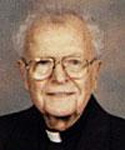
The Grand Jury will never be able to determine how many boys Father Francis P. Rogers raped and sexually abused in his more than 50 years as a priest. Nor, probably, will we or anyone else be able to calculate the number of boys the Archdiocese could have saved from sexual abuse had it investigated potential victims rather than protecting itself from scandal and shielding this sexually abusive priest. We have learned of at least three victims who we believe would not have been abused had the Archdiocese taken decisive action when it learned of Fr. Rogers' "familiarity" with boys. We find that the Archdiocese received a litany of verifiable reports beginning shortly after Fr. Rogers' 1946 ordination and continuing for decades about his serious misconduct with, and abuse of boys. One of his victims described waking up intoxicated in the priest's bed, opening his eyes to see Fr. Rogers, three other priests, and a seminarian surrounding him. Two of the priests ejaculated on him while Fr. Rogers masturbated himself. Then Fr. Rogers sucked on the victim's penis, pinched his nipples, kissed him, and rubbed his stubbly beard all over him. The former altar boy, whom Fr. Rogers began abusing when he was about 12 years old, remains haunted by memories of the abuse more than 35 years later. Father Rogers' file demonstrates that the Archdiocese responded to reports of his crimes with a shameful half-century of transfers, excuses, and finger-wagging threats that did nothing to deter the priest from indulging his self acknowledged "weakness " and that exposed every boy in his path to the very real and horrible possibility of sexual abuse. Father Rogers sexually abuses "Russell." In approximately 1962 or 1963, during his first year as an assistant pastor at Saint Joachim's parish in Philadelphia, Fr. Francis Rogers began molesting Russell, having selected him as an altar boy. The priest was 43 or 44; Russell was around 12. Father Rogers sexually abused Russell every week until sometime after Russell turned 16. In a statement he provided to the Grand Jury, discussions with the Archdiocese, a letter he wrote to a detective, and a follow-up interview with the detective, Russell described an escalating sequence of abuse that began when he was an altar boy working on setting up a manger. On that first occasion, Fr. Rogers put his hand inside Russell's underwear and slid his finger into the cleft between Russell's buttocks. Russell was baffled; he knew that what Fr. Rogers had done was a bad thing, but Fr. Rogers was smiling and, moreover, he was a priest and as Russell had been taught, priests were "chosen by God and could do no wrong." Quickly thereafter, Fr. Rogers insinuated himself into Russell's home and began to take Russell to dinner and the movies. The boy grew to hate these outings because they ended with kissing that, in Russell's words, "led to something else," namely Fr. Rogers putting Russell's penis in his mouth. Russell's psychological turmoil was intense. He blamed himself for Fr. Rogers' sexual attacks and hated himself as a result. Like other abuse victims, Russell decided "it must have been something I did to make him do these things to me." Father Rogers had chosen his victim well; young Russell wanted to make his father proud of him and saw his family's pride in the attention Fr. Rogers paid him. These factors likely created a very strong pressure on the boy not to report the priest's abuse. Father Rogers used alcohol to limit Russell's ability to resist his attacks. He regularly took Russell to a New Jersey beach house and got him drunk. Having done so, he took Russell to bed and did whatever he wanted to him. Father Rogers also inflicted pain on the boy. He made a practice of rubbing his beard stubble all over the boy, focusing on his nipples and the head of his penis. Father Rogers simply ignored Russell when he said that it hurt and asked the priest to stop. Russell hid his feelings of fear and disgust in the alcohol Fr. Rogers forced on him. To this day, he recalls Fr. Rogers' sweaty, hairy chest all over him and the priest's gin-soaked breath. Father Rogers took the boy to New York for Broadway shows and fancy restaurants almost as if they were dating; at the restaurants the priest would place an alcoholic drink before the child. Afterwards, back in the car, he made the boy fondle his penis and then drove him to New Jersey for further abuse. Russell wrote to the detective that one summer day Fr. Rogers anally raped him despite his best efforts to protect himself. Father Rogers had taken Russell and a group of altar boys to his New Jersey Shore house. The boy figured that if he left the beach ahead of the others and showered and dressed he would be safe from Fr. Rogers' predations: the priest would not touch him in front of the others. Russell went to the garage where the showers and a makeshift chapel were in close proximity. When he emerged from the shower, Fr. Rogers jumped him, ripped his towel off and threw him to the cement floor on which the boy struck his head. They landed in the chapel. Father Rogers forced the boy's legs up and stuck his erect penis into his anus, causing extreme pain. When he had sated himself, Fr. Rogers left the boy on the ground. Russell dressed and rode Fr. Rogers' bicycle 15 miles to his sister's summerhouse in Ocean City but was too afraid to tell his mother and sister what had happened to him. Unaware what happened to Russell, the boy's sister and mother put the bike into the car and drove him back to his abuser. Father Rogers was frightened at first, thinking the boy had revealed the assault. When he discovered that his sexual abuse of the boy was still secret, Fr. Rogers instructed the boy never to reveal it. Father Rogers told the boy that if others learned of the abuse they would think ill of Russell's mother for allowing him to be with the priest. It would be unseemly to compare or rank the types of psychological and sexual abuse Fr. Rogers heaped upon Russell. Yet, one event, involving the presence of multiple priests, is particularly notable. As Russell described it in his letter to the detective one morning at the shore house he awoke intoxicated in bed. Opening his eyes, he saw Fr . Rogers, three priests, and a seminarian looking at him. Two of the priests ejaculated on him while watching Fr. Rogers masturbate himself with one hand and caress Russell's penis with the other. Then Fr. Rogers sucked Russell's penis, pinched his nipples, kissed him on the lips, and rubbed his beard all over him. More than 35 years later Russell still trembles at the memory of this abuse. Father Rogers was simultaneously abusing a friend of Russell's. One winter day when Russell was visiting Fr. Rogers, he saw the boy sucking Fr. Rogers' penis. Detected, the priest ordered Russell to go shovel the driveway. The Archdiocese fails to respond effectively to three separate reports prior to Father Rogers' rape of Russell. Had the Archdiocese paid attention to prior reports of Fr. Rogers' abuse of boys, the priest might never have had the chance to rape Russell and assault other boys. We find that by May 5, 1961, the date on which the Archdiocese Chancellor, John J. Noone, wrote a memorandum to the file about then-current reports of Fr. Rogers' misconduct with boys, Fr. Rogers already had a more than 10-year history of reports of serious misbehavior with boys. On that date, more than a year before he ever met Russell, Fr. Rogers was an assistant pastor at Saint Francis of Assisi in Norristown. According to the Church memo, Doctor Hoffman, a psychiatrist, conveyed to Fr. Noone reports of Fr. Rogers' "familiarity" with 8th-and 9th-grade boys. The Chancellor met with Fr. (later Monsignor) Charles Devlin, the second assistant at Saint Francis, Msgr. McNally and Fr. Rogers. He recorded that Fr. Rogers "has taken boys out of school for trips to the seashore, occasionally overnight ones; frequently takes boys in his automobile and to drive-ins. He provides opportunities for them to smoke in his car or the parish garage; has [a]llowed them to drink; taken obscene pictures of them, and showed them indecent magazines." Father Noone also noted that some of the boys' mothers had complained; that one boy had told his mother he "never want[ed] to go with Father Rogers again"; that Fr. Rogers was known to wrestle with boys in public and lift them above his head; and that his speech was sometimes "vulgar and startling." These were not the first complaints concerning Fr. Rogers' improper contact with boys. Father Noone's memo discloses that Fr. Rogers was "[f]amiliar" with boys in at least two other assignments dating back to his first assignment at Saint Patrick in Pottsville in 1946-1949. The precise meaning of this seemingly innocuous word, "familiar ," is lost to time: the Secret Archives file contains no documents detailing the pre-1961 allegations. The Grand Jury notes, however, that Fr. Noone used the word "familiarity" to describe the above, serious charges against Fr. Rogers, which provides some clue as to the behavior he had previously been accused of committing. (Appendix D-21) Father Noone's memo does not explicitly state that Fro Rogers admitted the truth of the allegations against him. However, we find for two reasons that he must have either explicitly or implicitly done so. First, Fr. Noone concluded, after meeting with Fr. Rogers and others, that Fr. Rogers had committed the misconduct; given Church practice, it is highly unlikely that he would have drawn that conclusion had Fr. Rogers not admitted to the misconduct. Moreover, the memo recites that Fr. Rogers' response to the allegations was to "reveal the history of his weakness." We find that that phrase is a euphemism for Fr. Rogers' preference for sexual activity with boys: Fr o Rogers' explanation of the history of his "weakness" was that he said he was "victimized" by a boarder in his own home as a boy, that he had a weak character and an inferiority complex, and that he was "victimized" in the seminary by an older student. It apparently never occurred to anyone in the Archdiocese to have a psychiatrist examine Fr. Rogers even though there was clearly one available -the report of Fr. Rogers' misconduct had come from a psychiatrist who was already treating the pastor of Fr. Rogers' parish. We find that even in the early 1960's it would not have required great psychological insight to order such an examination, given Fr. Rogers' claim that he had been repeatedly abused himself and the fact that this was the third parish reporting that he had committed serious improprieties with boys. Instead, in handwritten notes on the memo, Cardinal Krol himself established the ineffective procedure that would be followed repeatedly with Fr. Rogers: warn him that he must change his behavior or face allegedly harsh consequences. Two sets of the Cardinal's notes appear on the memo. The first prescribes an immediate retreat, a "[s]evere warning that any further complaint will call for summary deactivation!" and "transfer to another post." The second set states that the Cardinal met with Fr. Rogers on May 8, 1961, and notes: "1) 2 week retreat; 2) change; and 3) Caveat! Must avoid slightest suspicion -- any further complaint will provoke effective action to preclude scandal -- even civil." The Grand Jury finds that Cardinal Krol's notes do not direct that any attempt be made to determine which boys Fr. Rogers abused or speak to them about what Fr. Rogers did to them. Instead, the Archdiocesan response to the serious allegations against the priest was, at best, lukewarm and apparently motivated by the fear of "scandal." We also note that even the two week retreat that Cardinal Krol prescribed to alter Fr. Rogers' more than decade-long practice of abusing boys was not possible: the Trappist Monastery where Fr. Rogers was sent permitted only ten day, not two week, retreats. The Archdiocese fails to respond adequately to accumulating evidence of Father Rogers' deficiencies of character and continuing misconduct with boys. The Grand Jury finds that Fr. Rogers' self-described weak character manifested itself in other than sexual ways that should have raised questions about his fitness to retain any position of trust or authority. A 1965 letter from a parishioner reported that Fr. Rogers had declined a request that he visit a woman before a serious operation despite having had more than six hours to do so; the woman died shortly after her operation. A 1969 letter from another parishioner reported that Fr. Rogers had announced at the wake of her husband's 89-year-old great-uncle that no priest would be at the grave the following morning. The family decided to conduct the prayers themselves and, before ten p.m., rang the bell of the rectory, seeking to borrow the necessary prayer book from Fr. Rogers. The parishioner reported that Fr. Rogers took offense and ordered them from the rectory saying, "Get out! I don't have to stand here and be insulted ... Get out!" A 1970 memo to the file from Chancellor Terrence F. Monihan noted a visit from a parishioner whose son Fr. Rogers had struck with a stick when the boy missed an altar boy assignment; the parishioner had to be persuaded not to report the incident to the police. According to the memo, Fr. Rogers admitted that he struck the child and promised that he "would never strike a child again, and certainly would never use a stick to strike a child again." The Grand Jury further notes that the Archdiocese either ignored or, at best, failed to act effectively in response to additional reports of Fr. Rogers' misbehavior with boys. Mothers of Saint Barnabas parish students sent an anonymous letter in May 1973 to the Chancery reporting that Fr. Rogers used foul language with women and children; constantly wrestled with boys in public and in private; and took older boys for rides in his car during school hours without informing their teachers. The letter-writers stated that they were withholding their names to safeguard their children but declared that little effort would be required to verify the truth of their report. These allegations are disturbingly reminiscent of the 1961 report of Fr. Rogers' misbehavior already discussed, a report whose allegations of his misbehavior with boys that Fr. Rogers essentially conceded was true. We find that the Archdiocese's response to the May 1973 reports of serious misconduct, like its response to the 1961 memo, was not calculated to protect the safety of the boys to whom Fr. Rogers had access. Chancellor Statkus explicitly told Fr. Rogers, as he recorded in his June 8, 1973, memo to the file, that he would take no action: "I noted to him that we would not take any action or investigate the letter since it is anonymous; however, I noted that if a signed letter or report comes to our attention, he will then be confronted." Monsignor Statkus' brief memo concludes with the following sentence, that lacks even the strength of Cardinal Krol's 1961 consideration of the possibility of summary deactivation: "I indicated to him that in view of the past reports, any future unfavorable reports would be treated very seriously." We find that in light of the fact that it had been at least 24 years since the first reports of Fr. Rogers' misbehavior with boys that this comment from Msgr. Statkus was extremely unlikely to have any deterrent effect on the priest's misbehavior. A signed complaint about Fr. Rogers' conduct arrived at the Archdiocese in January 1974; the writer, "Elizabeth," stated that Fr. Rogers was a bad example for Saint Barnabas boys and was vulgar with the women. Chancellor Statkus met with Fr. Rogers concerning the letter. Interestingly, although the letter did not allege improper contact with boys, the memo notes that "[a]s to his rapport with the boys, [Fr. Rogers] alleged no actions and no trips with anyone, but stated that he used vulgar expressions or words." Chancellor Statkus also repeated the familiar admonitions to Fr. Rogers: I noted to Father Rogers that in view of previous reports of his using vulgar and offensive language even when he was stationed at Incarnation parish [ 1968-1971 ], and in view of other more serious matter in earlier times, any further indications or reports of vulgarity or erratic behavior will be treated with sternness. I noted that such action would be taken which would not only indicate a change of assignment but would place him for psychiatric consultation and care and possible inpatient rehabilitation. One indication of the lack of gravity with which Fr. Rogers apparently regarded this now-familiar warning (in fairness, the portion of the censure concerning psychiatric consultation and possible inpatient rehabilitation was somewhat new) was that he asked Msgr. Statkus whether he would be assigned a pastorate. The Chancellor told Fr. Rogers that he would not be considered for such a promotion unless there was positive evidence "that these matters have been eliminated." An answer was not long in coming, albeit not the one the Archdiocese was apparently hoping to receive. Fewer than two weeks later, the Archdiocese began to receive anonymous letters asserting an improper association between Fr. Rogers and a married woman who lived in Saint Barnabas parish. Chancellor Statkus spoke with Fr. Rogers, who denied the allegations. Statkus also spoke with Fr. Gough, Fr . Rogers' pastor, who "feels that there is no scandal; and, therefore, no need to transfer him now." When Fr. Gough was sent a letter in March 1974 repeating the accusation against Fr. Rogers, Fr. Rogers reported that he destroyed it, allegedly to prevent Fr. Gough from being "distracted" during a hospital stay. Chancellor Statkus advised Fr. Rogers that if the letter writing continued, a transfer might have to be considered. The Archdiocese continues to tolerate Father Rogers' misconduct with boys. The Grand Jury finds that on June 25, 1975 (as well as at several previous and subsequent times), the Archdiocese was deeply suspicious of Fr. Rogers' conduct with boys (and women) but unwilling to take decisive action or to preclude Fr. Rogers' potential advancement within the Church, even though Fr. Rogers did not deny the truth of the reports of his misconduct. In a June 26, 1975, memo to the file, Vice Chancellor Francis Clemins recounted a recent meeting with Fr. Rogers. Monsignor Clemins summarized the Archdiocese's concern about promoting Fr. Rogers: "I told him that the suspicion of patterns involving homosexuality has been in the picture for some time, and I again reminded him that he knows of what I am speaking. He nodded in a positive way." In the two sentences that follow the acknowledgment of Fr. Rogers' long history of suspected sexual contact with young boys, Msgr. Clemins summarizes the Archdiocese's position on Fr. Rogers' future advancement and Fr. Rogers' response: "I told [Fr. Rogers] ...that in spite of these problems he has not been taken out of consideration for a pastorate, but this apprehension still exists. He offered no defense or argument in favor of new evidence that he has put aside any reason for such suspicion." In other words, despite Fr. Rogers' lengthy history of suspected sexual contact with boys and his complete failure to demonstrate that he had ceased such behavior, the Archdiocese still regarded him as a candidate for a pastorate. Cardinal Krol had, nearly 15 years earlier, reacted to the allegations of Fr. Rogers "familiarity" with boys in the 1961 memo by prescribing a retreat, urging "change" and threatening transfer. Now, in March 1976, he met with Fr. Rogers at the priest's request to discuss a possible pastorate. According to the Cardinal's handwritten, signed notes, he reviewed Fr. Rogers' record on the "various types of complaints that have been lodged against him on serious and less serious types of charges." The Cardinal noted that those charges gave rise to questions not only about Fr. Rogers' "weakness" but also about his "ability to engage the sympathetic cooperation of the people he serves." As to the complaints, the Cardinal noted that they "can be argued or explained but you cannot deny that some people were sufficiently disturbed by him to complain against him." The Cardinal noted that he told Fr. Rogers that he could make "no promises or predictions, however I will ask for a review of his record and for an evaluation of the risks, if any, entailed in entrusting him with a [last word illegible]." The Grand Jury finds that in 1976, given the accumulation of evidence over the thirty years of Fr. Rogers' priesthood, the Cardinal knew or should have known that Fr. Rogers posed a substantial risk in any situation that brought him into contact with boys. Fewer than two months later, a Saint Barnabas parishioner named "Mary" wrote an April 19, 1976, letter to "Your Eminence" and an April 20, 1976, letter to "Monsignor" concerning the behavior of the Saint Barnabas priests, especially Fr. Rogers. In the April 20, 1976, letter, Mary stated that Fr. Rogers' "chasing of boys is well known." The Archdiocese had previously declined to investigate earlier, anonymous complaints from the mothers of Saint Barnabas parish stating that Fr. Rogers was wrestling with boys in public and private and taking them for unauthorized rides in his car during school hours, despite the similarity of these reports to the 1961 allegations against him that Fr. Rogers had either implicitly or explicitly admitted were true. Mary's report was not anonymous. Yet, there is no indication in the file that the Archdiocese ever contacted the non- anonymous Mary. Each of her two signed letters bears the handwritten notation, "No address listed F.I.S [tatkus]." There is no other evidence in the file of any attempt to find or speak with Mary. Within one month of the receipt of these letters, Fr. Rogers was transferred from Saint Barnabas. The Archdiocese attempts to limit the damage resulting from Father Rogers' admission that he sexually abused Russell. In March 1998, Russell informed the Archdiocese that Fr. Rogers had sexually abused him for years in the early 1960s. Father Rogers' file contains undated 1998 notes recording some of those allegations, as well as notes headed with the name "Hank Keene," one of the Archdiocese' s attorneys. Those notes indicate that even at the point that Russell came forward to identify Fr. Rogers as having sexually abused him -- further proving what the Archdiocese had known for decades -- the Archdiocese still sought to avoid having to act. Underneath Mr. Keene's name, the notes say "due to time since alleged incident" "no recent complaints," "Fr. R. age -(77?)," "H.K. advice -- wait for letter before confront." On Apri1 6, 1998, Russell met with Msgr. Lynn and Fr. Mesure and provided the details of Fr. Rogers' abuse, as well as the name of "Richard," a current parishioner who, as a boy, had been sexually abused by Fr. Rogers. Monsignor Lynn's account of the meeting to Cardinal Bevilacqua hopefully notes that Russell was "not antagonistic and did not make any demands." The memo also delicately records that material in the Secret Archives indicates that "there was a problem" in the 1960's with this behavior." Interviewed that day, Fr. Rogers initially declared Russell's accusations to be "maybe" true. Then, he admitted to sexually fondling Russell when Russell was a boy. Finally, he admitted that, according to Fr. Mesure, "[Russell] was being truthful in his accusations." Father Mesure reported that after consulting with legal counsel it was decided that it was sufficient, given Fr. Rogers' age and retired status, for Fr. Rogers to receive outpatient psychological evaluation. The Grand Jury finds that the initial findings and recommendations of Vianney therapist Andrea Delligatti, Ph.D., who performed a psychological evaluation of Fr. Rogers, do not demonstrate even a cursory knowledge of Fr. Rogers' psychological makeup. The Archdiocese therapist did not diagnose Fr. Rogers as having any sexual disorder. We also find it significant that the materials produced to the Grand Jury by the Archdiocese do not include a final Psychodiagnostic report concerning Fr. Rogers. Despite Fr. Rogers' admission to sexually abusing Russell, the Archdiocese preferred not to provide Russell with additional information. For instance, in October 1998, when Russell asked Fr. Mesure to tell him the name of the one priest Fr. Rogers had identified as a participant in masturbating on Russell, Fr. Mesure told him that the man was dead and because he could not defend himself against the accusation, "I was not sure that it would be right to be giving out his name." Father Mesure's concern for the priest's reputation in light of the "accusation" was arguably misplaced. Seemingly it was more a fact than an accusation since Fr. Rogers had admitted that the event had occurred and himself provided the priest's name. In further contravention of their professed dedication to the needs of victims of sexual abuse, Archdiocese officials did not attempt to find additional victims of Fr. Rogers, even when provided with a name. On Apri1 7 , 1998, Russell told Fr. Mesure that he: had spoken the night before to another Rogers victim, Richard, who was willing to speak to the Archdiocese about his abuse if contacted. Father Mesure told Russell that since Fr. Rogers was "cooperating," he did not see a need to contact Richard, although Russell was welcome to tell Richard to call if he needed assistance. We find that Archdiocese's behavior in Fr. Rogers' case was not an isolated example of its unwillingness to seek out additional victims of identified abusers. Rather, the Archdiocese adopted a passive approach: it would speak to those victims who came forward but not to speak to or seek additional victims even where provided with the names and/or addresses of those victims. Church officials were more willing to be aggressive when it came to the possibility that Russell would file a civil suit. In a June 3, 1999, letter to Russell, an attorney for the Archdiocese declared that the Archdiocese had concluded that two other people had had sexual contact with Russell when he was a minor. The basis for the attorney's statement was apparently the fact that during his initial interview with Fr. Mesure and Fr. Lynn, Russell revealed that a baby sitter and a relative had molested him by the time he met Fr. Rogers. Ultimately, the Archdiocese paid some of Russell's counseling and other medical bills but declined any other financial settlement. More victims come forward. If the Archdiocese hoped that failing actively to seek additional victims would prevent them from coming forward, it was to be disappointed. On February 28,2002, Msgr. Lynn received a call from a man concerning the period from 1959 to 1961 when Fr. Rogers was assigned to Saint Francis of Assisi in Norristown -the assignment that was the subject of the 1961 memo. Because Lynn kept limited, semi-legible and cryptic notes, it is impossible to say what, if anything, Fr. Rogers did to the caller. However, ill a subsequent letter Msgr. Lynn expressed the hope that their conversation had been able "to ease your mind somewhat, and was an instrument of closure for you." On March 11, 2002, fewer than two months later, the Archdiocese received a call from a victim who said he was "abused when he was ten years old by Fr. Francis Rogers at Townsend's Inlet and elsewhere, trips to Hair and Jesus Christ Superstar." Although he did not want to give a full account of his abuse, the victim mentioned (presumably as places where the abuse occurred): Saint Joachim's (where Fr. Rogers was assigned from 1962 to 1968), Incarnation (1968 to 1971 ), and "61st and Dickerson." A third new case of child sexual abuse by Fr. Rogers was reported in June 2002. In that month, the Deacon of the Archdiocese of Charleston, South Carolina, called to report that "Sean" reported that Fr. Rogers had sexually abused him in approximately 1976-77 when Fr. Rogers was Assistant Pastor at Saint Ambrose. Msgr. Lynn's handwritten notes on the phone message relate that the abuse involved fondling and sex. They also list the names of two males, one of whom is recorded as having committed suicide. There is no evidence that the Archdiocese attempted to investigate the abuse of either of those males or questioned Fr. Rogers about them. Father Rogers' abuse of his young victims was shameful, as was the Archdiocese's unwillingness or refusal to stop it. Had the Archdiocese interceded, as it should have, instead of allowing Fr. Rogers to remain a priest for more than 50 years, it likely would have saved countless boys from the trauma inflicted on them by Fr. Rogers. Father Rogers was never punished or held to account for his unchecked sexual predations or the devastation they caused. He was permitted to retire in 1995, his "good name" intact. The message clearly communicated by the Archdiocese's actions -- to victims and abusers alike -- was that it would protect the reputation of its priests at all costs. This twisted sense of priorities was not lost on Fr. Rogers. In 2002, according to a Philadelphia Inquirer article, Fr. Rogers admitted to having sexual relations with Russell but minimized its significance and questioned the importance of the disclosure. Father Rogers said that the abuse "may have happened but it was not as prolonged as he says it was ... Naturally, he was young and I was older, so I should have known better. I don't know why it has to come out now ... It will just ruin my reputation." On October 6, 2004, faced with the possibility of involuntary laicization, Fr. Rogers agreed to live "a supervised life of prayer and penance" at Villa Saint retirement home for priests. Although he was sworn in to testify before the first grand jury, it was determined that Fr. Rogers was too feeble to be questioned and no testimony taken. He died in February 2005.
|